
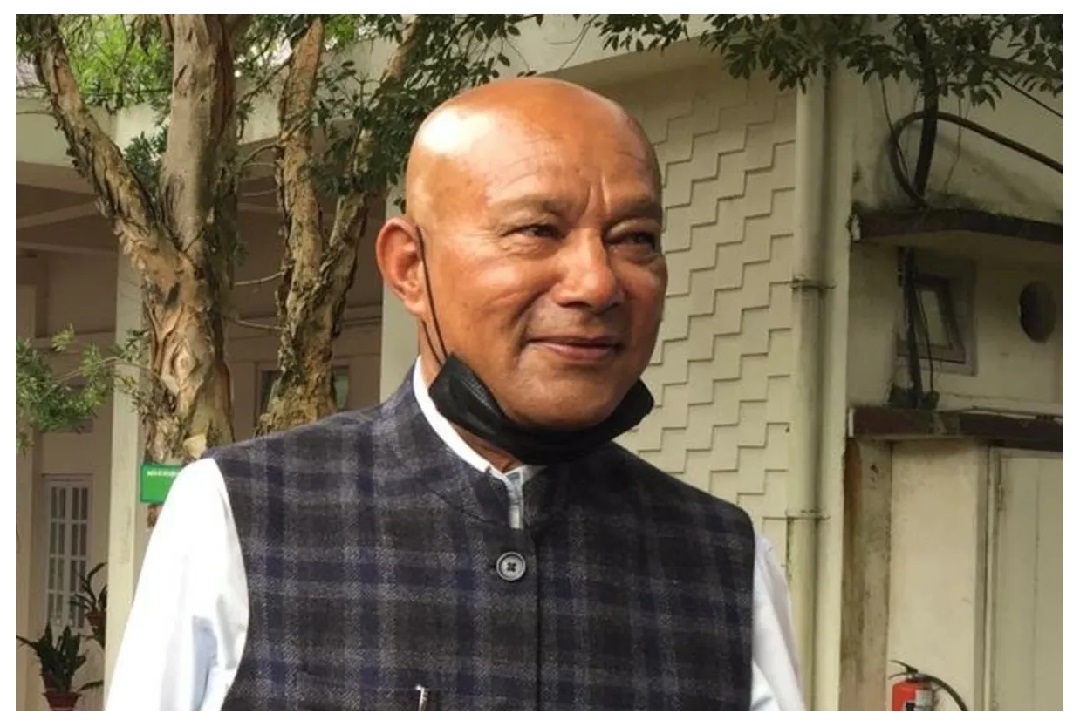
Shillong, Nov 3: Arts and Culture Minister Sanbor Shullai has underscored the need for sustainable and inclusive growth that harmonizes development with environmental preservation. Speaking at a workshop on the Hill Regions Planning Initiative (HCRPI), he highlighted the importance of creating a climate-resilient, economically vibrant roadmap tailored specifically for hill cities.
Shullai noted that while hill regions are blessed with rich natural resources and cultural diversity, they also face unique challenges related to terrain, infrastructure gaps, and climate vulnerability. The HCRPI, he said, is a significant step forward under the visionary leadership of Prime Minister Narendra Modi to achieve balanced and people-centric development.
He added that the initiative provides an opportunity to design a model of progress that promotes local entrepreneurship, boosts eco-tourism, empowers youth, and protects fragile ecosystems. “Meghalaya has long believed that development and nature must move together, and as the nation works toward Viksit Bharat @ 2047, we must ensure our hill regions are not left behind,” Shullai emphasized.
Focus on Vision 2032 for Meghalaya
Organized by NITI Aayog in collaboration with the state government, the workshop brought together policymakers, senior government officials, and domain experts to explore strategies that integrate economic aspirations with environmental stewardship.
Delivering the welcome address, Vijay Kumar D., Commissioner and Secretary of the Urban Affairs Department, called the initiative “timely and apt.” He reiterated the Chief Minister’s vision for Meghalaya to rank among the top 10 states by 2032—a 10-year goal launched in 2022 focusing on GDP growth, SDG progress, and improvement in the overall ease of living.
He stressed that urban development has become a top priority for the state, with evolving approaches to addressing complex governance challenges.
NITI Aayog, NEC and Experts Share Key Insights
Anna Roy, Principal Economic Adviser and Programme Director at NITI Aayog, outlined the workshop’s objectives under the organization’s State Support Mission. She explained that urban frameworks designed for cities in the plains cannot be uniformly applied to hill regions, which require a distinct, bespoke development model.
Representing the Northeastern Council (NEC), Som Kamei, Planning Adviser, highlighted urbanization as a crucial driver of growth. He acknowledged the difficulties faced by hill cities in managing population growth and assured that NEC would incorporate the workshop’s insights into Vision 2047, working with stakeholders to promote balanced and sustainable progress.
Sessions Highlight Global Practices and Local Solutions
During the technical sessions:
Jagan Shah, CEO of The Infravision, presented global best practices for hill cities, emphasizing the need for improved mobility, sustainable land use, disaster resilience, and strategic eco-tourism in Meghalaya.
Dr. Uday Bhonde, Senior Program Specialist at NIUA, discussed initiatives such as shallow aquifer management, climate action plans, and environmental indices to support decision-making.
Snehit Prakash, Regional Director at Borda Asia, spoke on climate-resilient planning for essential services, focusing on stakeholder engagement, regional collaboration, and knowledge exchange.
Following these presentations, Prof. Arup Sarma from IIT Guwahati shared insights on carrying capacity assessment and introduced a Sustainable Accommodation Framework, emphasizing the need to effectively manage peri-urban areas.
Prof. Mahua Mukherjee, HoD of Architecture and Planning at IIT Roorkee, stressed that resilience must be viewed as a prerequisite for development. She discussed community-level resilience building and participatory planning approaches.
In the final technical session, Tikender Singh Panwar, former Deputy Mayor of Shimla, elaborated on governance, policy reforms, and financing frameworks. He highlighted the need for a differentiated developmental approach for hill regions and advocated for a terraced governance model that is grounded, ecological, and inclusive.
Workshop Ends with Round-Table Deliberation
The workshop concluded with an interactive round-table discussion that identified priority research areas, potential pilot cities (both brownfield and greenfield), and probable knowledge partners to drive forward the developmental agenda for hill regions.