

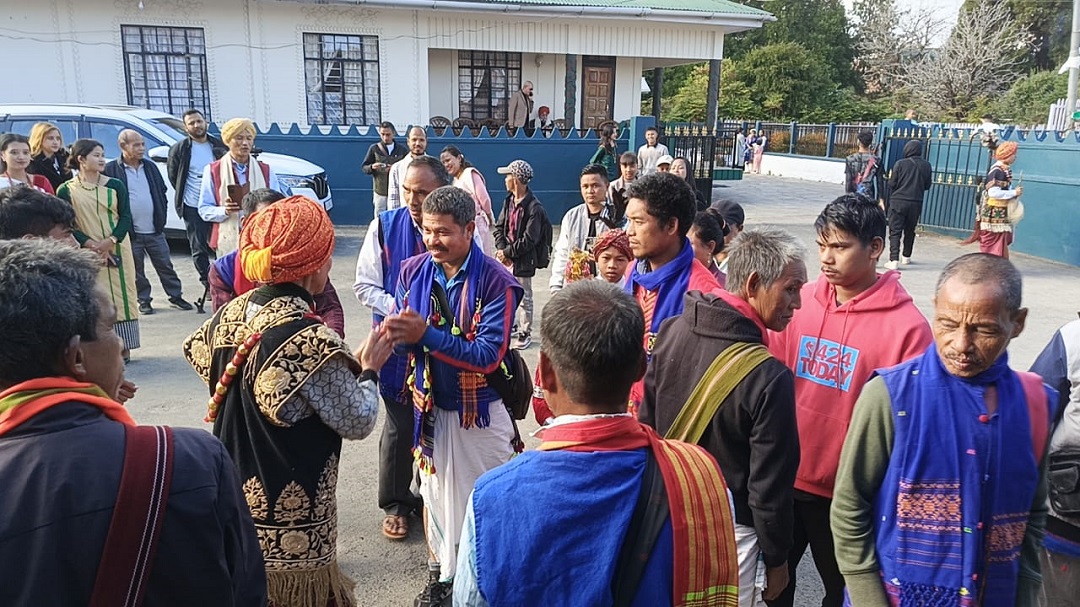
Smit, November 10, 2025: A remarkable cultural moment unfolded during this year’s Shad Nongkrem festival in Smit when a delegation of Karbi traditional leaders from Assam visited and held an interaction with Dr. Balajied Sing Syiem, the Syiem (Chief) of Hima Khyriem. The meeting brought to light a little-known but historically significant connection — that the Karbi and Khasi peoples, particularly those of Hima Khyriem, share ancestral ties that stretch back nearly 700 years.
Ancient Historical Connection
According to Karbi oral traditions and folk records preserved in songs, chants, and legends, the Karbi people once lived alongside the Khasi clans in the ancient territories of the Khasi Hills — including areas under Hima Khyriem. Local historians and linguists have long noted cultural and linguistic similarities between the two communities, suggesting centuries of coexistence and interchange.
Both the Karbis and Khasis are hill tribes with matrilineal lineage, strong clan-based structures, and governance systems rooted in chieftains — known as Syiems and Dongs in the Khasi context. Elders from both groups recall that long before state boundaries were drawn, Karbi settlements flourished along the southern slopes of the Khasi Hills, where they maintained trade, kinship, and shared cultural practices with Hima Khyriem.
The Meeting with the Syiem
During the interaction, Dr. Balajied Sing Syiem warmly welcomed the Karbi delegation and acknowledged the deep historical bond between their communities. He highlighted that the connection between Hima Khyriem and the Karbis is not merely cultural but also spiritual, rooted in a shared reverence for nature, communal harmony, and tradition.
“It fills me with pride to learn that the Karbis and the people of Hima Khyriem have walked together through centuries of change,”
said Dr. Syiem. “This relationship reminds us that our traditions are bridges — not barriers — that connect our peoples across generations.”
He further described the Karbi participation in this year’s Shad Nongkrem as “a symbolic reunion of two ancient hill families” and emphasised the importance of such cultural exchanges in preserving indigenous identity amidst rapid modernisation.
Reflections from the Karbi Delegation
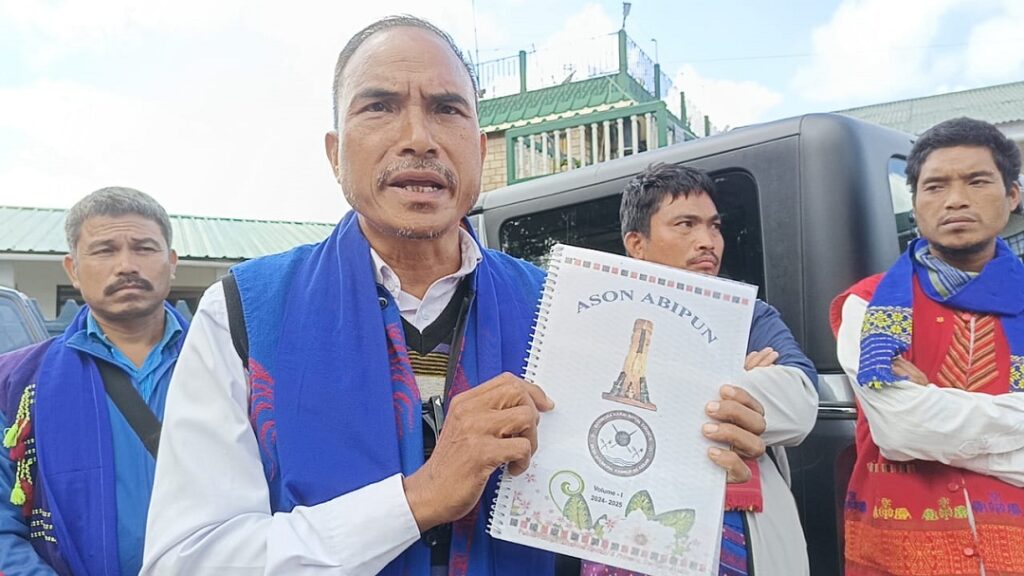
The Karbi leaders, representing traditional councils and cultural organisations from Karbi Anglong, expressed heartfelt gratitude for the invitation and hospitality extended by the Hima. Speaking on behalf of the group, a Karbi elder shared:
“Our visit to Smit is not just a gesture of friendship but a homecoming to a land where our ancestors once walked. We feel proud to revive this ancient bond with our Khasi brothers and sisters.”
The delegation also presented traditional Karbi songs and dances during the festivities, symbolising respect and kinship. Their performance was warmly received by spectators and leaders of Hima Khyriem alike.
Reaffirming Cultural Friendship
Both sides agreed to strengthen inter-community cooperation, particularly in areas of culture, youth interaction, and traditional governance. They also discussed the possibility of organising joint cultural events in the future to celebrate the shared heritage of the Karbi and Khasi peoples.
Dr. Syiem noted that “the history of unity between our peoples is proof that cultural bonds are stronger than political divisions,” emphasising the need for continued engagement among indigenous communities across state borders.
A Legacy of Seven Centuries
The relationship between the Karbi community and Hima Khyriem — dating back nearly seven centuries — stands as a testament to mutual respect, cooperation, and shared ancestry. Long before the advent of colonial administration or modern state borders, these hill tribes lived in harmony, exchanging rituals, customs, and oral traditions that still resonate today.
The Karbi delegation’s participation in the Pomblang Syiem Nongkrem celebration this year was therefore much more than a cultural visit. It was a revival of an ancient bond — a reaffirmation of a shared history that has endured through centuries.
As both communities continue to nurture this connection, the story of Karbi-Khyriem friendship serves as a powerful reminder of how tradition, unity, and historical memory can inspire harmony in the modern age.
“Our ancestors built bridges through understanding and respect,” a Karbi elder reflected. “Today on the 7 Nov 2025, by standing here in Smit, we walk once again across that same bridge.”