
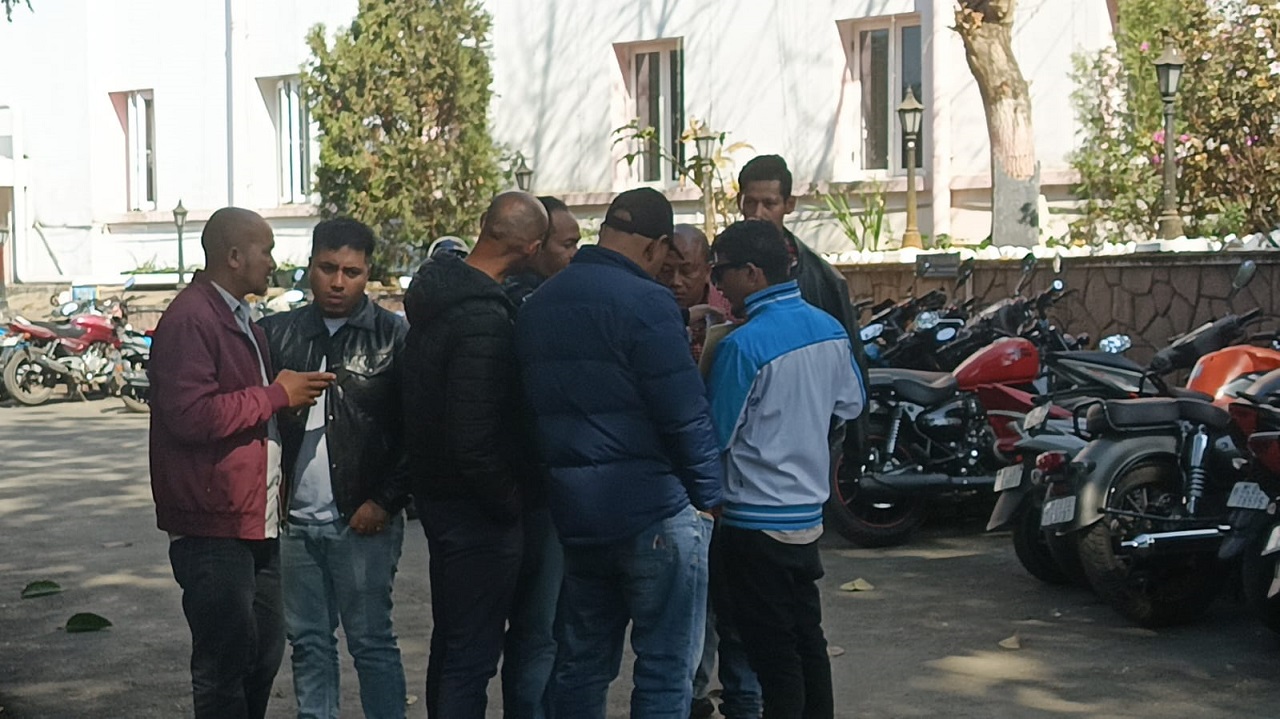
SHILLONG, Jan 28: The Hynñiewtrep Integrated Territorial Organisation (HITO) has urged the state government to pursue the implementation of the Instrument of Accession (IOA) and Annexed Agreement (AA) signed with the Khasi States on August 17, 1948, citing prolonged delay by the Centre in fulfilling national commitments.
In a memorandum submitted to Chief Secretary Shakil Ahammed, HITO sought clarification on the current status of the Ministry of Home Affairs’ (MHA) response regarding the implementation of the agreements.
Expressing concern over the delay, HITO president Donbok Dhar stated that the organisation is seeking details of the letter dated November 27, 2014, issued by the MHA to the Government of Meghalaya, which addressed representations related to the implementation of the Instrument of Agreement concerning the Khasi States.
“We are respectfully inquiring about the details and present status of the response submitted by the Government of Meghalaya to the Union Ministry of Home Affairs in connection with this matter,” Dhar stated in the letter.
HITO also referred to several earlier communications, including a letter dated August 27, 2014, from the National Commission for Scheduled Tribes (NCST) chairperson to the then Union Home Minister Rajnath Singh, which had advised and recommended that the IOA and AA be concluded and their mandate incorporated into the Constitution of India.
The organisation further cited a National Human Rights Commission (NHRC) communication dated June 16, 2012, which stated that the matter falls within the legislative competence of Parliament and advised petitioners to approach the government for redressal.
HITO highlighted that various political parties, including the Bharatiya Janata Party (BJP), have acknowledged the importance of fulfilling the IOA and AA. However, the organisation alleged that continued non-implementation has resulted in constitutional anomalies and conflicts with Central Acts, adversely affecting the customary Indigenous land tenure system in Meghalaya.
Dhar pointed out that despite unanimous resolutions passed by the Meghalaya Legislative Assembly on issues such as the Inner Line Permit (ILP), language, and boundary disputes, these matters remain unresolved, further aggravating conflicts and governance gaps.
“The non-fulfillment of these treaties is causing conflict today, affecting the social, cultural, and legal standing of the Khasi and Jaintia people,” he said, adding that while the IOA and AA recognise the unique status and rights of the Khasi States, the failure to implement their terms has left the Hima in a state of uncertainty.
Dhar further stated that the traditional Khasi institutions historically exercised legislative, executive, judicial, and religious customary functions, but the absence of a formal Assembly has resulted in elected representatives—such as MLAs and MDCs—lacking adequate understanding and commitment to frame effective laws for the 54 Hima in the Khasi Hills and the Elaka of the Jaintia Hills.
He criticised the functioning of the Autonomous District Councils (ADCs), stating that they were intended as an interim arrangement and not a substitute for traditional institutions. He argued that representation in the ADCs should have come directly from the Khasi States’ constitutional-making Dorbar and that recognised political parties should be barred from contesting ADC elections to ensure focus on indigenous governance structures.
HITO also questioned why key traditional stakeholders—including Dorbar Shnong, Dorbar Kur, Dorbar Raid, and Dorbar Hima—remain unrepresented in the ADCs, despite the traditional Khasi States’ assemblies historically including representatives from various Hima and Elaka, along with nominated women members.
The organisation urged the government to revisit the IOA and AA, ensure meaningful representation of traditional institutions within the ADCs, and initiate serious deliberations on the future of indigenous governance in Meghalaya.
HITO further questioned the lack of a united approach among political parties, attributing it to differences in ideology and political priorities.
“We are keenly interested in understanding the progress made on this long-pending issue and would appreciate clarity on whether your office has submitted a report to the MHA, as this matter is of significant importance to our community,” the letter stated.