
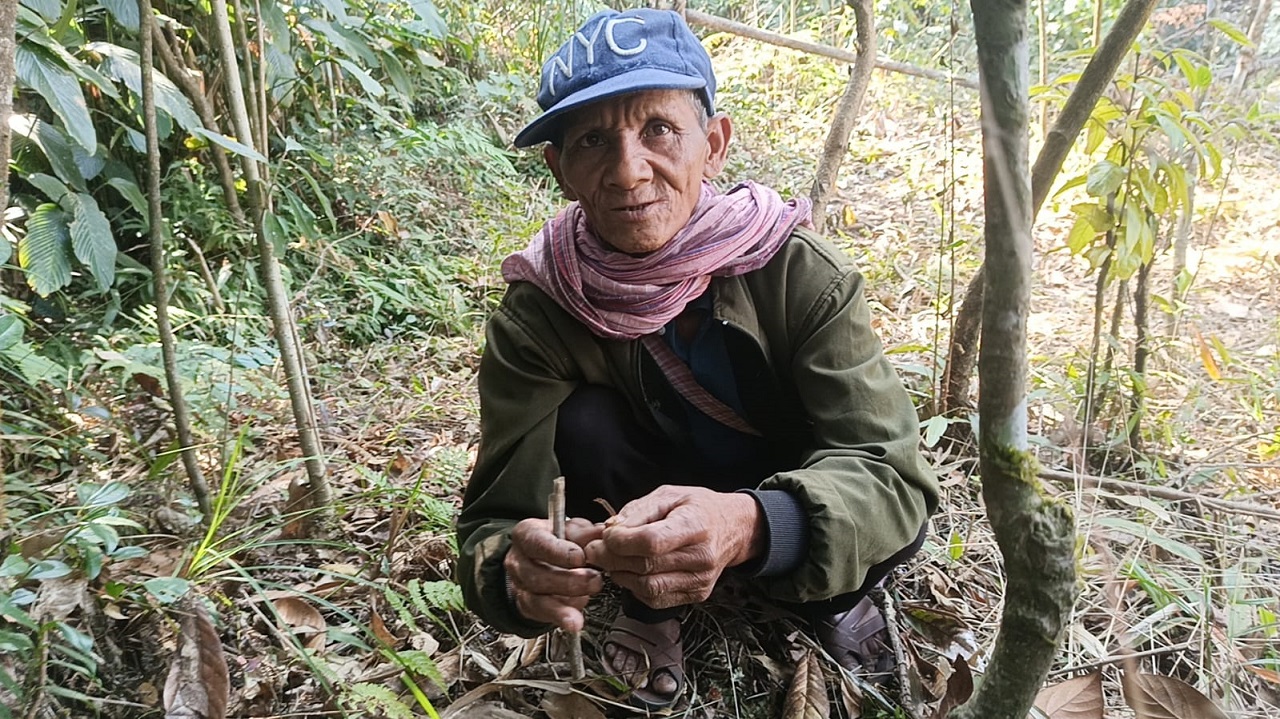
Shillong, Feb 9: Indigenous knowledge of the Khasi community continues to remain a respected part of its cultural heritage, particularly in rural areas where traditional healing practices are still followed alongside modern medicine.
In Siatbakon village, an elderly man, Bah Idred Nengnong, is known locally as a traditional healer, especially for treating people who have suffered dog bites. People from different areas, including War Dawki, Smit and other parts of the Khasi Hills, reportedly visit him seeking traditional treatment. Several villagers have claimed recovery after receiving his remedies and some have shared their experiences through media interactions.
Bah Idred said his healing knowledge was inherited from his ancestors and passed down through generations—from his forefathers to his father and eventually to him. Though not a formally trained medical practitioner, he continues to practise indigenous healing methods to help people in need. He also stated that he provides treatment free of cost and does not charge patients.
As part of his traditional practice, Bah Idred prepares a powdered medicine locally known as “dawai tah”, made using a white worm (eit wieh rong lieh) collected from forest areas. The powder is prepared by him, sometimes combined with other traditional herbal ingredients. According to the healer, the remedy has been used in several dog bite cases over the years.
However, there is currently no scientific or medical evidence confirming that such indigenous remedies can prevent or cure rabies. Medical experts have repeatedly warned that rabies is a fatal disease if timely and proper medical treatment is not administered.
Bah Idred himself cautioned that dog bite victims should not rely solely on traditional remedies. He urged those bitten by dogs to immediately visit hospitals or health centres, receive anti-rabies vaccination, and seek appropriate medical treatment without delay.
Villagers noted that traditional healers continue to play an important role in rural communities, particularly in areas where access to modern healthcare facilities remains limited, but stressed that traditional practices should complement—not replace—essential medical care.