
SHILLONG, MAR 27: The Meghalaya government on Friday signed a Memorandum of Understanding (MoU) with the National Jal Jeevan Mission under the Department of Drinking Water and Sanitation, Ministry of Ministry of Jal Shakti, for the implementation of Jal Jeevan Mission 2.0, aimed at ensuring functional household tap connections for every rural home in the state.
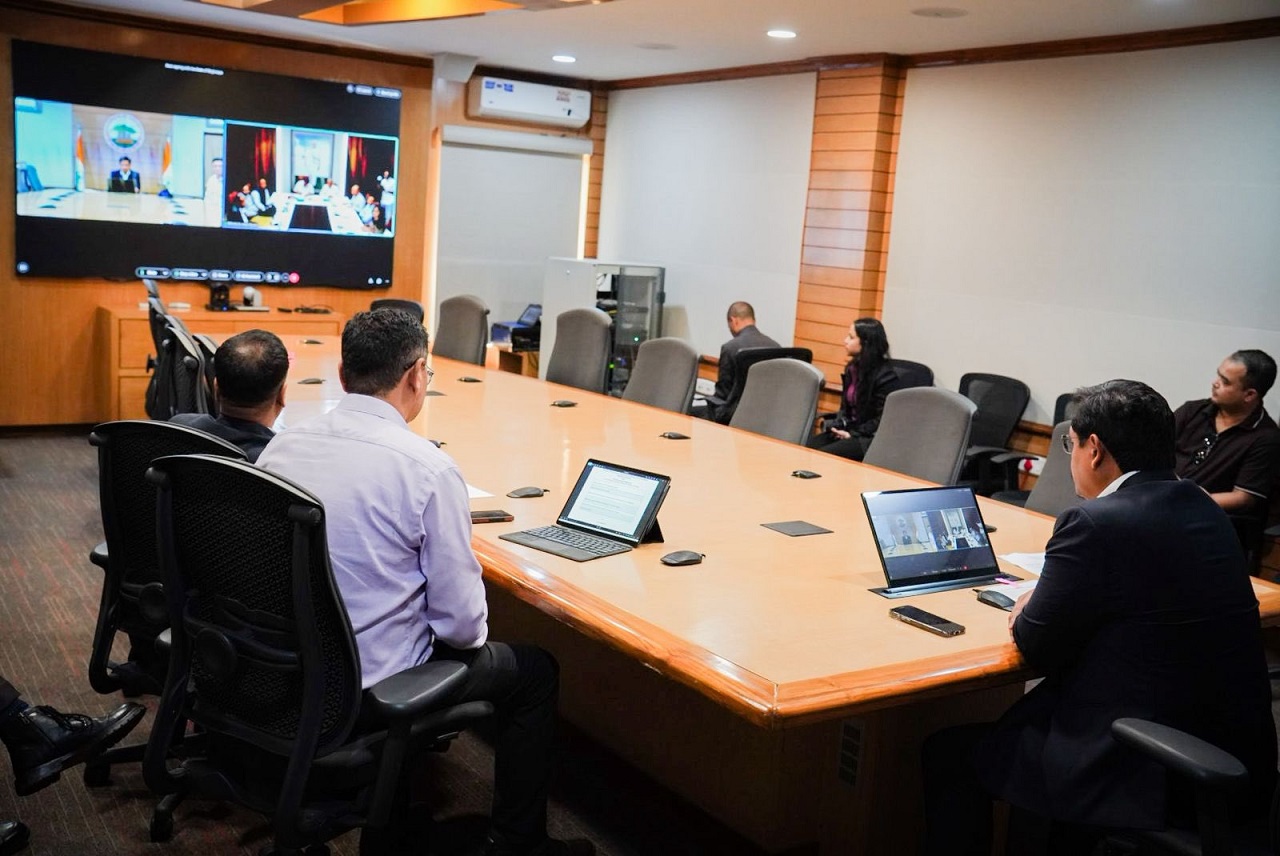
The signing ceremony was held in the presence of Chief Minister Conrad K. Sangma, while Union Minister for Jal Shakti C. R. Patil joined the event virtually. Also present were Minister of State V. Somanna, Secretary Ashok K.K. Meena, and Additional Secretary and Mission Director KK Soan, along with other officials from the Ministry.
Representing the Meghalaya government were PHE Minister Marcuise N. Marak, Commissioner and Secretary Pravin Bakshi, Chief Engineer R.S. Nongbri, and Superintending Engineer D. Shabong.
Addressing the gathering, Sangma expressed gratitude for the partnership and reaffirmed the state’s commitment to ensuring safe and sustainable drinking water access for all households. He noted that tap water coverage in Meghalaya has increased significantly from among the lowest levels to about 83 per cent at present.
He also stressed the need for continued support from the Centre and highlighted the importance of a comprehensive water policy, with ongoing efforts focused on water source rejuvenation and long-term sustainability.
The Chief Minister said the state is taking a proactive approach to address challenges related to water availability and management through coordinated planning and implementation.
In his keynote address, Patil emphasised that achieving last-mile connectivity in drinking water supply is essential to realise the vision of a developed India. He said the Government of India is prioritising effective implementation of the mission with a focus on efficiency and measurable outcomes.
He further underscored the importance of convergence with other initiatives, including the G-RAM-G programme, to strengthen delivery and maximise impact.
The MoU outlines a comprehensive framework detailing the roles and responsibilities of both the Centre and the State for the successful implementation of Jal Jeevan Mission 2.0 within a stipulated timeline. It covers key aspects such as governance reforms, planning and financing, digital monitoring systems, manpower training, water quality surveillance, and source sustainability.
The agreement also emphasises the need to avoid cost and time overruns, conduct periodic evaluations, and establish mechanisms for dispute resolution.
The partnership is expected to enhance coordination, improve service delivery, and accelerate progress towards achieving the goal of “Har Ghar Jal” in Meghalaya, ensuring safe, adequate, and sustainable drinking water for rural communities across the state.