
Shillong, April 8: The sudden demise of Dr. Ricky Andrew J. Syngkon has triggered a high-stakes political contest in Meghalaya, with the upcoming Shillong Lok Sabha by-election expected to reshape the state’s political landscape.
Dr. Syngkon, a first-time MP from the Voice of the People Party (VPP), had secured an unprecedented mandate in the last general election, winning by over five lakh votes—the largest margin in the state’s electoral history. His victory not only unseated established political heavyweights like Vincent H. Pala of the Congress and Ampareen Lyngdoh of the National People’s Party (NPP), but also signalled a broader shift in voter sentiment towards alternative political forces.
A Contest Beyond Numbers
The by-election is shaping up to be more than a routine electoral exercise. It is emerging as a referendum on governance, representation, and the evolving political identity of Meghalaya.
The VPP enters the contest with a clear advantage, buoyed by its previous landslide victory and a growing support base rooted in regional aspirations. The potential candidature of Batskhem Marboh indicates the party’s intent to consolidate its position and retain the mandate secured in 2024.
However, the Indian National Congress and the National People’s Party are unlikely to concede ground easily. Both parties are expected to adopt recalibrated strategies, focusing on candidate credibility, grassroots outreach, and issue-based campaigning to regain lost political space.
The entry of the Bharatiya Janata Party into the fray adds a significant new dimension. As the ruling party at the Centre, the BJP may leverage narratives around development, infrastructure, and Centre–State coordination, potentially influencing voter calculations in a state where regional identity remains a powerful factor.
Meanwhile, the United Democratic Party (UDP) faces a strategic dilemma. In the absence of a strong candidate, its possible decision to stay out of the contest could lead to a consolidation of votes, particularly benefiting regional players like the VPP.
Core Issues and Electoral Narrative
The electoral discourse is expected to centre around deeply rooted socio-political concerns:
Implementation of the Inner Line Permit (ILP)
Inclusion of Khasi and Garo languages in the Eighth Schedule
Safeguarding indigenous land rights and customary institutions
Striking a balance between economic development and cultural preservation
These issues reflect not only policy priorities but also the broader anxieties and aspirations of the state’s indigenous communities.
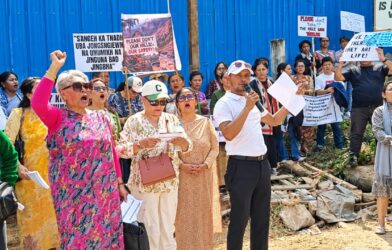
Civil society groups and pressure organisations are likely to play a decisive role in shaping the narrative, as public engagement intensifies in the run-up to the polls.
Centre–State Equation Under Scrutiny
A key undercurrent in the by-election will be the debate over political alignment with the Centre. With the BJP in power nationally, questions are being raised about whether electing a representative aligned with the central government could facilitate greater access to resources and policy support.
At the same time, concerns persist regarding the protection of minority rights and the preservation of Meghalaya’s unique cultural identity, which have historically influenced voting behaviour in the state.
A Turning Point for Meghalaya Politics
Ultimately, the Shillong by-election stands as a critical moment in Meghalaya’s political evolution. For the VPP, it is an opportunity to reaffirm its growing influence and validate its mandate. For national parties like the Congress and BJP, it represents a chance to reassert relevance in a rapidly changing political environment.
The outcome will extend beyond parliamentary representation. It will serve as a barometer of public sentiment, offering insights into how voters perceive governance, identity, and development in contemporary Meghalaya.
As the state prepares for this contest, the verdict will likely chart the course of its political future for years to come.