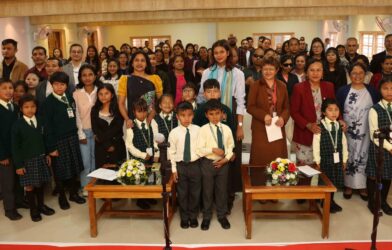

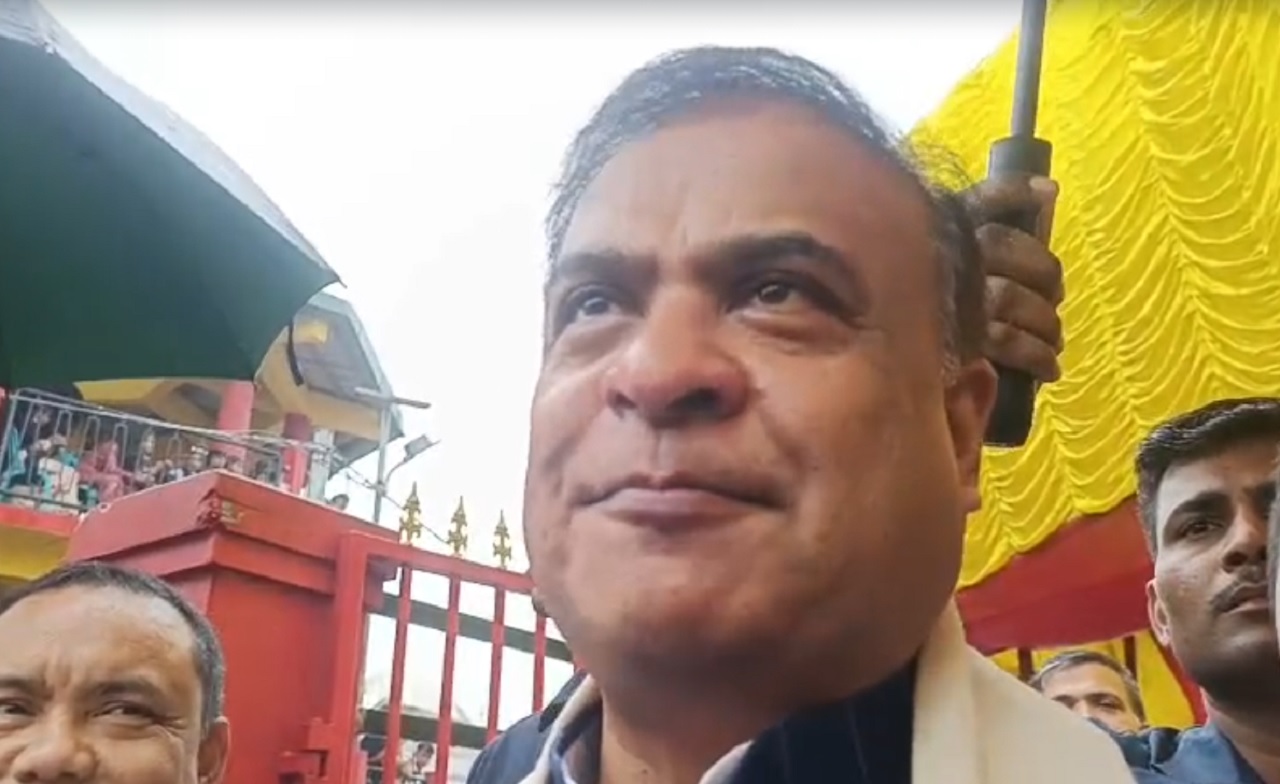
Jowai, July 9: Assam Chief Minister Himanta Biswa Sarma on Thursday attended the concluding day of the Behdienkhlam festival in Jowai, extending greetings and best wishes to the people of Meghalaya, particularly those from the Jaintia Hills.
Attending the festival for the first time, Sarma said he had brought a message of goodwill and friendship from the people of Assam to the people of Meghalaya. He wished for the continued success of the traditional festival and prayed for peace and prosperity among the people.
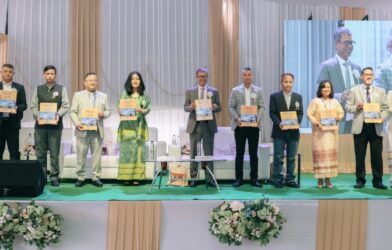
Joining him at the celebrations were Meghalaya Deputy Chief Minister Sniawbhalang Dhar, Chief Executive Member of the Karbi Anglong Autonomous Council Tuliram Ronghang, Cabinet Ministers, MLAs, MDCs of the Jaintia Hills Autonomous District Council (JHADC), senior government officials and other dignitaries.
Speaking to reporters on the sidelines of the event, Sarma said relations between Assam and Meghalaya remained cordial, adding that there were no major conflicts between the two neighbouring states.
“I don’t think there are frequent conflicts between Assam and Meghalaya. Everything is being managed smoothly, and whenever any issue arises, it is resolved amicably,” he said.
On the long-pending interstate boundary dispute, the Assam Chief Minister said dialogue between the two governments was continuing through regular communication.
“I regularly meet the Chief Minister and the Deputy Chief Minister of Meghalaya. The channel of communication is always open, and whenever any issue arises, we resolve it immediately in the spirit of friendship,” Sarma said.
The Behdienkhlam festival concluded at the sacred Aitnar pond, where tens of thousands of devotees from the Khasi and Jaintia Hills, along with visitors from other parts of India and abroad, gathered to witness one of Meghalaya’s most significant indigenous religious festivals.
The final day’s observances began with the Kynting Khnong ritual at the residence of the Lyngdoh, followed by Bam Tyngkong and the sacred Choh Thyndai ceremony. According to Niamtre beliefs, the ritual symbolises driving away evil spirits, diseases and misfortunes from homes and the community.
The ceremonies were performed by traditional religious functionaries, including the Dolloi, Sangot, Chutia, Pator, Langdoh, the Langdoh priestess and other custodians of the Raij.
Later in the afternoon, the main ceremony took place at the sacred muddy pond of Aitnar. Led by the Pator, priests first offered prayers to Syiem Aitnar before bringing the Khnong Blai. Thereafter, followers of the Niamtre faith entered the sacred pond to perform the traditional ritual dance.
Several organisations, including Seinraij Shillong, Seng Khasi Kmie, Seintyllilang Niamtre Ladthadlaboh, Seinraij Ummulong and Dorbar Shnongs from Loomiongkjam, Loomkyrwiang, Umshangiar, Panaliar, Dulong, Tpep Pale, Loompyrdi Iongpiah and Iawmusiang, brought their ceremonial rots—decorated wooden structures—accompanied by traditional messages.
A total of 13 ceremonial rots were displayed at Aitnar this year before the Khnong Blai ritual was performed.
The festival concluded with the traditional Datlawakor ritual, a symbolic contest between the Langdoh group of Pynthor Wah and the Sangot Paswet group of Pynthor Nein, formally marking the end of this year’s Behdienkhlam celebrations.