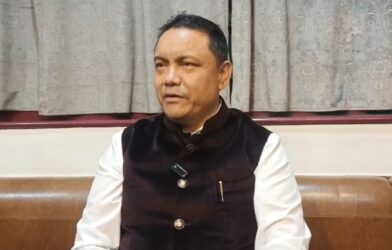

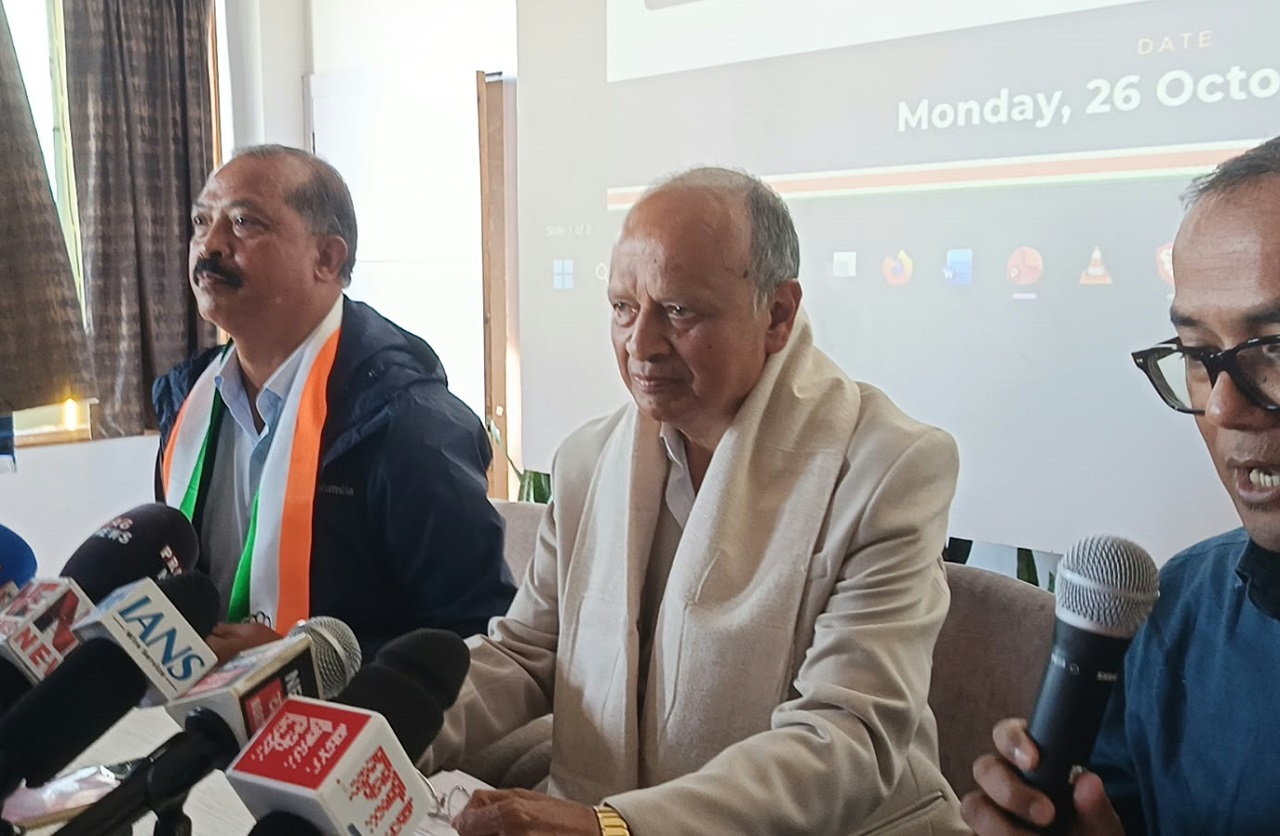
Shillong, October 26: Former Rajya Sabha MP Dr. W. R. Kharlukhi on Monday said his departure from the National People’s Party (NPP) was voluntary, rejecting suggestions that he had been sidelined or humiliated after completing his parliamentary term.
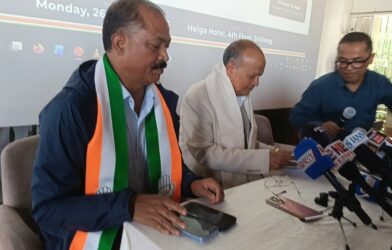
Speaking to reporters after declaring his support for Meghalaya Pradesh Congress Committee (MPCC) president Vincent H. Pala ahead of the Shillong parliamentary by-election, Kharlukhi said he did not intend to blame anyone for his decision to leave the NPP.
“When I leave a party, I never blame anybody,” he said, maintaining that his political decisions were his own.
Asked whether his support for Pala could eventually lead to him joining the Congress, Kharlukhi declined to make a commitment but left the possibility open.
“When we reach the bridge, then we will cross the bridge,” he said.
Kharlukhi also denied that he had stepped down as party president because he felt marginalised. He said he had served as president for around 17 years during his association with the Nationalist Congress Party (NCP) and the NPP and believed it was time to give someone else an opportunity to lead.
Explaining his decision to support Pala, Kharlukhi cited the Congress’s opposition in Parliament to the FCRA-related bill, saying the party’s position on issues affecting minorities had influenced his decision.
He maintained that the matter should be viewed from a national perspective, arguing that the key question was which party could effectively counter the BJP at the national level.
Reflecting on his political career, Kharlukhi said he had left parties while they were in power and had never abandoned a party simply because it was out of power.
He also rejected suggestions that the NPP’s growth should be credited to him alone, stressing that the party’s achievements were the result of collective leadership.
Responding to questions about the BJP’s increased strength in the Meghalaya Assembly following the entry of legislators from another party, Kharlukhi said the party’s electoral standing would ultimately be determined by voters.
Drawing a comparison with the Trinamool Congress’s expansion through the induction of Congress legislators before the 2023 Assembly election, he said changes in legislative strength alone did not necessarily establish public support.
Kharlukhi also defended his earlier position during the reservation policy debate, saying it stemmed from concerns over divisions between the Khasi-Jaiñtia and Garo Hills regions.
He maintained that leaders sometimes had to take unpopular positions when they believed the wider interests of the state were at stake.