
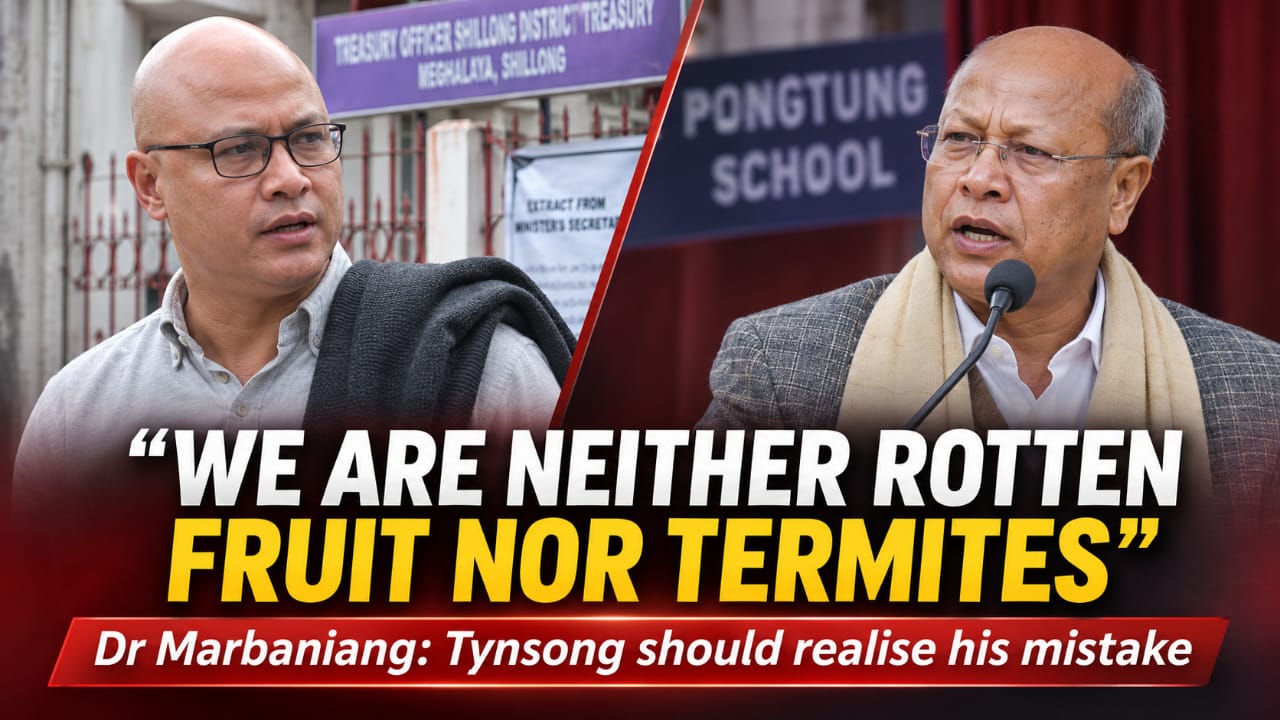
Shillong, November 19: Dr David Feral Marbaniang criticised Deputy Chief Minister Prestone Tynsong for comparing teachers to “rotten fruit” and “termites”, describing the remarks as unfortunate for someone holding such a senior public office.
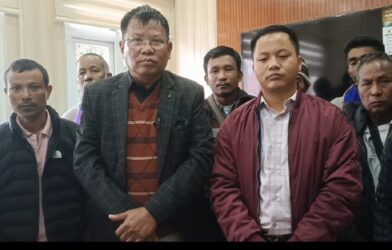
Marbaniang was speaking after taking part in a black flag protest outside the Meghalaya Board of School Education (MBoSE) office on Thursday. He said college teachers had joined the demonstration to express solidarity with fellow teachers.
He said teachers did not enjoy protesting or staying away from their classrooms but had been compelled to take to the streets because they believed their legitimate rights had been affected by government policies over the past few years.
Marbaniang appealed to parents, guardians and students to understand the reasons behind the agitation. He said the protest was not merely about teachers’ rights but also concerned the strength of educational institutions and the future of students.
He maintained that a stronger education system would benefit society and encourage future generations to take up the teaching profession.
Reacting to Tynsong’s remarks, Marbaniang described the comparison as “most unfortunate”. However, he said he would not demand an apology, arguing that an apology made only under pressure would have little meaning.
He also defended the standard of education in deficit institutions, referring to recent university examination results. He claimed that students from these institutions had performed well and said their achievements should be recognised. However, the precise figures mentioned during his remarks could not be independently established.
Marbaniang urged elected representatives to exercise caution while making public statements, warning that remarks against teachers could also upset students and parents.
Responding to the “termites” comparison, he said teachers could instead turn their attention towards challenging corruption and wrongdoing within the corridors of power.
He further called on the government to listen to public dissatisfaction and ensure good governance. While acknowledging the contributions of some political leaders to the state, he cautioned those in power against becoming arrogant.
“No one is indispensable,” he said.