
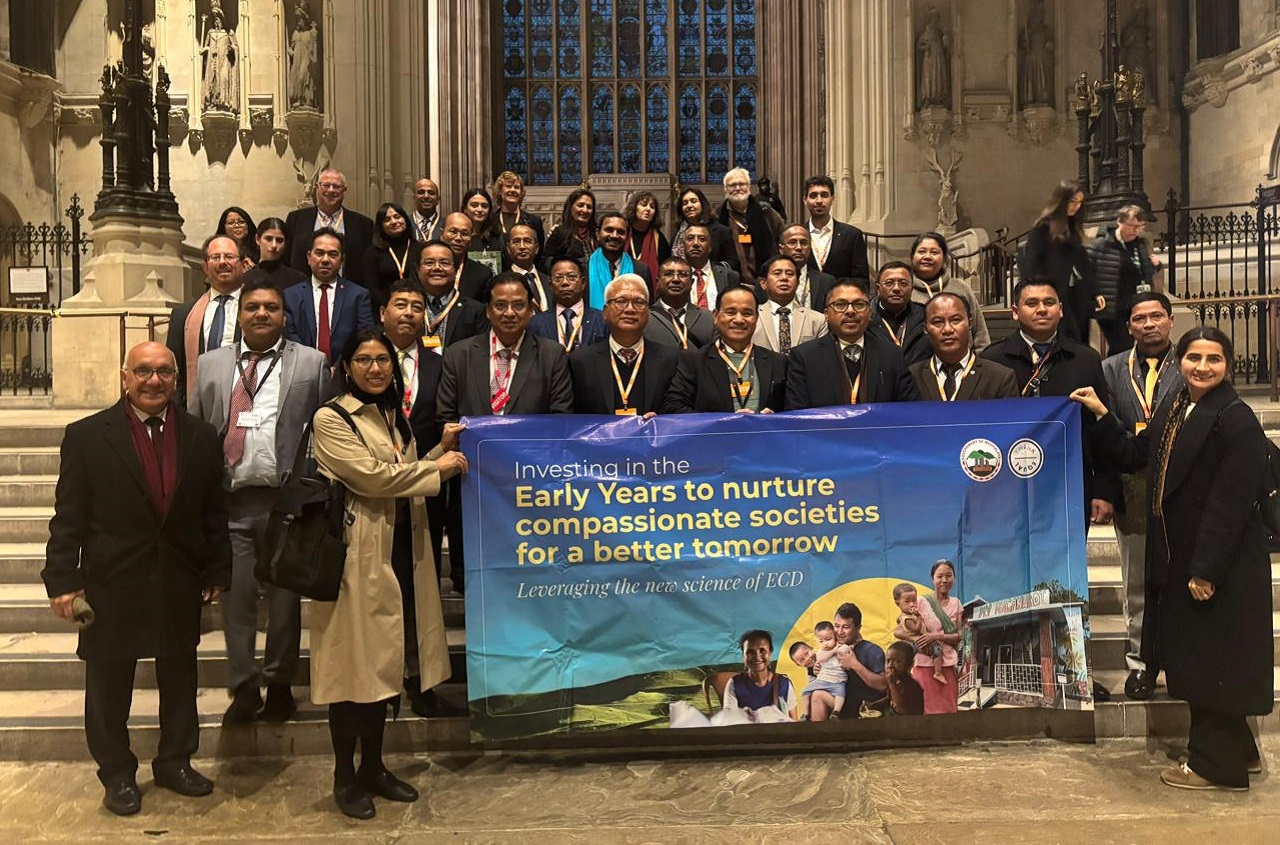
Shillong, November 24: Meghalaya has taken its Early Childhood Development (ECD) initiative to the UK Parliament, with a parliamentary dialogue held at Westminster, London, on November 11 bringing together legislators from the State, UK representatives, researchers and international advocates to discuss the importance of investing in children’s development.
The dialogue, organised by the Government of Meghalaya in collaboration with global education organisation Think Equal, was led by Meghalaya Legislative Assembly Speaker Thomas A. Sangma and attended by 20 legislators from the State.
The discussions focused on strengthening early childhood development through public investment, governance, healthcare, nutrition, early learning and social and emotional wellbeing.
Sharing Meghalaya’s experience, Additional Chief Secretary Dr Sampath Kumar said evidence of childhood stunting and nutritional challenges had prompted the State Government, under the leadership of Chief Minister Conrad K. Sangma, to rethink its spending priorities and recognise the importance of investing in children’s development.
He said Meghalaya’s Early Childhood Development Mission follows a whole-of-government and whole-of-society approach, bringing together health, nutrition, early learning, responsive caregiving and parental wellbeing.
The initiative has supported the training of approximately 22,000 frontline functionaries. Its Early Childhood Development Fellowship has also engaged more than 1,600 young people across all 12 districts of the State.
Dr Julian Huppert, former Member of Parliament for Cambridge and Founding Director of the Intellectual Forum at Jesus College, University of Cambridge, stressed the need for governments to increase investment in the early years of a child’s life rather than relying mainly on interventions after problems emerge.
He also highlighted the importance of independent research and evidence in identifying effective interventions and expanding successful programmes.
Think Equal Founder and President Leslee Udwin said early childhood development goes beyond academic learning, as the social and emotional skills developed during the formative years shape how children relate to themselves, others and society.
Through its partnership with Think Equal, Meghalaya is introducing structured social and emotional learning in approximately 6,188 early childhood development centres, with a planned reach of around 200,000 children.
The dialogue also highlighted Greater Manchester’s experience in building supportive environments for children and families through political leadership and cooperation among public institutions. The discussions opened opportunities for continued knowledge-sharing and collaboration between Meghalaya and Greater Manchester.
Participants also explored cooperation in research, independent evaluation, institutional learning and international policy exchange, including the possibility of establishing a Commonwealth learning platform.
In his vote of thanks, Speaker Thomas A. Sangma said the exchange reflected the shared aspirations of different countries to secure a better future for children.
He expressed hope that the dialogue would lead to continued learning and collaboration and strengthen efforts to make early childhood development a priority across government and society.
The engagement marked another step in Meghalaya’s efforts to place early childhood development at the centre of public policy, with a focus on improving children’s health, learning and overall wellbeing.