
Shillong, November 26: The proposed Shillong Peak Ropeway Project has sparked debate over environmental protection, customary land rights and the extent of public consultation before the project was approved.
The controversy has brought attention to the legal status of Green Blocks, the authority of traditional institutions under the Khasi customary system and the need for transparency regarding land agreements and environmental clearances.
One of the issues raised concerns the definition and protection of Green Blocks under the United Khasi and Jaintia Hills Autonomous District (Management and Control of Forests) Act, 1958.
Under the legislation, Green Blocks refer to forest areas belonging to families, clans or joint clans, or situated on Raid land, which are set apart to preserve Shillong’s scenic character and protect its water supply.
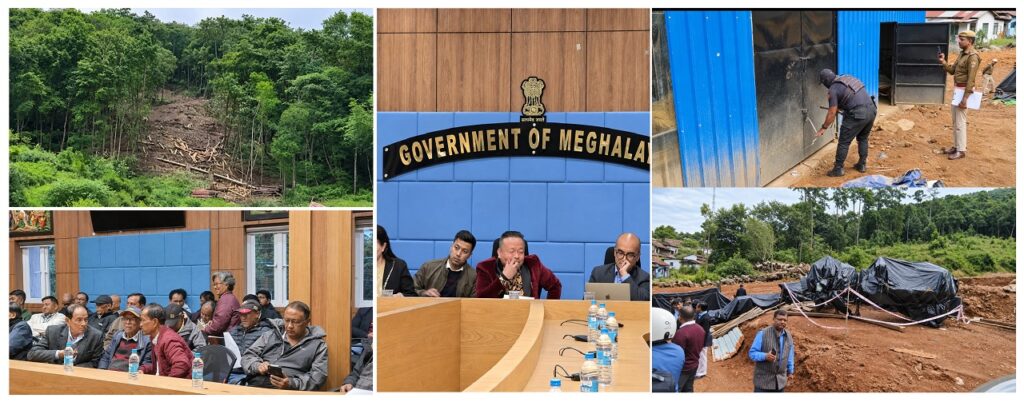
However, questions have also been raised over references to a ‘Green Block Order, 1952’, with the need to establish the exact legal status of such an order through original official documents and notifications.
The debate has also drawn attention to the Instrument of Accession signed by the Khasi States and accepted by the Governor-General on August 17, 1948, which formed part of the constitutional transition through which Khasi institutions and customary practices received protection.
The legality of the ropeway project, however, would depend on the classification and ownership of the land involved, the applicable customary and statutory provisions, and whether the required permissions were obtained from the relevant authorities.
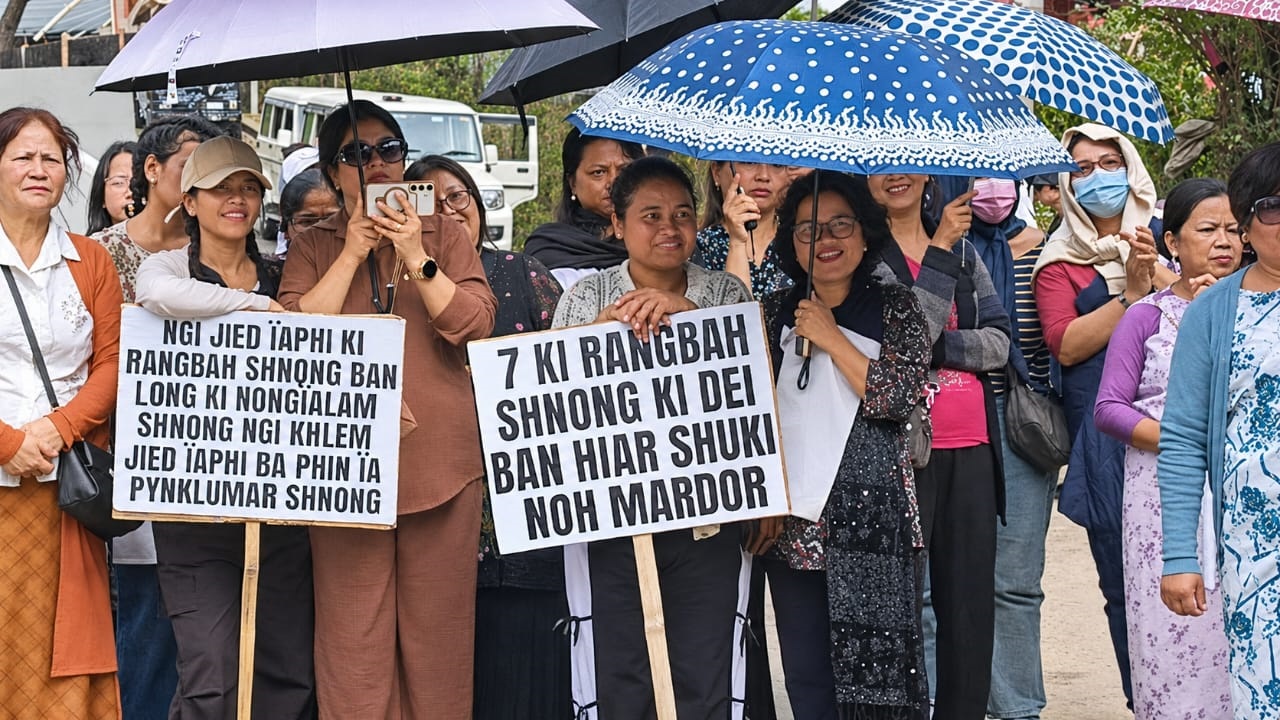
Another major concern relates to the role of the seven Rangbah Shnong under Raid Laban in approving the project.
The Administration of Mylliem Syiemship Rules, 2015, recognises the Rangbah Shnong as an office-bearer representing the Dorbar Shnong and implementing its decisions. However, questions have been raised over whether the necessary Dorbar resolutions and approvals from the Syiem and his Dorbar were obtained before the project agreements were finalised.
The Government has maintained that it obtained an NOC from the Dorbar Shnong and entered into a land lease agreement covering 7,416.95 square metres. It has also stated that letters were sent to the seven Rangbah Shnong requesting them to mobilise residents for consultations.
However, concerns remain over whether residents were adequately informed and given an opportunity to express their views before the agreements were signed.
The Joint Action Committee, led by President Deborah Marbaniang and General Secretary Dr Linda Marbaniang, has raised concerns over the possible environmental impact of the project, particularly on forests, springs, slopes and water catchment areas.
The committee has expressed apprehension that tree felling, drilling, excavation, construction of access roads and the movement of heavy machinery could disturb the ecological balance of Shillong Peak.
The cultural and spiritual significance of Lum Shyllong has also emerged as an important aspect of the opposition, with concerns that the project could affect a landscape closely associated with Khasi identity, traditional beliefs and heritage.
Meanwhile, the State Government has defended the approximately ₹151-crore project, which reportedly involves an 896-metre passenger ropeway, six tower bases and two terminal points.
Officials have maintained that the proposed alignment lies outside the principal catchment areas and that the project will not affect existing drinking-water sources.
The Government has also stated that the project does not attract the usual requirements for prior environmental clearance or a public hearing under the applicable Environmental Impact Assessment notification. However, an Environment and Social Management Plan has reportedly been prepared because the project is externally funded.
Clearances or no-objection certificates from authorities, including the Army, Air Force and Airports Authority of India, have also been cited by the Government.
The project is expected to promote tourism, create employment opportunities and generate revenue, according to the Government’s position.
However, questions relating to land ownership, forest protection, customary approvals and public participation remain part of the ongoing debate.
The demand for greater transparency has led to calls for the Government to make public the land lease agreement, NOC, Dorbar resolutions, land classification records, Green Block maps, forest permissions, tree inventory, hydrological assessment and Environment and Social Management Plan.
There have also been calls for independent environmental assessments, particularly concerning the possible impact on water sources, slopes and surrounding forest areas.
The controversy has highlighted the need for a transparent consultation process involving residents, women, landowners, clans, environmental experts and traditional institutions.
With the Government and local stakeholders expected to continue discussions over the project, the central issues remain the protection of the environment, respect for customary institutions and the extent to which affected residents have been involved in decisions concerning the proposed development.