
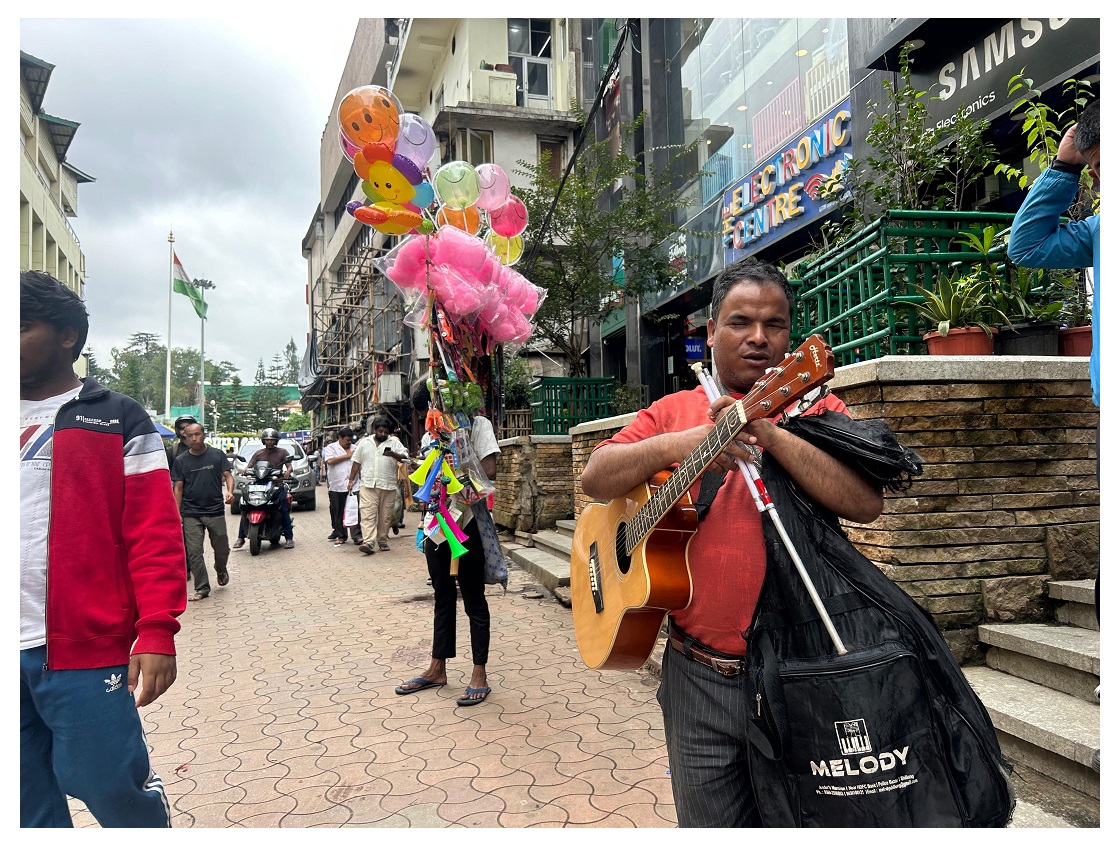
Shillong, July 16, 2025: Amidst the ceaseless motion and noise of Police Bazar, one figure stands apart—not for grandeur, but for grit. A blind and physically disabled man, known by many but named by few, has become a symbol of dignity, self-reliance, and quiet defiance against despair.
Stationed daily along the bustling corridor, he does not beg. He performs. With a speaker, a few modest instruments, and an unshakable will, he plays music that draws passersby into a rare moment of pause and reflection. His tunes, guided not by sight but by sound and soul, transcend mere entertainment—they are acts of resistance and resilience.
“He doesn’t ask for anything,” remarked a local shopkeeper. “He works, and that is why people respect him.”
In 2024, his silent perseverance gained wider recognition when he performed at a government-organized football event for individuals with disabilities. On that day, he was not merely a performer—he was a living testament that disability does not define capacity.
While state welfare programs offer limited pensions and basic medical assistance, he advocates for deeper change. “We don’t need just charity,” he told a social worker. “We need training, employment, and recognition.” His message echoes a larger call from the disabled community—demanding inclusion, not sympathy.
His presence has become an integral part of Police Bazar’s identity. To the thousands who pass him daily, he is not just a man playing music—he is a reminder of what it means to live with purpose, even in the face of adversity.
As Meghalaya looks toward inclusive growth and equitable development, his story challenges policymakers to think beyond tokenism. True empowerment, as he exemplifies, lies in opportunity, not handouts.
In a city always in motion, his song remains still—but its resonance is unmistakable.