

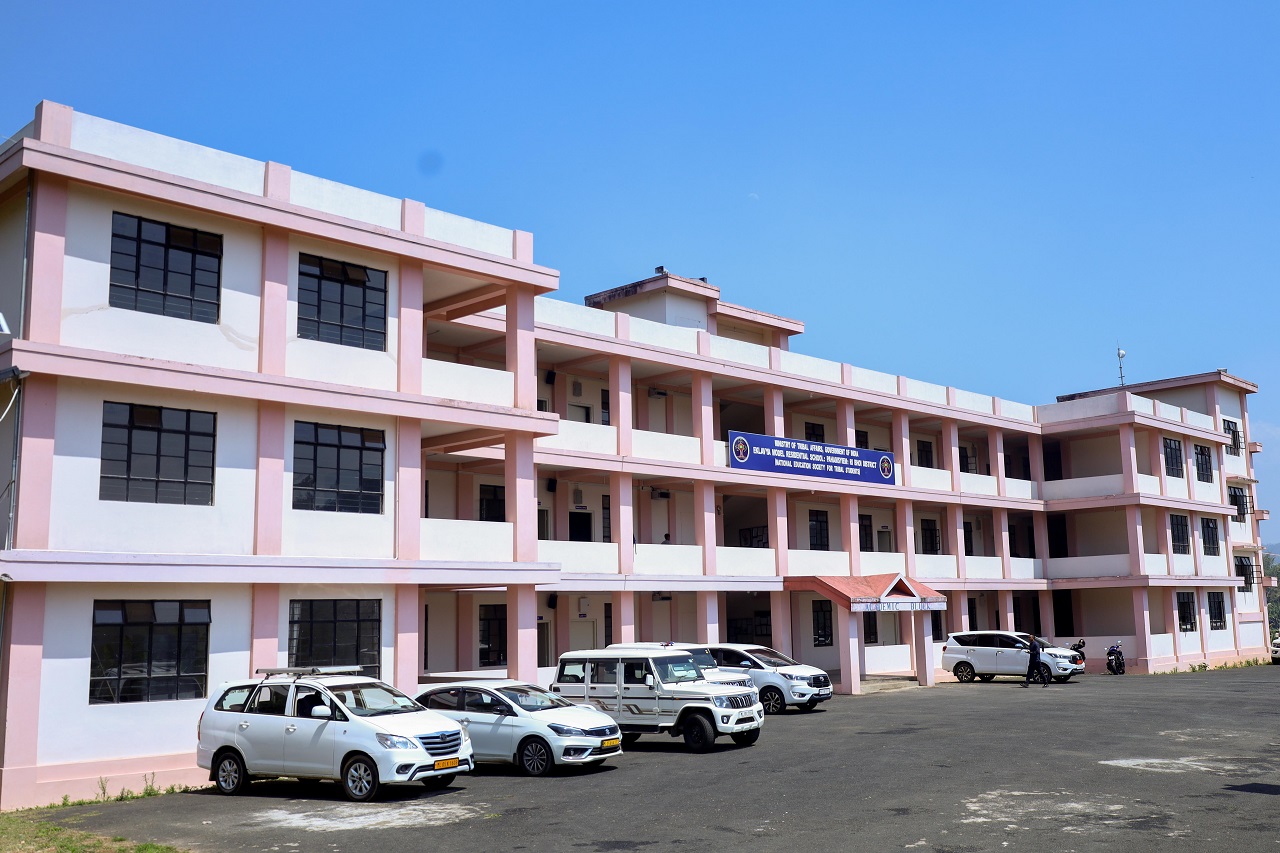
SHILLONG, MAR 25: The Committee on Scheduled Castes and Scheduled Tribes (SC/ST) of the Meghalaya Legislative Assembly on Wednesday inspected the Eklavya Model Residential School (EMRS) at Pahamsyiem, Nongpoh, to assess its infrastructure and operational readiness.
The inspection was led by Committee Chairman and Nongstoin MLA Gabriel Wahlang, along with committee member Ampareen Lyngdoh and Nongpoh MLA Mayralborn Syiem.
During the visit, school authorities highlighted several initial challenges and infrastructure gaps that need to be addressed to ensure smooth functioning and long-term sustainability of the institution. The Committee expressed particular concern over deficiencies in the girls’ hostel, which currently lacks essential facilities.
Speaking to the media, Wahlang said that inputs and observations gathered during the inspection would be compiled into a detailed report to be submitted to the state government for necessary intervention.
He stressed that identifying and addressing early-stage issues is crucial to ensuring that upcoming EMRS institutions in Meghalaya are adequately equipped to deliver quality education in line with prescribed standards. He added that the experience from the Pahamsyiem school would serve as a guiding framework for strengthening similar residential schools across the state.
The Eklavya Model Residential Schools (EMRS) are a flagship initiative of the Ministry of Tribal Affairs aimed at providing quality middle and secondary education to Scheduled Tribe (ST) students, particularly in remote and underserved areas.
In Meghalaya, the Pahamsyiem EMRS is the first fully functional institution under the scheme, having commenced its academic session in December 2025. A second EMRS at Samanda in East Garo Hills became operational in early 2026.
The state government has sanctioned 38 EMRS institutions across Meghalaya as of 2025, with an estimated investment of ₹1,400 crore. The initiative aims to establish at least one such school in every eligible block with a significant tribal population, thereby expanding access to quality residential education.