
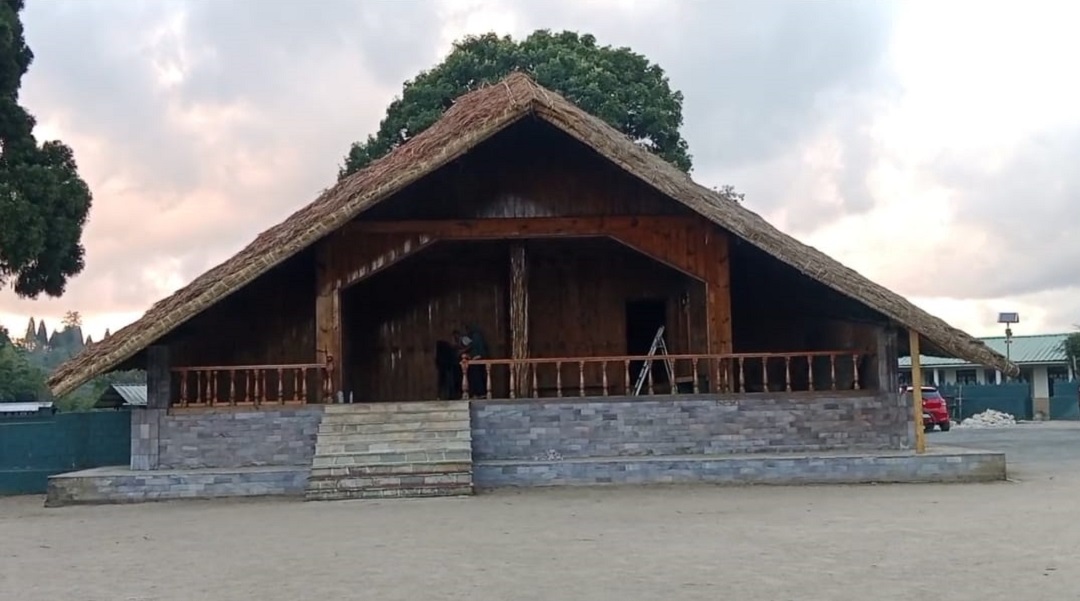
Shillong, 21 October 2025: The people of Hima Khyrim will celebrate the annual Blei Nongthaw Nongbuh festival—known locally as the Nongkrem Dance or Pom Blang Syiem—from 5th to 7th November at Iing Sad Smit.
Thousands of residents of Hima Khyrim are expected to take part in the festivities, performing traditional rituals and offering prayers. The event will be inaugurated by Paiem ka Hima Khyrim, Dr. Balajied Sing Syiem, who has emphasized the deep cultural significance of the festival. He noted that the celebration is an essential tradition of the Hima, aimed at educating and connecting the younger generation with their rich heritage.

During the festival, devotees will offer prayers to God and contribute to the Hima through offerings known as “U Syniang u Bynhei.” These contributions symbolize gratitude and unity among the people. Dr. Balajied Sing Syiem highlighted that organizing the Nongkrem Dance is both a spiritual duty and a cultural responsibility—an act of thanksgiving to the ancestors and a reaffirmation of identity and faith.
A central part of the festival involves the preparation of Iing Sad Iing Syiem, which holds great significance in the Nongkrem celebrations. Historically, the Syiem, Syiem Sad, Jir Kiri Syiem, and Ling Sad performed sacred rituals at Nongkrem, which are now conducted at Smit. Among the most revered traditions is the ceremonial Sop Iing Sad, performed once a year during Sngi Rynghep (Traditional Market Day). The ritual includes offerings of pyramid-shaped roofs (Satep), blessed by the priest (Sohblei Mawroh).
The construction of Iing Sad follows ancient methods, using sacred pillars (Rishot) crafted from Dieng Sning (Oak), Lyntang Kseh (Special Pine), U Traw (Thatch), U Siej, and U Thri. These materials are carefully collected from regions such as Rasong, Rangphlang, and Ri-Bhoi. Each pillar has a specific symbolic name according to its placement within the hall, including Shah Ksew (Main Corridor), Rishot Lai Sawkher, Rishot Lai Lyngdoh, and Rishot Raid Mawlieh.
The Shlur (Main Corridor) of Ling Sad also serves as a sacred communication channel, where Kyrwoh (messages) from the Syiem are sent to six Lyngdohs. These Lyngdohs, in turn, share guidance and instructions with all the villages under Hima Khyrim, particularly concerning rituals and the proper stewardship of ancestral lands.
Community leaders and residents play an active role in preserving and passing on these sacred traditions, ensuring that the customs, knowledge, and spiritual practices of Hima Khyrim endure for generations. The Nongkrem Dance continues to serve as a vibrant expression of unity, gratitude, and the deep-rooted cultural heritage of the Khasi people.