

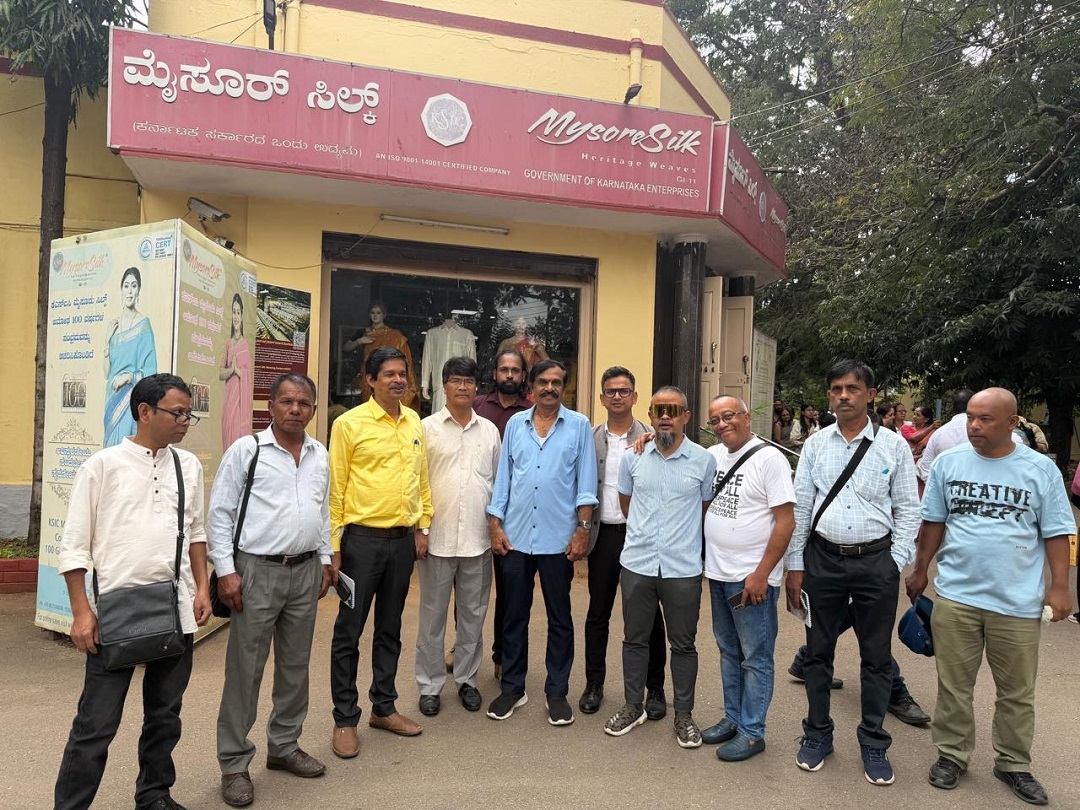
Shillong, Oct 21: A delegation of journalists from Meghalaya and Tripura, as part of the Press Tour organised by the Press Information Bureau (PIB), Shillong, recently visited the prestigious Karnataka Silk Industries Corporation Ltd. (KSIC) in Mysuru. The visit provided an immersive insight into the legacy, craftsmanship, and enduring allure of Mysore Silk, one of India’s most iconic handloom traditions.
The Mysore Silk Weaving Factory, established in 1912 by Maharaja Sri Nalvadi Krishnaraja Wodeyar, was originally set up to supply fine silk garments to the royal family. With a legacy spanning over a century, the factory stands today as a proud symbol of India’s textile excellence. Starting with only 10 looms, it has grown to 138 looms, many of which were originally imported from Switzerland — the first of their kind in India.
Following India’s Independence, the factory came under the Mysore State Sericulture Department before being transferred to KSIC in 1980, where it continues to function as a government enterprise.
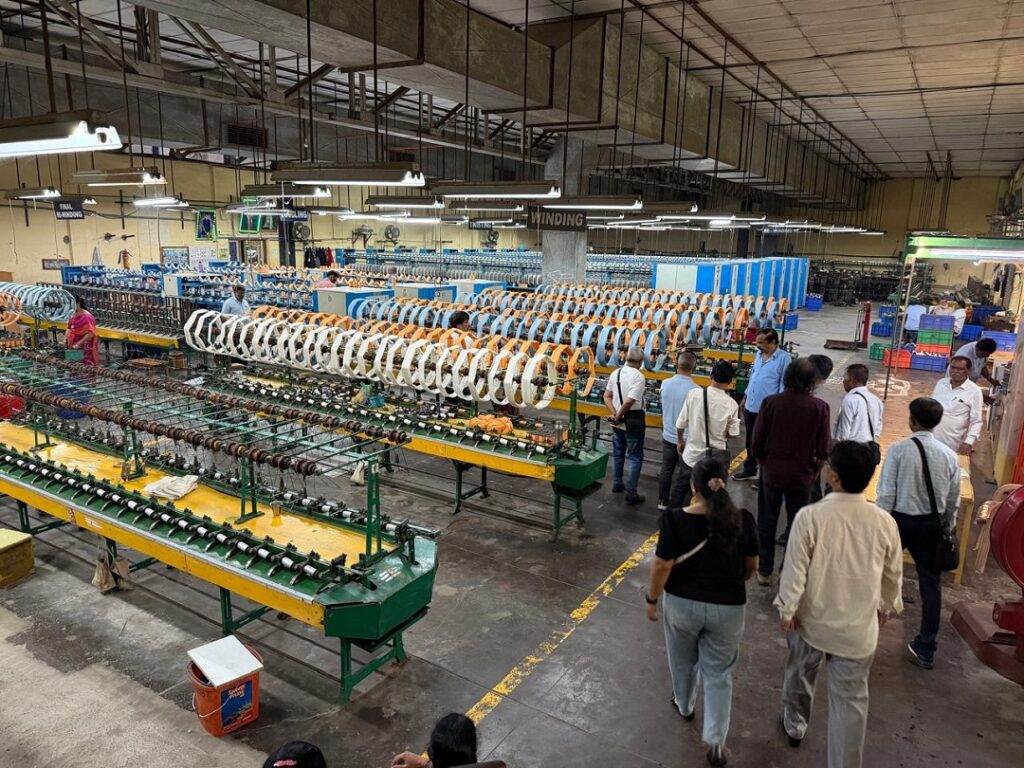
During the factory tour, the delegation received an in-depth orientation from Shri Krishna Kumar, Dyeing Master at KSIC, who explained each stage of silk production — from degumming and eco-friendly dyeing of mulberry silk yarns to the intricate handweaving process using real gold and silver zari. His detailed demonstration reflected the seamless blend of traditional artistry and modern precision behind every Mysore Silk saree.
KSIC currently produces around 350 sarees daily, each known for its vibrant colours, rich texture, and authentic 22-karat gold zari. Depending on the intricacy of design and zari content, sarees range from ₹18,000 to ₹2.5 lakh. The factory’s Mysuru showroom remains a major attraction, with customers queuing up early every morning — a testament to the silk’s timeless appeal and trust built over generations.
While exploring Mysore’s silk heritage, the journalists from Meghalaya also drew attention to their home state’s indigenous Eri Silk, also called Peace Silk for its cruelty-free production process. Known for its breathability, sustainability, and soft texture, Eri Silk holds deep cultural and ecological significance in the Northeast.
The journalists discussed how Eri Silk could gain national and international recognition through better exposure, branding, and institutional support — similar to the success story of Mysore Silk.
They noted that such press tours serve as vital platforms for cross-cultural exchange, fostering a deeper appreciation of India’s diverse handloom traditions. They also emphasised that promoting traditional industries like silk weaving not only helps preserve cultural heritage but also contributes to economic growth and sustainable livelihoods.