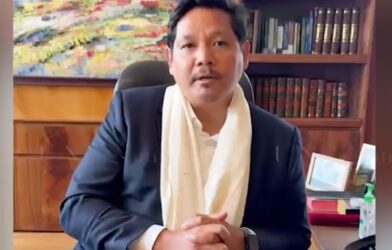


Meghalaya’s political climate is undergoing a visible transformation. What was once a relatively predictable contest dominated by established parties has now evolved into a high-stakes battleground of ideas, leadership, and public expectations. At the centre of this transformation stands the Voice of the People Party (VPP), led by Ardent Miller Basaiawmoit, which has emerged as a defining force challenging the governance model of the ruling National People’s Party (NPP) under Chief Minister Conrad K. Sangma.
The VPP’s rise is not merely a political event; it is a reflection of shifting public mood. Across districts, from urban centres to rural blocks, people have expressed frustration over slow execution of policies, unemployment pressures, and government silence on issues like influx and indigenous identity. This political shift is rooted not in ideology alone, but in emotion — the sentiment that accountability in governance has been missing for far too long.
The VPP’s Appeal: A Voice for Reform
The VPP has struck a chord with a growing constituency — particularly the youth — who are increasingly unwilling to accept traditional political rhetoric. Its emphasis on transparency in recruitment, reservation reform, and protection from demographic threats has tapped into deep public anxieties.
Ardent Miller Basaiawmoit has positioned the VPP as a moral and corrective force. His rhetoric of “people before party” resonates strongly in a state where political trust has eroded. The party’s strength lies in its ability to articulate discomforts that many feel but rarely hear acknowledged from the establishment.
Yet, momentum must eventually translate into policy maturity. For the VPP, the real test will be demonstrating that its activism can evolve into practical governance alternatives — beyond rallies and public pressure.
The NPP’s Task: Defend Record, Restore Confidence
On the other side, the NPP leadership insists that development cannot be measured by slogans and emotional appeal. The government argues that long-term infrastructure projects, welfare initiatives, and national partnerships take time and require administrative continuity. From road networks to JJM water supply and expansion of IT services, the NPP positions itself as the party of deliverable results.
However, a government’s accomplishments mean little if the public perceives opacity. The NPP’s greatest challenge today is not policy — but perception. Allegations of tender irregularities, slow departmental functioning, and lack of responsiveness have damaged confidence. Unless addressed transparently, even genuine achievements risk being overshadowed by distrust.
The Battle Ahead: Not Just Parties, But Philosophies
The confrontation between the VPP and NPP represents two contrasting visions for Meghalaya:
VPP: reform, accountability, indigenous protection
NPP: continuity of development, economic growth, administrative stability
Neither side can afford complacency. The VPP must prove capability beyond criticism; the NPP must demonstrate humility and transparency in power.
What the People Expect Now
The people of Meghalaya are no longer passive spectators. They demand answers, accountability, and respect — not political theatrics. The next political cycle will not be decided by party loyalty, but by performance.
The editorial message for both sides is clear:
To the VPP: It is not enough to expose weaknesses — you must present credible, implementable solutions.
To the NPP: Development without trust is fragile. Restore transparency and communication before it is too late.
Conclusion
Meghalaya is at a pivotal moment. Whether the state moves toward new leadership driven by reform and public pressure, or reinforces existing governance in the interest of continuity, will depend entirely on the ability of its leaders to listen, deliver, and evolve.
The future will belong to those who rise above rhetoric and respond to the real needs of the people.