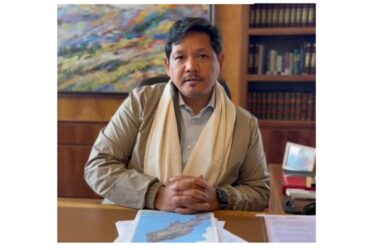


SHILLONG, Dec 9: Chief Minister Conrad K Sangma has acknowledged the challenges surrounding the coal mining crisis in Meghalaya, stating that the issue is far more complex than simply declaring mining activities illegal overnight, particularly given their long history and deep connection to livelihoods in the state.
Speaking on the matter, Sangma said, “I have repeated this a hundred times… For 200 years, mining was done in the way rat-hole or tunnel mining, whatever you call it, and lakhs and lakhs of families were involved in this. Suddenly you come and say the same thing which was okay and legal for 200 years is from tomorrow illegal.”
He stressed that the abrupt enforcement of the ban has had a profound impact on miners and communities dependent on coal. “Obviously, it was a big shock to the people, especially to the miners… livelihood, families, other businesses—all were dependent on it,” he added.
The Chief Minister defended the state government’s efforts in implementing the ban on illegal mining, citing thousands of filed cases, chargesheets, and closures of mines. “Whenever there have been cases where we have been given information that illegal mining has been happening, the government has acted,” he said.
However, Sangma emphasized that the shift away from rat-hole mining requires the development of viable alternatives. “For livelihood to be sustainable in the long run, alternatives have to be given to people. Now, if you want an alternative to mining, you have to come with scientific mining.”
He explained that the transition to scientific and safer mining methods is underway but will take time due to procedural requirements and investment needs. “People have to invest, adapt, and file for different permissions—from Delhi, Coal Ministry, CMPDIL, Government of Meghalaya—so it is going to take time,” he stated.
Appealing for understanding, Sangma said the government must balance legal enforcement with humanitarian concerns. “While we look at the administrative and judicial aspect, we also need to realize the social aspect, the livelihood aspect, and understand the humane side of why this is happening.”
“We will continue to implement the law, but we also need to find alternative livelihoods for the people,” he added.