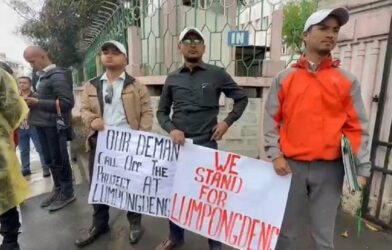


Shillong Dec. 1: Meghalaya continues to confront the long-standing and deeply sensitive issue of unregulated influx and illegal settlements, which has once again come under sharp focus amid renewed debates over who wields greater influence in shaping public policy—the elected government or powerful pressure groups operating across the state.
A Core Issue That Refuses to Fade
For several decades, the question of unchecked migration has remained central to Meghalaya’s socio-political discourse. Prominent pressure groups such as the Khasi Students’ Union (KSU), Hynniewtrep Youth Council (HYC), and Federation of Khasi Jaintia and Garo People (FKJGP) have repeatedly warned that growing influx threatens the demographic balance, land security, and cultural identity of the indigenous tribal communities.
The issue is particularly sensitive given Meghalaya’s relatively small population base, where any demographic shift is felt more rapidly and intensely. The continued absence of a reliable regulatory framework, particularly the long-demanded implementation of the Inner Line Permit (ILP), has heightened public concern.
Illegal settlements—often established without valid documentation or land rights—have also resulted in administrative disputes, social tensions, and demands for stronger enforcement from both civil society and traditional institutions.
Why Pressure Groups Remain Vocal
Pressure groups argue that if left unchecked, unregulated influx will:
Increase competition for limited employment and economic opportunities
Threaten hereditary ownership and control over tribal land
Contribute to cultural erosion and weaken traditional governance systems
These organisations have historically engaged in public demonstrations, inspection drives, and social awareness campaigns, keeping the issue alive in political and public forums. Their consistent agitation has ensured that discussions around ILP, migration control, and border regulation remain at the forefront of government priorities.
Who Holds More Power?
The current debate revolves around whether the government or pressure groups hold greater power in influencing decision-making in Meghalaya.
The Government: Institutional Authority
The state government holds constitutional and administrative power, including:
Law-making and policy formulation authority
Law enforcement capability
Access to resources and institutions capable of long-term governance
Legally, the government remains the strongest institution with the mandate to implement regulatory frameworks such as ILP or anti-encroachment laws.
Pressure Groups: Power of Public Mobilisation
However, pressure groups wield significant grassroots influence:
Strong public support, particularly among students and youth
Ability to mobilise large-scale demonstrations and social pressure
Capacity to influence political narratives and electoral outcomes
In Meghalaya’s civil society–driven environment, pressure groups have often shaped public sentiment more rapidly than state policy processes.
A Delicate Balance
The government holds constitutional and administrative power
Pressure groups hold social and emotional influence
When both sides align, policy changes advance quickly. When they diverge, governance challenges intensify, sometimes leading to public unrest or policy stagnation.
Conclusion
Unregulated influx and illegal settlements are likely to remain defining issues in Meghalaya’s political evolution. While the government is equipped with institutional authority, pressure groups continue to play a crucial role as watchdogs and representatives of community sentiment. The evolving balance between democratic governance and civil activism will continue to shape the state’s identity and strategic future.
As the debate intensifies, effective resolution may ultimately depend on cooperation—not confrontation—between the two forces competing for influence within Meghalaya’s socio-political landscape.
By Carmel Lyngdoh