
Shillong, July 16, 2025: As Shillong presses forward in its efforts to restore order and improve aesthetics in one of its busiest commercial centers, Khyndai Lad, the focus now turns to the city’s street vendors — both a vital part of the local economy and a challenge to urban order.
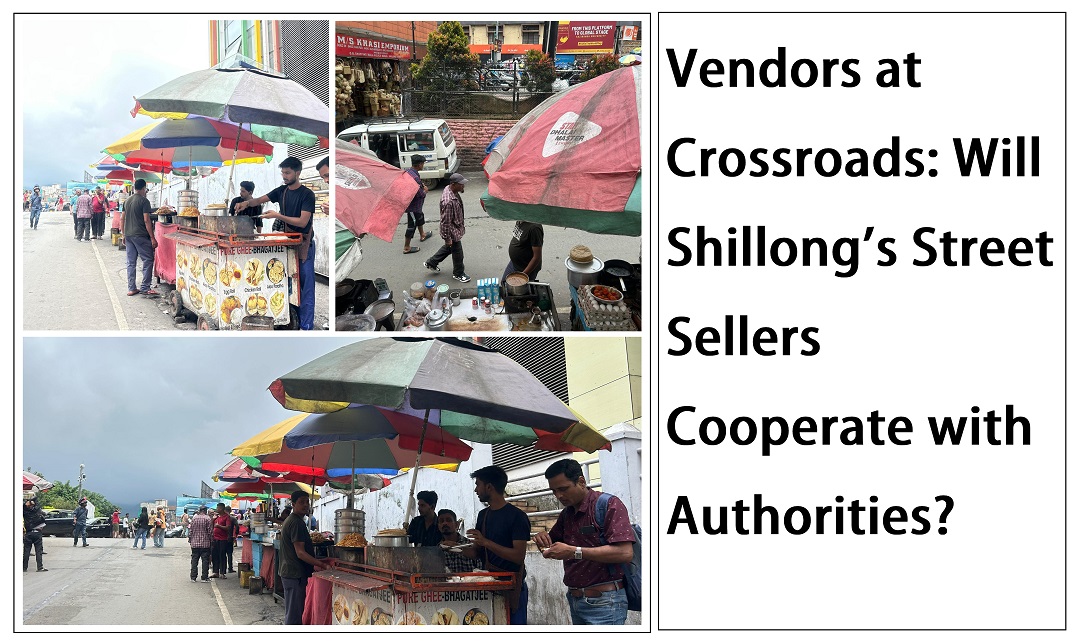
The bustling streets of Khyndai Lad, captured vividly in recent images, highlight the ongoing issues: unauthorized vending, congestion, and increasing pressure on public infrastructure.
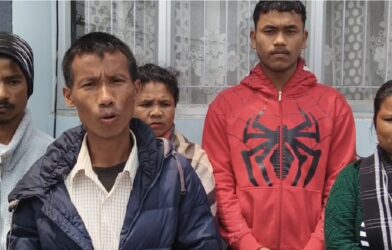
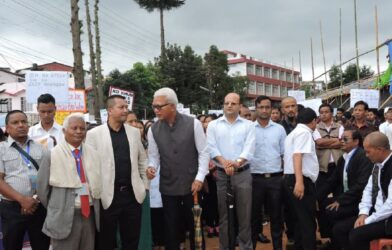
On Wednesday, Subhasis Chakrawarty, the Special Officer appointed by the Hon’ble Meghalaya High Court, chaired a high-level meeting with vendors, district officials, and department representatives at the Deputy Commissioner’s office. The meeting served to reinforce the Court’s directive dated 3 July 2025, which orders vendors to vacate all unauthorized public spaces.
Acting on this directive, the Shillong Municipal Board and the Meghalaya Urban Development Authority (MUDA) have initiated ground inspections to verify the legitimacy of each vending setup. Vendors have been asked to submit documents proving long-term occupation; however, the mandate remains firm: no stalls should obstruct roads, footpaths, or hinder traffic and law enforcement.
In a bid to bring order, the government has proposed the MUDA Parking Lot as a designated vending zone, offering registered vendors a place to continue their business lawfully. But progress has been slow, and confusion prevails. As evident in Khyndai Lad, many vendors continue to crowd alleyways and pavements, worsening traffic snarls and inconveniencing pedestrians.
Officials from the Public Works Department (PWD) have raised concerns about encroachment. According to reports, vendor stalls have blocked roads, left behind waste, and clogged drainage systems, delaying vital infrastructure repair and development efforts.
Despite strong legal backing, actual enforcement on the ground has been inconsistent. While the government reiterates its commitment to urban cleanliness and beautification, these goals remain elusive without the cooperation of vendors themselves.
This ongoing impasse also highlights deeper issues — lack of inter-agency coordination and poor communication with the street vendor community. Moving forward will require not just enforcement but also constructive dialogue, awareness campaigns, and humane solutions that protect both the city’s urban vision and the livelihoods of its people.
Will vendors cooperate with the authorities? That question remains unanswered. For now, Khyndai Lad stands as a symbol of Shillong’s struggle, where tradition, economy, and modernity collide on the city’s most contested streets.