
Lone protester criticises Government and Opposition over deteriorating road conditions
Shillong, August 28: Nicky Boy Kharkamni, popularly known as Bah Hei Ka Pla, has criticised Deputy Chief Minister and PWD Minister Prestone Tynsong, along with all 60 MLAs, over the deteriorating condition of roads across Meghalaya.
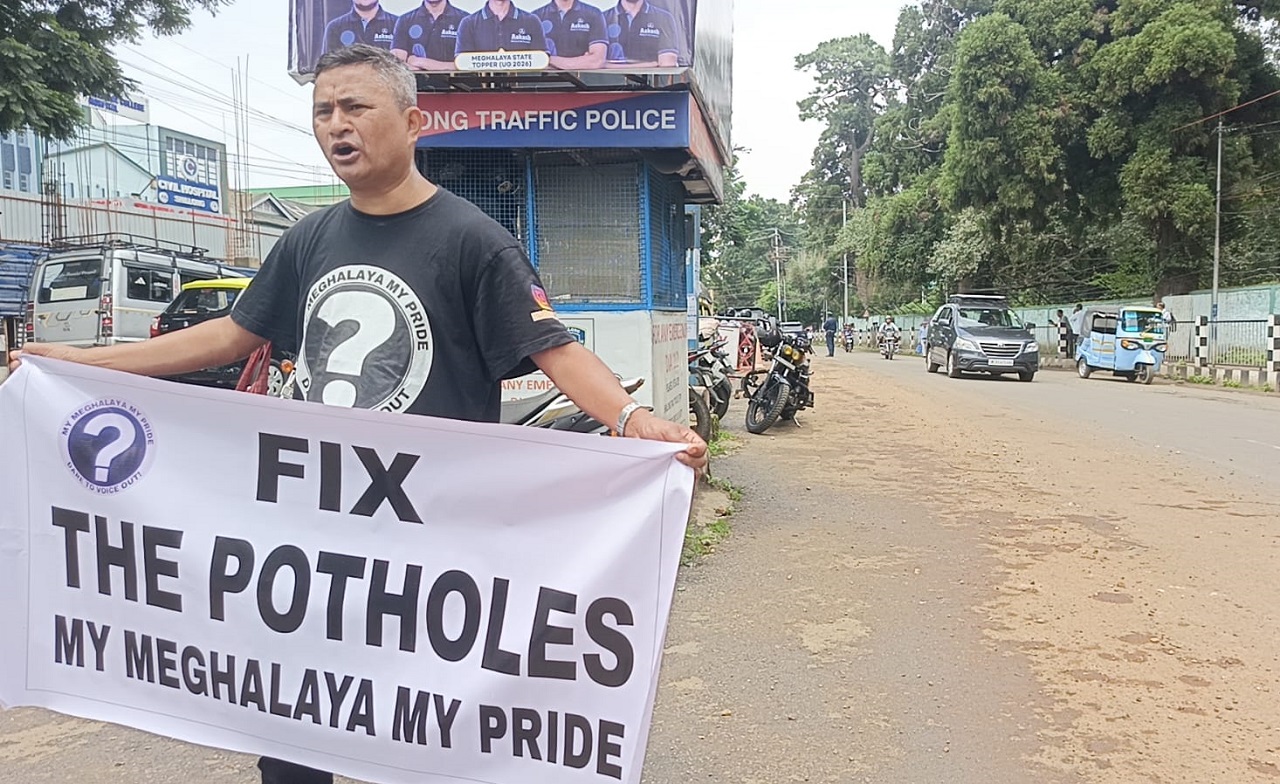
On the fifth day of the Assembly’s Autumn Session, Kharkamni staged a lone protest outside the Assembly with a placard, questioning whether the problems faced by commuters were receiving adequate attention in the House.
He displayed the placard to draw the attention of the Chief Minister, ministers and legislators arriving at the Assembly, particularly Tynsong, who is in charge of the Public Works Department.
Speaking to reporters, Kharkamni questioned why repairing damaged and pothole-ridden roads was not being treated as an urgent priority despite their direct impact on the daily lives of residents.
He said commuters continued to face hardship and expected their elected representatives to raise the issue in the Assembly. He also criticised the Opposition for what he described as its failure to press the Government more forcefully for accountability over the state of the roads.
According to Kharkamni, representing the concerns of the public was the responsibility of every legislator, not only those holding ministerial positions.
He also questioned the response of PWD engineers, district authorities and magistrates who regularly travel on the affected roads. He asked why visible damage had not resulted in timely repairs and criticised what he described as the shifting of responsibility between different authorities.
Kharkamni further questioned how development funds were being utilised when essential road repairs remained pending. He argued that development should be reflected in the condition of roads used daily by ordinary citizens.
Meanwhile, he urged residents to move beyond expressing grievances on social media and directly seek answers from their elected representatives.
Citizens’ responsibilities, he said, do not end with casting their votes. They must continue to raise issues affecting their communities and hold their elected representatives accountable for the responsibilities entrusted to them.