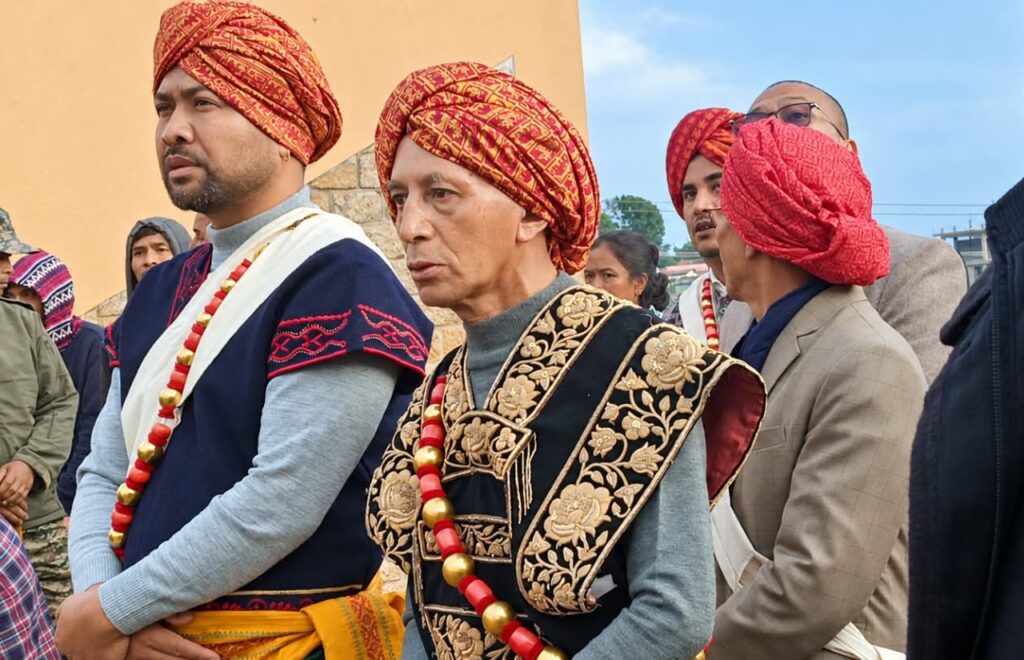

Shillong, November 1: The annual Pomblang Syiem, popularly known as the Nongkrem Dance, commenced at Smit on October 31, with Khyrim Hima performing its traditional rites, including prayers, offerings, ceremonial sacrifices and customary dances.
On November 1, the observances continued with Pomblang Iewduh, an important part of the annual ceremony. The rituals began at the Iingsad, the traditional ceremonial house at Smit, before a procession proceeded to the sacred hill for prayers and sacrificial rites.
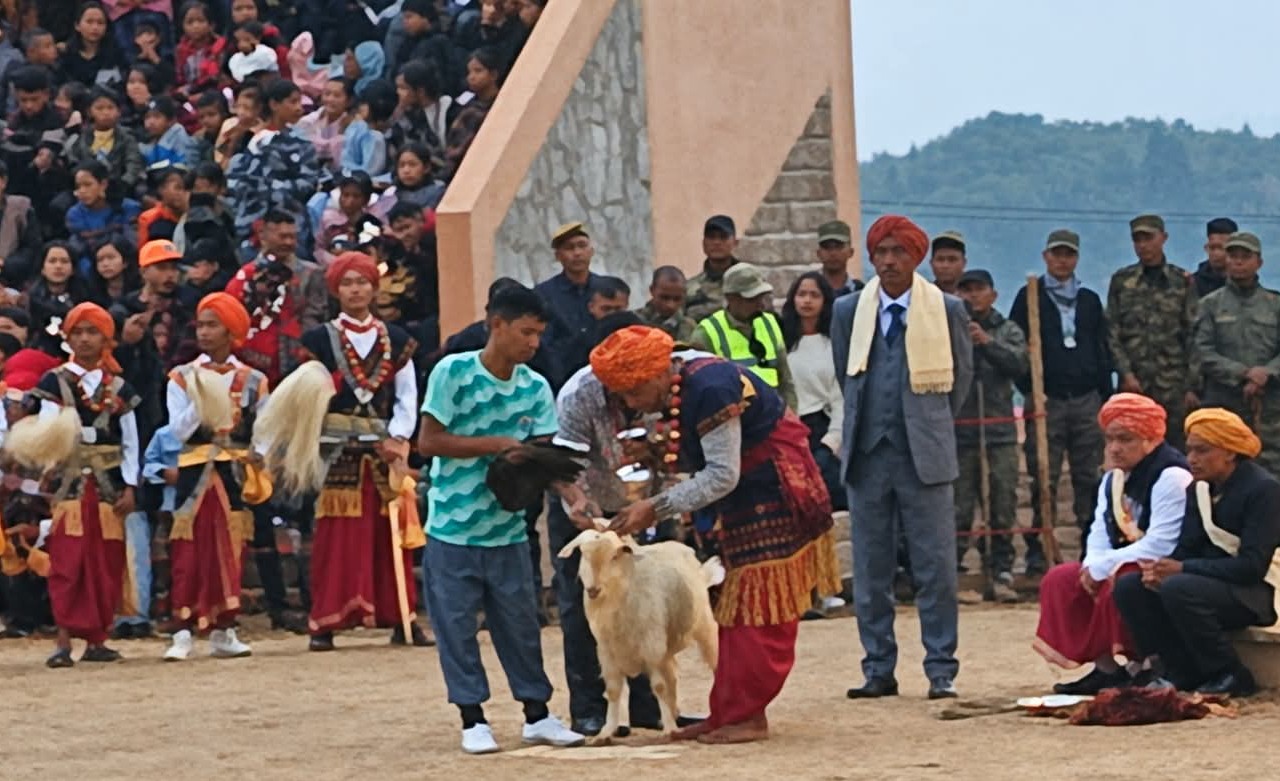
One of the key rituals at Lum Pomblang Iewduh is the sacrifice of the specially selected ‘Lang Nyngkong’, or first ceremonial goat, performed by one of the Duhalia in accordance with the traditions of the Hima.
The ritual is followed by traditional dances at the site, with the Syiem Khynnah participating alongside the Syiem of Mylliem.
Before the procession leaves the Iingsad, customary ceremonies are performed inside the house, while a group of male dancers performs in the courtyard. In the afternoon, the Syiem distributes betel nuts to the Duhalia before the procession sets out for the sacred hill.
Traditional dancers lead the procession to the accompaniment of drums and the tangmuri, a traditional wind instrument. A woman carrying ritual articles in a khoh, a traditional basket covered with a trap, also accompanies the procession. According to custom, she must walk straight ahead without looking back until she reaches the ceremonial site.
Pomblang Iewduh is part of a sequence of observances guided by the traditional Khasi cycle of days. It is preceded by rituals associated with Pomtiah and Umni.
During Pomtiah, customary rites include suit dohkha and the ceremonial sharing of ‘khapiah’ inside the Iingsad. Prayers and offerings are made for the well-being of the Hima and its people, accompanied by traditional drumbeats.
The observances begin in the evening and continue until midnight. The ‘khapiah’ served during the ceremonial meal is prepared with salt and ginger.
Pomtiah is followed by Umni, when further rituals and another ceremonial meal are held inside the Iingsad ahead of Pomblang Iewduh. These ceremonies are not open to public viewing.
Following Pomblang Iewduh, the celebrations move to Lyngka, also known as Pomblang Lyngka, which marks the concluding day of Pomblang Syiem.
The day features a thanksgiving dance in the courtyard of the Iingsad, with male and female dancers, including members of the Syiem’s family, participating in traditional attire and ornaments to the accompaniment of customary musical instruments.
In the early hours of Lyngka, a ritual known as Bujai Blang is performed in connection with the goats brought by the different Raids and Shnat Raids of Khyrim Hima.
After the dancing concludes towards evening, prayers are offered and preparations are made for the ceremonial sacrifice of the goats. The Syiem Khynnah traditionally leads this part of the observance, during which ceremonial gunshots are fired into the air.
The annual Pomblang Syiem reflects Khyrim Hima’s continued commitment to preserving its ancestral faith and customs, with prayers and offerings seeking the welfare and prosperity of the Hima and its people.