

From the traditional Manipuri Ingkhol to climate-resilient farming, indigenous practices offer a strong foundation for natural agriculture
By Dr. Chabungbam Victoria Devi
Assistant Professor, Department of Extension Education, College of Agriculture, Central Agricultural University, Imphal
When conversations around natural and organic farming were still evolving in Manipur and across Northeast India, traditional household farming systems had already been practising many of the principles that are central to natural farming today.
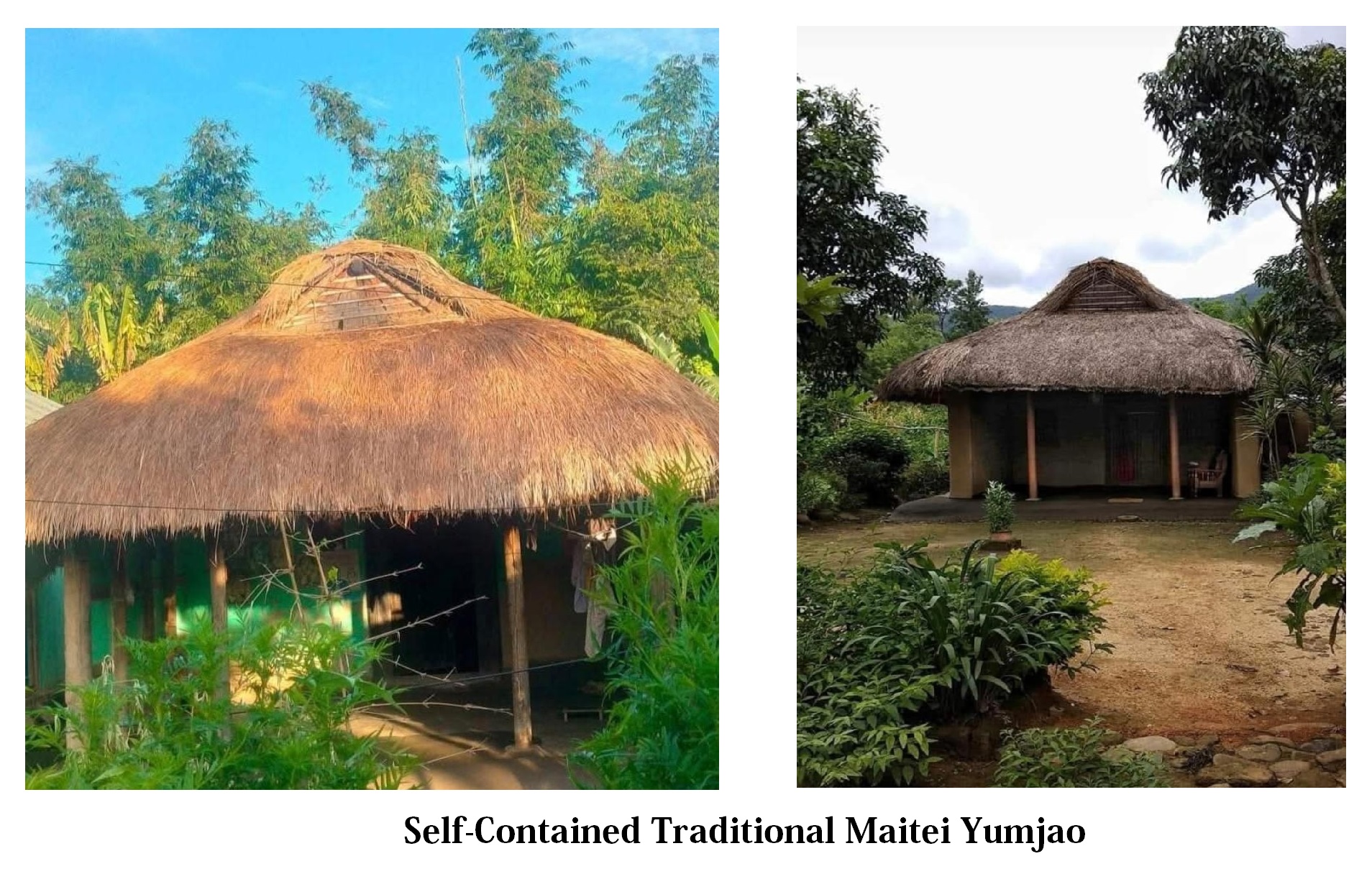
The traditional Manipuri Yum Ingkhol—the kitchen garden associated with the household—can be viewed as an important foundation of this living agricultural heritage. It represents a self-contained food system in which plants, animals, microorganisms and natural resources interact within a household ecosystem.
A natural farm is essentially a complex, self-regulating and deliberately managed ecosystem comprising a diversity of interdependent plants, animals, insects, birds and microorganisms. It seeks to minimise dependence on chemical inputs and unnecessary physical intervention while making productive use of local natural resources.
In many traditional households of Manipur and other parts of Northeast India, these principles were not merely agricultural concepts. They were part of everyday life.
The Traditional Manipuri Home as a Living Food Basket
A traditional Manipuri house, like many traditional tribal houses of Northeast India, was closely integrated with its surrounding natural environment. The house generally had a larger homestead compound known as Yumpham, within which the kitchen garden or Ingkhol formed an essential component.
Usually located at the backyard or along the sides of the Yumjao, the Ingkhol provided fresh food and cooking ingredients for the family. It functioned as a small but diverse ecosystem where different crops, herbs, trees and other useful plants were grown together.
The garden typically contained a combination of perennial trees, seasonal vegetables and aromatic herbs that were closely connected to traditional Manipuri cuisine.
Among the herbs and aromatics were Maroi Nakupi (Chinese chives), Maroi Napakpi (Hooker chives), Mayang-ton (lemon basil) and Laphrit (mint). Vegetables included Yongchak or stink beans, Sougri (roselle leaves), pumpkins, chillies, local beans and different types of gourds.
Perennial plants such as bamboo, banana (Laphoi) and lemon were also commonly integrated into the homestead landscape.
Sustainability Built Into the Garden
The traditional kitchen garden incorporated several simple principles of sustainability.
Fencing was often done using a Shamban, a traditional live fence made from intertwined bamboo or thick shrubs, including Samballei (Lantana camara).
Kitchen waste was not necessarily treated as waste. Organic scraps and ash from the Funga, or cooking hearth, could be transferred to a compost pit within the garden. In this way, household residues were returned to the soil as a source of nutrients.
The proximity between the kitchen garden and the Chakhum Ka also created a direct connection between cultivation and food preparation. Fresh herbs could be harvested just before cooking traditional dishes such as Kangsoi or preparing boiled dishes such as Champhut.
This close relationship between the home, garden and kitchen demonstrates how food production and consumption were historically integrated into everyday household life.
Ponds as Part of the Household Ecosystem
Traditional Manipuri homesteads also incorporated water bodies into the household landscape. Ponds were commonly located in the northeastern corner of the front courtyard.
According to the traditional practice described here, aquatic flowering plants such as lotus (Nelumbo nucifera), water lily (Nymphaea stellata) and Eshing Ikaithabi (Mimosa nilotica) were grown in ponds. These plants were regarded as helping to keep the water healthy.
The ponds also supported local fish species, including Channa punctata, Clarias magur, Anabas testudineus and Amblypharyngodon mola.
For many households in the past, these ponds were important sources of water. Thus, the pond was not simply a water-storage structure; it formed another component of the larger household ecosystem.
Bamboo: A Multifunctional Natural Resource
Bamboo has traditionally played an important role in Northeast Indian rural life, and the traditional homestead provides numerous examples of its versatility.
Bamboo can serve as a source of energy, fodder and fencing material. Dried bamboo has been used as firewood for cooking and heating, while its leaves can serve as fodder for cattle and other ruminants.
Bamboo groves can also be used as boundary fencing. Their placement within the homestead requires consideration of sunlight and wind. The traditional practice described in the article suggests that the western side of the courtyard is particularly suitable for bamboo because evening sunlight is less significant for household activities.
Bamboo groves can additionally function as natural windbreaks and air filters, illustrating how a single plant resource can provide multiple ecological and household benefits.
Preserving Traditional Rice Diversity
The agricultural heritage of Manipur and other parts of Northeast India also includes the conservation of traditional paddy varieties.
Farmers have maintained indigenous rice cultivars over generations, including varieties regarded as resilient to local climatic conditions. Traditional systems have also included practices such as paddy-cum-crab culture in hilly terrain.
Such practices highlight the importance of agricultural biodiversity. Traditional varieties are not simply part of cultural heritage; conserving them can also help maintain a diverse genetic resource for future farming systems.
Natural Farming Begins at Home
The transition towards natural farming need not begin with a complete transformation of large farms. It can begin with something much closer to home.
The fundamental idea is simple: rebuild farmers’ confidence by strengthening what communities already possess—their knowledge, resources, seeds and traditional practices.
A living model can be created within household spaces, where farmers, rural youth and students can learn through practical demonstrations.
Some of the techniques that can be explored include:
Multi-storeyed and multi-crop farming
No-till cultivation
Bio-intensive raised beds
Bamboo biochar
Liquid organic manures
Biodegradable and live mulching
Cow-dung cakes
Homemade yellow sticky traps
These practices can help demonstrate that sustainable agriculture does not necessarily require dependence on expensive external inputs.
Empowering Rural Youth and Communities
Natural farming can also become a platform for rural youth engagement. Practical training, demonstration farms and community-based learning can help young people understand the relationship between soil, biodiversity, food production and human wellbeing.
At the community level, quality seed production can be promoted alongside the conservation of traditional cultivars. Farmers can work collectively to preserve locally adapted varieties while adopting agroecological practices that support biodiversity, nutrition security and resilient livelihoods.
Such an approach can transform traditional knowledge from something viewed merely as a part of the past into a resource for addressing present and future agricultural challenges.
Every Seed Carries a Heritage
The agricultural traditions of Northeast India offer valuable lessons about living in closer harmony with nature. The traditional Ingkhol, household ponds, bamboo-based systems, indigenous crops and traditional rice varieties collectively demonstrate an approach in which food, culture, biodiversity and everyday life are interconnected.
The challenge today is not simply to return to the past, but to learn from traditional systems and adapt their principles to contemporary agricultural needs.
Every traditional seed that is conserved represents more than a crop variety. It carries a part of the region’s agricultural heritage and provides another resource for building resilient farming systems.
As Northeast India looks towards more sustainable and climate-resilient agriculture, its traditional knowledge can provide an important starting point.
Every conserved seed is a step towards protecting our rich agricultural heritage and strengthening natural farming practices for future generations.
This article is written by Dr. Chabungbam Victoria Devi, Assistant Professor, Department of Extension Education, College of Agriculture, Central Agricultural University, Imphal, for publication on the occasion of the three-day National Conference on “Natural Farming: Pathways to Self-Reliant Farming and Rural Prosperity”, with the motto “One Farm, One Ecosystem and One Health”, to be held from September 9–11, 2026, under the aegis of Central Agricultural University (Imphal) at the College of Post Graduate Studies in Agricultural Sciences (CPGSAS), Umiam, Meghalaya.