
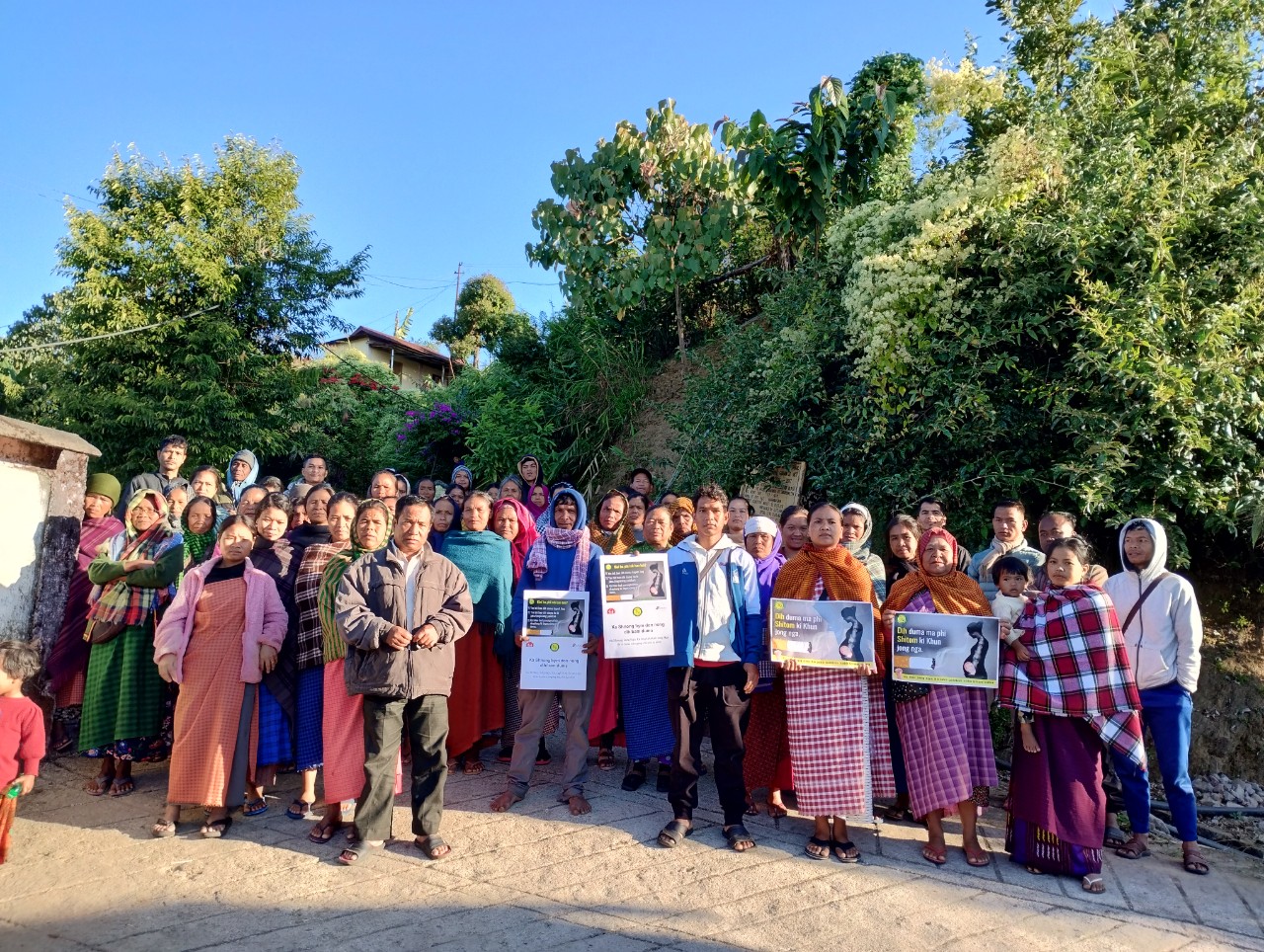
Shillong, September 10, 2026: Meghalaya’s Tobacco-Free Village (TfV) Programme has strengthened its position as a national model for community-led tobacco control for the second consecutive year, with the number of Village Health Councils (VHCs) meeting the prescribed Tobacco-Free criteria more than doubling in its second year.
The programme was initiated in 2024 in East Khasi Hills and West Jaintia Hills by the National Health Mission (NHM), Meghalaya, in collaboration with the Meghalaya State Rural Livelihoods Society (MSRLS), with Sambandh Health Foundation (SHF) as the implementation partner.
According to Dr Nabaneeta D. Mawrie, State Nodal Officer, National Tobacco Control Programme (NTCP), NHM Meghalaya, the initiative focuses on community action rather than merely declaring villages tobacco-free.
In the first year, 264 VHCs, or 20 per cent of the 1,295 VHCs across the two districts, met the criteria to become Tobacco-Free. In Year 2, the number increased to 531 VHCs, or 41 per cent, while 1,039 VHCs are now actively implementing the programme.
“With 8,000 estimated tobacco-related deaths annually in Meghalaya, the growing reach of village-level prevention is an important public-health achievement,” Dr Mawrie said.
During the second year, more than 5,500 anti-tobacco activities were conducted, reaching over 55,000 community members. Tobacco-related health concerns and prevention measures are increasingly being discussed through VHC meetings, Self-Help Group meetings and other community gatherings.
A key feature of the Meghalaya model is that a Tobacco-Free Village status is based on community action and verified compliance rather than a declaration. VHCs appoint TfV Nodal Officers, conduct awareness discussions and community meetings, pass resolutions restricting tobacco sales near schools, issue no-smoking orders for public places, install anti-tobacco signage and posters, and conduct community awareness drives.
The activities are documented and verified, with a VHC recognised as Tobacco-Free after successfully completing and verifying at least five of the six prescribed activities.
During the programme’s first year, senior officials from the Ministry of Health and Family Welfare and the World Health Organization visited participating villages and appreciated the community-driven approach.
The impact has also been reported at the community level. The VHC Chairperson of Mawmluh VHC in Shella Block said around 40–50 per cent of villagers had stopped smoking or using tobacco in public places such as tea shops, bus stands and social gatherings. Around 60–70 per cent had reportedly stopped smoking inside their homes, particularly around infants and young children.
VHC TfV Nodal Officers, in coordination with schools, are also working to prevent the sale of cigarettes and other tobacco products near educational institutions.
The second year further strengthened grassroots mobilisation through VHCs, TfV Nodal Officers and Community Gender & Health Activists (CGHAs) associated with MSRLS.
MSRLS COO Ronald Kynta said the organisation’s staff had used their established community networks through Village Organisations, Self-Help Groups and VHCs to take tobacco-prevention messages into homes and everyday conversations.
Three best-performing VHCs were also recognised by the Government of Meghalaya during the State-Level Observation of World No Tobacco Day 2026 in Shillong. Each received a Certificate of Appreciation and a cash award.
The programme is being implemented through Sambandh Health Foundation’s Digital Programme Implementation (DPI) methodology, aimed at strengthening monitoring and implementation at the grassroots level.
Year 3 of the Tobacco-Free Village Programme commenced on September 1, 2026. With the programme expanding its reach across the two districts, Meghalaya is positioning village-level community institutions at the forefront of its efforts to reduce tobacco use and promote healthier lifestyles.