
Shillong, November 5: The Meghalaya government spent ₹23.5 crore on seven festivals and concerts during the 2024–25 financial year, with the Tourism Department estimating that the events generated ₹133.42 crore in economic activity.
However, the available records do not provide a year-wise account of the Meghalaya Democratic Alliance (MDA) government’s spending on festivals during its first eight years in office or the revenue collected from them.
The seven events included the Shillong Cherry Blossom Festival, Me’Gong Festival, Winter Tales, Shillong Literary Festival and concerts featuring international performers Bryan Adams, Alan Walker and Ed Sheeran.
According to the Tourism Department, the events attracted nearly 76,000 tourists over 13 days. Hotels reportedly earned ₹33.78 crore, while transport operators and taxi drivers generated an estimated ₹5.38 crore. Homestay operators also reported that some visitors extended their stays after attending the events.
The estimated ₹133.42 crore represents the economic activity associated with the festivals and concerts. However, the department’s summary does not provide a consolidated account of government receipts from ticket sales, sponsorships and fees, or the additional tax revenue generated for the state.
Without these figures and a complete account of public expenditure, it remains difficult to establish how much of the money spent on organising the events returned to the state treasury.
Tourist arrivals rise, local festival attendance remains unclear
Meghalaya has recorded a steady increase in tourist arrivals over the past three years. Figures tabled in the Legislative Assembly show that the state received 13.85 lakh tourists in 2023, 16.08 lakh in 2024 and 18.55 lakh in 2025.
While the numbers indicate growing tourist arrivals, they do not establish how much of the increase was directly linked to festivals and concerts.
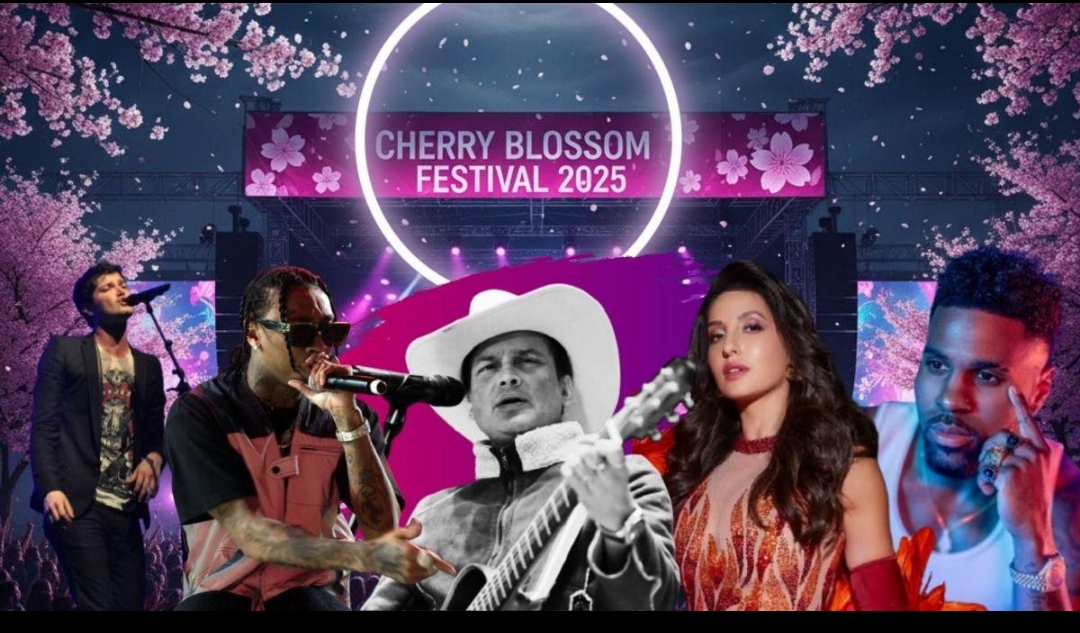
The Tourism Department recorded around 50,000 visits to the 2025 Shillong Cherry Blossom Festival over two days. However, the published figures do not specify how many of those visitors were residents of Meghalaya and how many came from outside the state.
The Cherry Blossom Festival has been held six times between 2018 and 2025. It was cancelled in 2020 due to the COVID-19 pandemic and in 2022 following the fatal incident at Mukroh. If held as scheduled on November 20 and 21, 2026, the upcoming festival will be its seventh edition.
Local musicians and artisans get a platform
Beyond attracting tourists, the festivals have also provided opportunities for local musicians, artisans and entrepreneurs.
Winter Tales featured Meghalaya-based acts such as Sur Na Nongkyndong, Sieng Riti Wakkhen, The Grassroots and Khasi Bloodz, giving them an opportunity to perform before wider audiences.
Separately, the Tourism Department reported that the Meghalaya Grassroot Music Project had registered more than 7,750 singers and musicians and organised 13,104 performances, involving total expenditure of ₹38.69 crore.
However, these figures cover the wider music programme and do not provide a festival-wise account of bookings, payments or earnings received by local performers. Such information would help establish how much local artists benefited and whether emerging musicians from outside Shillong received opportunities to perform.
Winter Tales also provided a platform for weavers, artisans and food producers to sell their products directly to visitors. The government said artisans and weavers from all 12 districts participated in the 2024 festival.
The Tourism Department had set a target of reserving 30 per cent of stalls for Indigenous weavers, bamboo artisans and home-based food producers. However, the available figures do not show how many stalls were actually allocated under this category, how much vendors earned after expenses or whether they secured repeat orders following the festival.
While the department’s estimates indicate that hotels, transport operators and other businesses benefited from the events organised in 2024–25, a detailed festival-wise disclosure of public expenditure, government receipts, artist fees and vendor earnings would provide a clearer picture of how widely the economic benefits were shared.
It would also help establish how much of the public money spent on festivals and concerts ultimately flowed back into Meghalaya’s economy and state treasury.