
By Carmel Lyngdoh
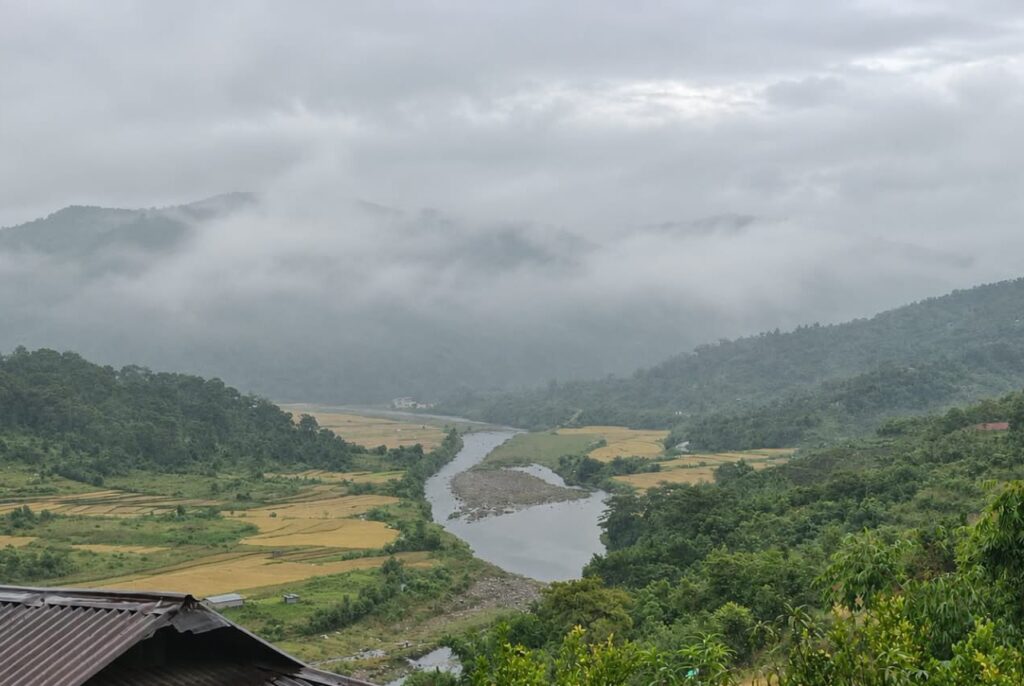
Shillong Nov, 03: Beneath the cloud-covered hills and alongside golden paddy fields, the Umngot River flows through a valley where agriculture, fishing and nature remain central to everyday life. For generations, communities along its banks have depended on the surrounding land and water for their livelihoods, while the scenic landscape has increasingly attracted visitors.
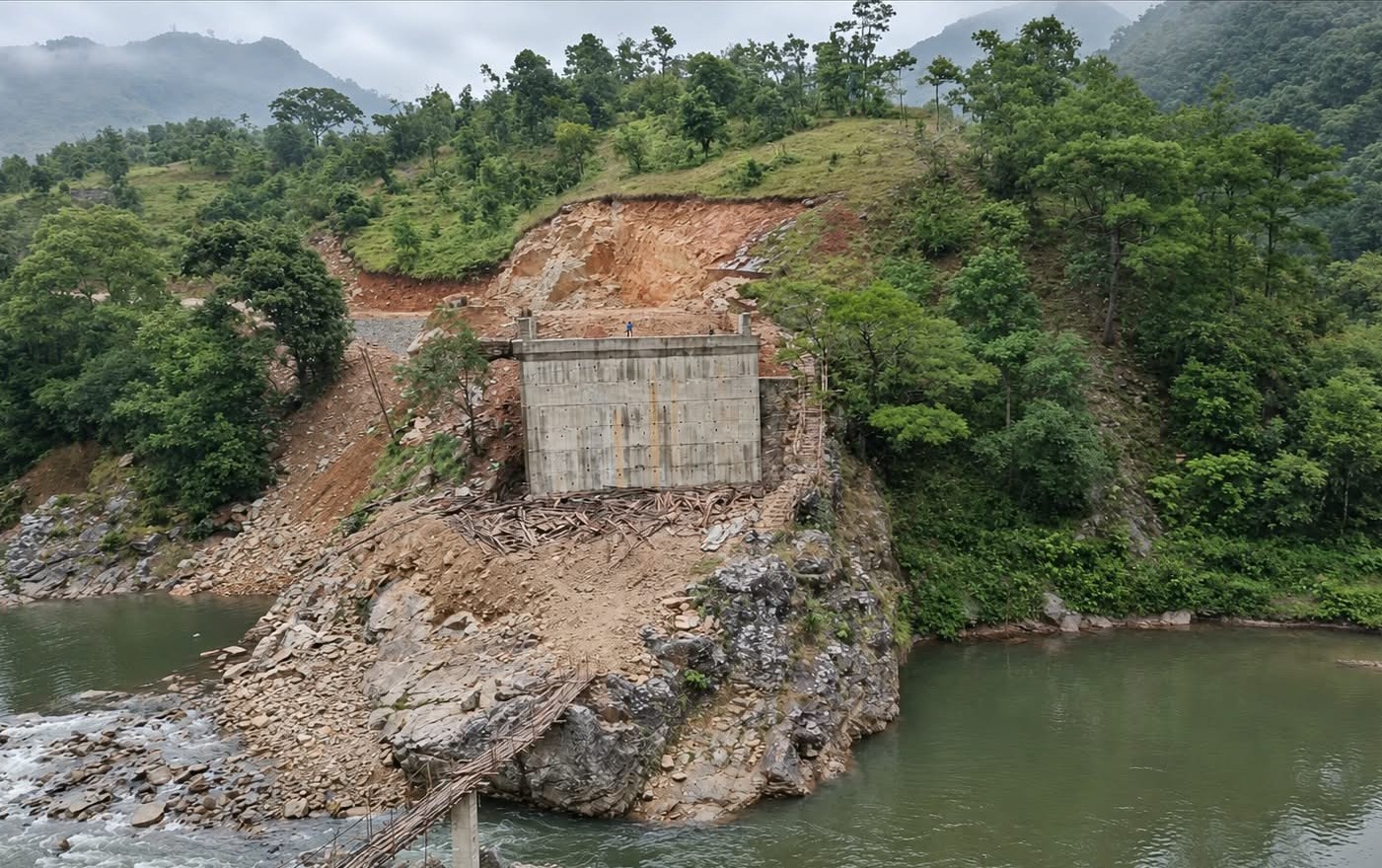
Now, a ₹21.32-crore bridge under construction across the Umngot promises to improve connectivity and open new opportunities for villages in the region. Beyond its engineering significance, the project is expected to strengthen access to markets, ease transportation for farming communities and support the area’s growing tourism potential.
The 110-metre bridge forms part of the Jongksha–Kharang–Dienglieng–Nongjrong–Moodymmai–Wahiajer road project, which includes the bridge and its approach roads.
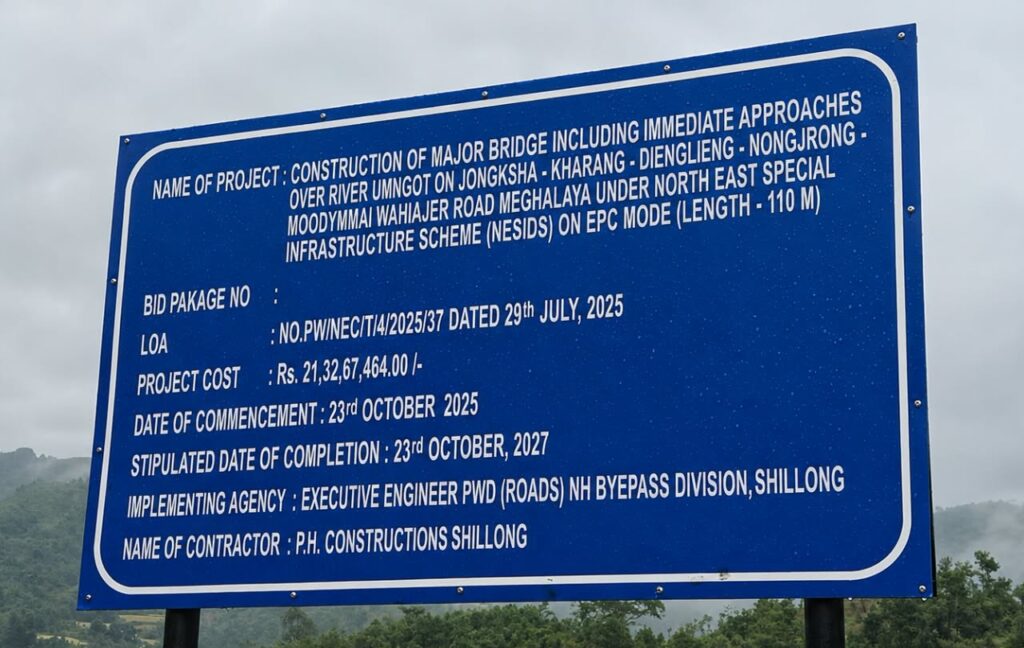
According to the project signboard, the estimated cost is ₹21,32,67,464. Construction commenced on October 23, 2025, with completion scheduled for October 23, 2027.
The project is being implemented under the North East Special Infrastructure Development Scheme (NESIDS) through the Engineering, Procurement and Construction (EPC) model. The implementing agency is the Office of the Executive Engineer, PWD (Roads), NH Bypass Division, Shillong.
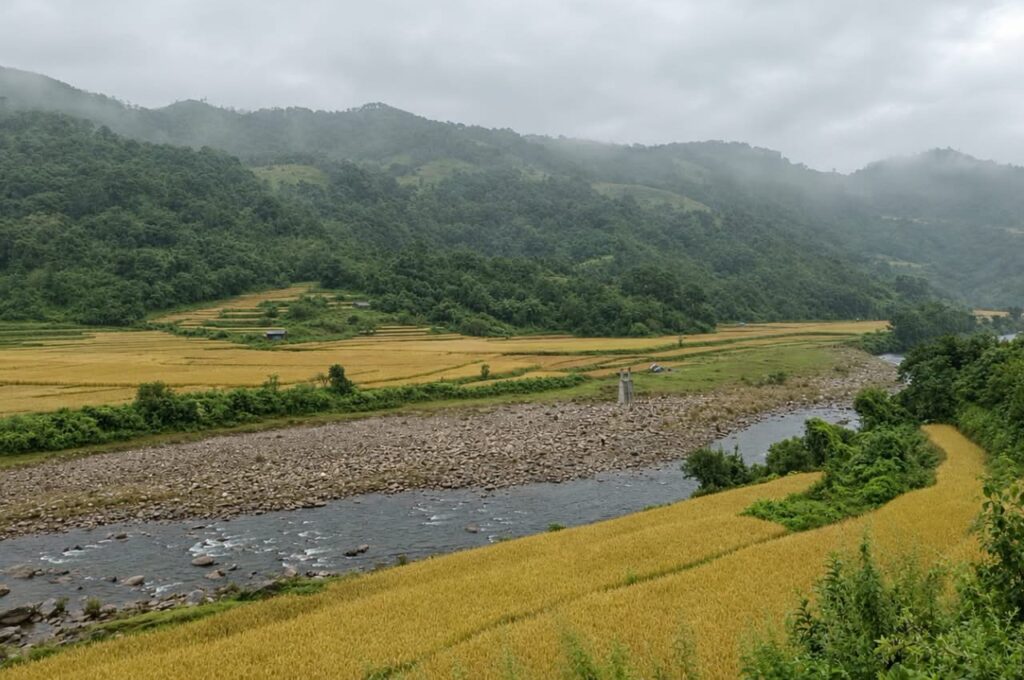
Photographs and video footage from the construction site show concrete structures, reinforcement steel and earthworks, including preparations for the approach roads. Sections of the surrounding slopes have also been cut and levelled to facilitate the road connection. However, an officially verified figure on the overall progress of construction was not available at the time of reporting.
For farming households, the bridge could make a significant difference to their daily lives. Paddy, fruits and vegetables represent months of hard work, and transporting these products to markets remains an important part of the agricultural economy.
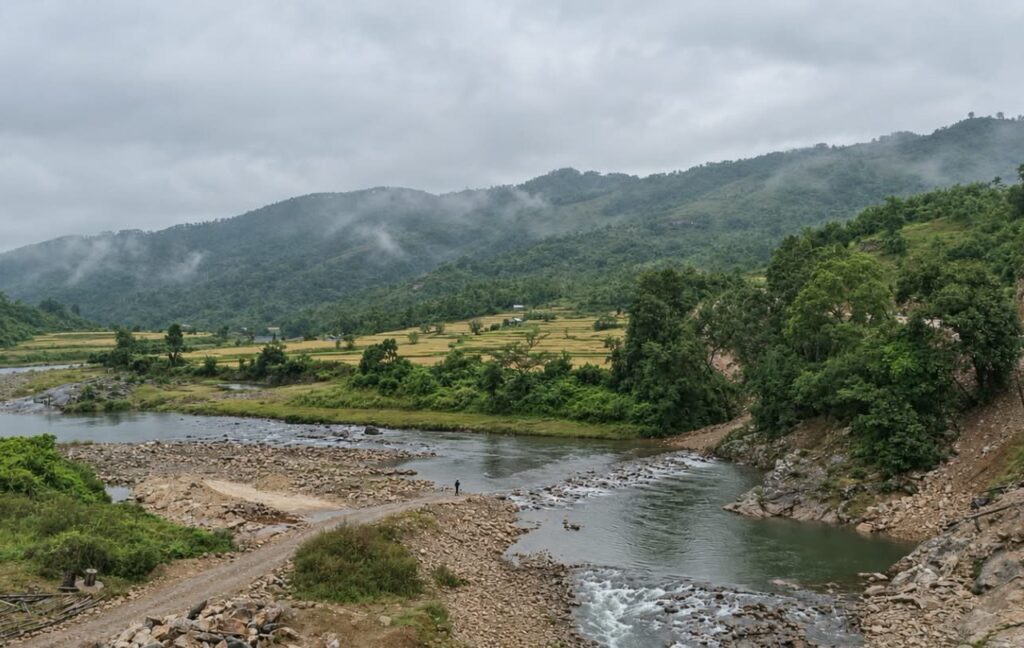
Difficult road conditions can increase transportation costs, delay deliveries and affect the quality of perishable produce. A dependable crossing could help farmers move their harvest more conveniently, reduce travel difficulties and improve access to markets.
Improved connectivity towards Niriang, Moodymmai, Wahiajer and neighbouring areas could provide farmers with better transportation options. Villages such as Dienglieng, Syniasya, Kharang, Pingwait and Nongjrong could also benefit from stronger road links, depending on the condition of the completed bridge and its approach roads.
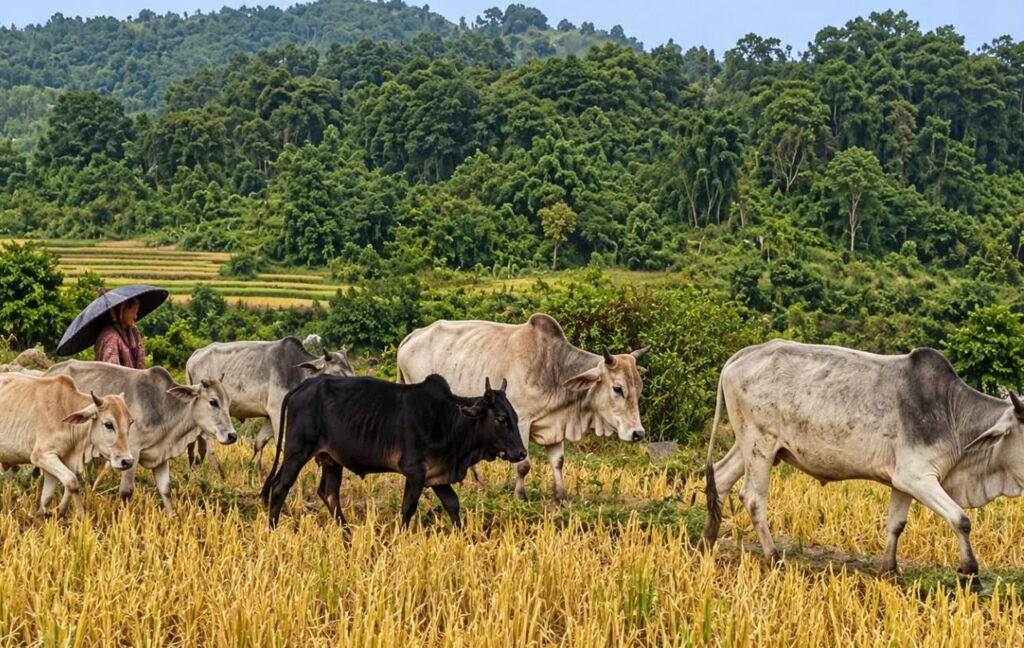
The agricultural richness of the valley is particularly visible during the harvest season. Golden paddy fields stretch along the river, while cattle graze on harvested plots and farmers continue gathering their seasonal produce. These scenes reflect the close relationship between the people and the land that sustains them.
Beyond agriculture, improved connectivity could benefit students, workers, traders and families who travel regularly for education, employment and other essential services. A reliable bridge would make journeys easier and strengthen connections between communities.
The project also holds potential for young people interested in tourism and small businesses.
Nongjrong, in particular, is known for its spectacular early-morning cloud formations, when layers of mist settle between the hills and across the valley before sunrise. As daylight breaks, the clouds gradually shift, revealing the surrounding mountains, green slopes, paddy fields and the Umngot winding through the valley.
The changing landscape has made the area attractive to nature lovers and photographers seeking to experience its distinctive scenery.
Better road access could encourage more visitors and create opportunities for local transport operators, food outlets, homestays, accommodation providers and tourist guides. Increased tourism could also generate demand for locally grown vegetables, fruits and other agricultural products.
For young residents, such activities could provide additional sources of income without having to move away from their villages in search of employment. However, the benefits will depend on active community participation, responsible tourism practices and the preservation of the natural environment.
As accessibility improves, proper waste management, sanitation, parking facilities and responsible visitor behaviour will become increasingly important. Protecting agricultural land, respecting private property and keeping the riverbanks clean will be essential to ensuring that tourism benefits local communities without damaging the landscape.
Yet, the Umngot is more than a source of livelihood or a tourist attraction. It is also part of the cultural and historical identity of the communities living along its course.
Stories passed down through generations connect the river with surrounding hills, rocky passages, secluded stretches and deep valleys. These accounts reflect how earlier generations understood and related to the natural landscape.
In a literary sense, the Umngot resembles a traveller making its way through difficult terrain, disappearing between rocks and hidden passages before emerging into open stretches of the valley. The sunlight reflecting on its waters creates images of gold and silver, framed by the surrounding hills and drifting clouds.
Such descriptions capture the emotional connection people share with the river and the landscape around them. Preserving these stories through local storytelling and community-led tourism could help visitors understand that the beauty of the valley is inseparable from the people, traditions and memories that define it.
Fishing also remains part of everyday life along the river, while the surrounding agricultural land supports families growing paddy, fruits and vegetables. These activities highlight the importance of protecting the river and its adjoining environment.
As construction progresses, proper management of excavated soil, drainage and construction waste will be important to minimise disturbance to the river and nearby agricultural land. Once completed, regular maintenance of the bridge and approach roads will also be necessary to ensure reliable connectivity throughout the year.
The development of infrastructure and conservation of the natural environment must therefore go hand in hand. Responsible tourism, cleaner surroundings and the protection of riverbanks will help ensure that the benefits of improved connectivity are sustained for future generations.
The bridge represents a significant investment in rural infrastructure by the Meghalaya Democratic Alliance (MDA) government led by Chief Minister Conrad K. Sangma, through the PWD (Roads) Department under Deputy Chief Minister Prestone Tynsong.
Its long-term impact will ultimately depend on the quality of construction, timely completion and the reliability of the road network connecting the surrounding villages.
With October 2027 set as the completion target, regular updates on construction progress will be important for residents whose livelihoods and daily journeys depend on the project.
For now, life along the Umngot continues with its familiar seasonal rhythm. The river flows through the valley, paddy fields turn golden during harvest and farmers continue their work, while a new connection gradually takes shape across the water.
For the communities of the Umngot valley, the bridge represents more than a road connection. It carries the promise of easier access to markets, better opportunities for young people and stronger links between villages.
As the river continues to carry the stories of generations, the bridge may soon carry the aspirations of a region towards a more connected and prosperous future.