
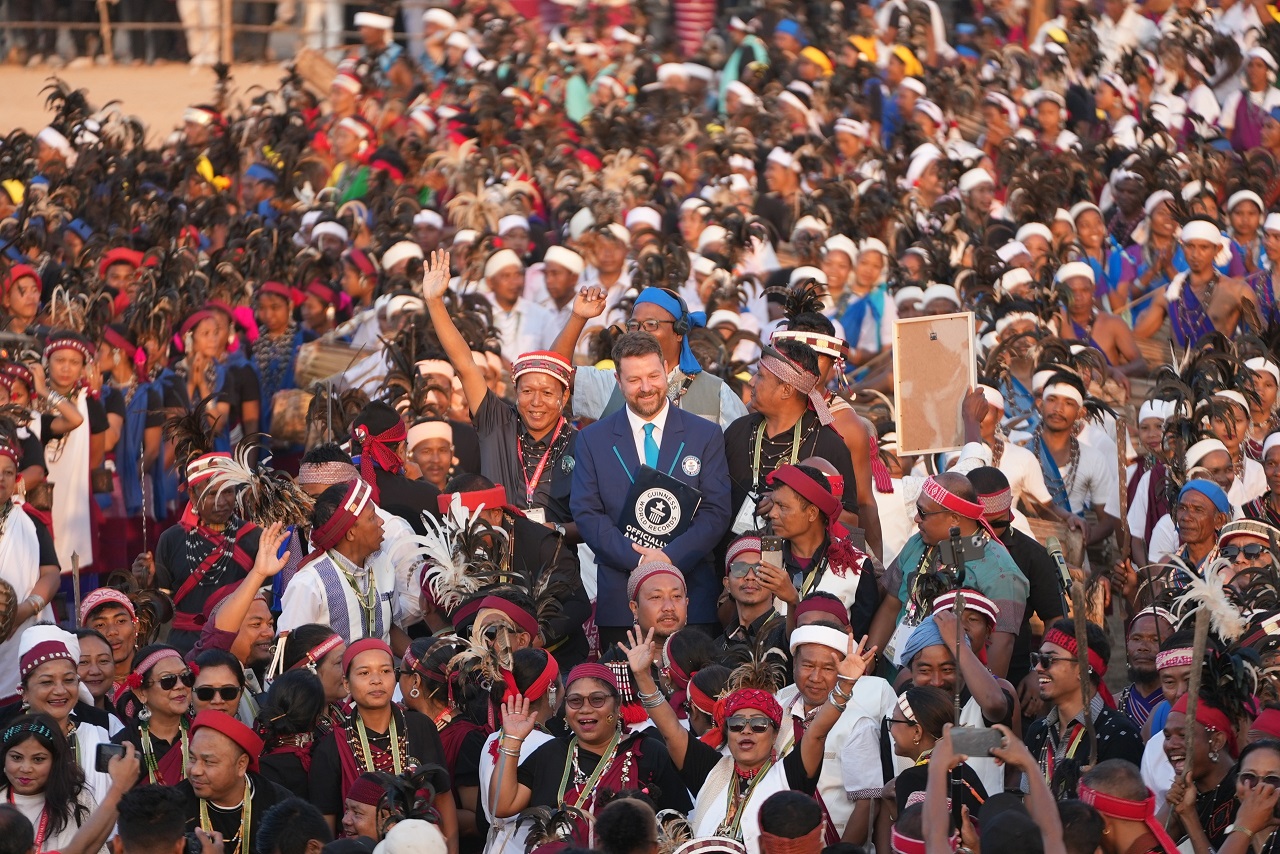
The Wangala festival offers an important lesson in unity, collective effort and the preservation of cultural heritage. The sound of Garo drums coming together was not merely a celebration of tradition but also a reflection of what communities can achieve when they work towards a common goal.
People from different villages joined hands to make the celebration a success. Nokmas, village leaders, community organisations, musicians, dancers and members of the public each played their part. Together, they showcased their traditional attire, promoted the Garo language and preserved customs passed down through generations. Differences in religion and belief did not prevent them from working towards a shared cultural purpose.
The attempt to set a world record by bringing together 1,000 traditional drummers demonstrated the power of collective effort. One village can teach its children to play traditional drums, but when many villages come together, their combined efforts can take their cultural heritage to the world.
This is a lesson the Hynñiewtrep community must reflect upon. How much more could we achieve if every village, organisation and community leader contributed to a common purpose rather than working in isolation?
Another striking moment at Wangala was the presence of Chief Minister Conrad K. Sangma and former Chief Minister Dr Mukul A. Sangma together among the people. One leads the government, while the other occupies the opposition benches. Their political differences remain, and disagreements over government policies are part of democracy. Yet, at a cultural celebration, they could stand together to honour the traditions and identity of their people.
This is an example of how political differences need not prevent leaders from coming together for the larger interests of their community. Respecting one another’s roles and recognising a shared cultural identity can strengthen the bonds that hold a society together.
We, the Hynñiewtrep, must honestly ask ourselves whether we are doing enough in this regard. When organisations compete for recognition and credit, collective work often suffers. When disagreements among leaders and organisations bring common initiatives to a standstill, it is ultimately the people who lose.
The greatest loss is often suffered by the younger generation. Young people miss opportunities to learn traditional music, dances, languages and customs. Elders who carry valuable cultural knowledge need younger generations willing to learn, practise and pass that knowledge forward. Without this connection between generations, even the richest traditions risk gradually disappearing.
Preserving our heritage cannot be left entirely to festivals or occasional public celebrations. It must begin in our homes, villages and communities. Our languages will survive when we speak, read and write them and ensure that children use them in everyday life. Our traditional music and dances will endure when elders teach them and young people are encouraged to participate.
Village councils, community organisations and cultural institutions must share this responsibility. Leaders, regardless of their political affiliations or organisational differences, should be willing to support initiatives that protect our common heritage.
Wangala has shown that unity does not require everyone to have the same beliefs, opinions or political interests. It requires people to recognise a shared responsibility and work together despite their differences.
Perhaps this is the most important lesson for the Hynñiewtrep. We must learn to celebrate the achievements of another village, organisation or community as a collective success rather than viewing them through the narrow lens of competition.
Our cultural identity is greater than any individual, organisation or political interest. If we can put aside differences, recognise one another’s contributions and work towards common goals, we too can achieve much more.
The lesson Wangala leaves with us is simple: when people come together, tradition becomes stronger, communities become stronger and their collective voice reaches further.