
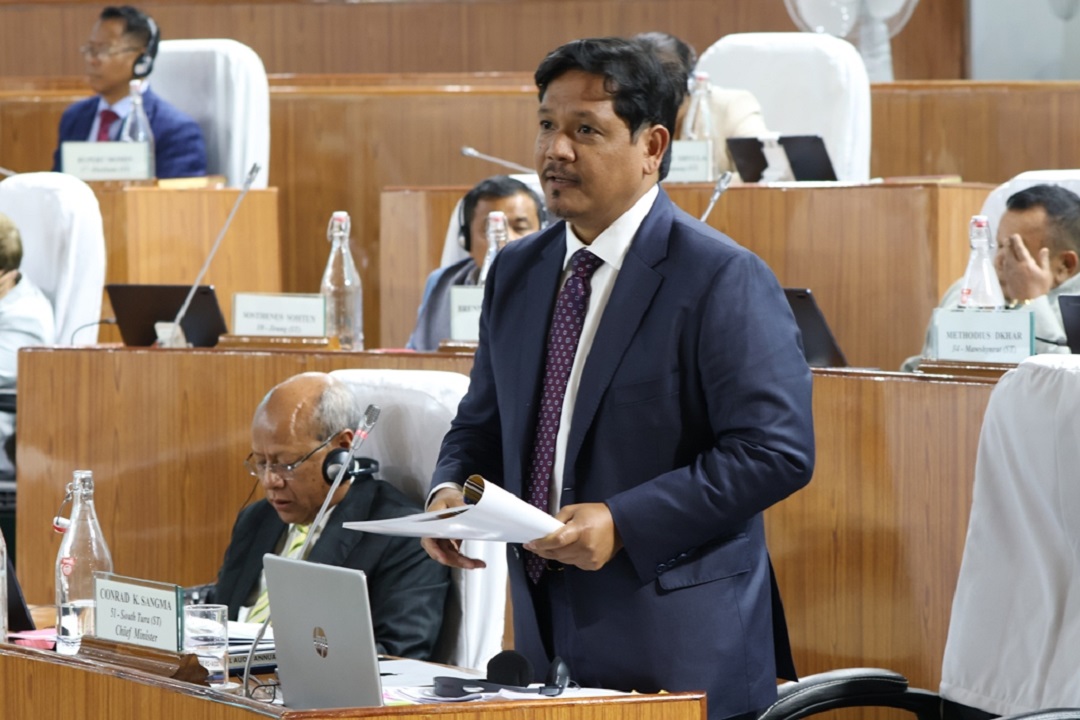
Shillong, February 23: Chief Minister Conrad K. Sangma on Monday said that the introduction of scientific coal mining in Meghalaya has been a challenging and intricate process due to the state’s unique land laws and administrative framework.
Addressing the media, Sangma explained that Meghalaya follows a traditional landholding system that differs significantly from other parts of the country. Coal-bearing areas in the state fall under multiple legal frameworks, making negotiations with the Government of India complex and time-consuming.
He said discussions were held at various levels with different central ministries and departments, with new concerns and queries emerging at each stage of the process. “We did not always know what the final outcome would be because of the complexity of the laws involved,” the Chief Minister stated.
100-Hectare Clause Non-Negotiable
Sangma pointed out that certain provisions — including the 100-hectare mining area requirement — were considered non-negotiable by the Centre. However, in Meghalaya, land ownership rests with individuals and communities under the traditional system, leading to extensive deliberations.
He acknowledged that while the state government could not secure all of its demands immediately, it chose to move ahead on aspects where consensus had been achieved rather than risk stalling the entire process.
Pragmatic Approach to Ensure Progress
The Chief Minister said the government adopted a pragmatic approach to ensure steady progress. As negotiations continued, efforts were made to address procedural bottlenecks and clarify regulatory requirements.
With mining licenses now being issued and scientific mining gradually taking shape in the state, Sangma said the developments reflect the results of sustained dialogue between the state and the Centre. He added that discussions are ongoing to further ease certain provisions while maintaining compliance with the law.
Concluding his remarks, the Chief Minister emphasized that scientific mining is not merely a political matter but one that directly affects the livelihoods of miners, landowners, and the broader economic growth of Meghalaya.