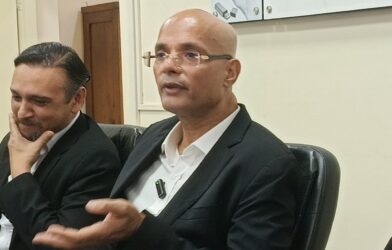


SHILLONG, MAR 27: Chairman of the Awaken India Movement (AIM), Banshai Marbaniang, has reiterated concerns over the implementation of Aadhaar, stating that efforts to mobilise public opposition have faced significant challenges.
Addressing media persons in Shillong, Marbaniang said that despite sustained efforts by activists, the anti-Aadhaar movement has struggled to gain widespread public participation. He noted that many citizens remain unaware of the broader implications of Aadhaar, particularly in relation to privacy, personal data protection, and individual rights.
He alleged that the system places undue pressure on economically weaker sections, who are often compelled to link Aadhaar to access essential services. “This creates a situation where people feel forced into compliance without fully understanding the consequences,” he said.
Marbaniang further highlighted concerns over financial burden, administrative hurdles, and lack of transparency, while calling for stronger legal safeguards and increased public awareness on data security issues.
He urged authorities to review certain aspects of Aadhaar implementation and called for a more inclusive dialogue involving civil society, legal experts, and the general public. He stressed that any national identification system must uphold principles of human dignity, privacy, and constitutional rights.
Meanwhile, Churchill Syiemlieh raised concerns over a proposed portal, questioning its necessity and relevance to the public.
Speaking on the issue, Syiemlieh said that many people, particularly youth, continue to struggle with unemployment and lack of opportunities, and introducing additional digital systems may not address their immediate challenges.
He pointed out that a large section of the population still lacks stable employment and basic opportunities, suggesting that priority should instead be given to job creation and livelihood improvement.
Syiemlieh also emphasised that the proposed portal should not be made mandatory, advocating for voluntary participation, especially considering that not everyone is familiar with digital platforms.
He added that policy discussions often overlook ground realities and called for more practical, people-centric solutions to address pressing socio-economic issues.