
Shillong, April 29: The indigenous way of life of the Hynniewtrep people stands as a powerful reflection of harmony between human existence and nature—an identity that continues to resonate even as the modern world rapidly evolves.
In earlier times, life within Hynniewtrep society was largely untouched by deceit or intense competition. Instead, it was rooted in unity, cooperation, and a shared sense of responsibility within families and communities. These values formed the backbone of a system where survival and well-being were collective efforts rather than individual pursuits.
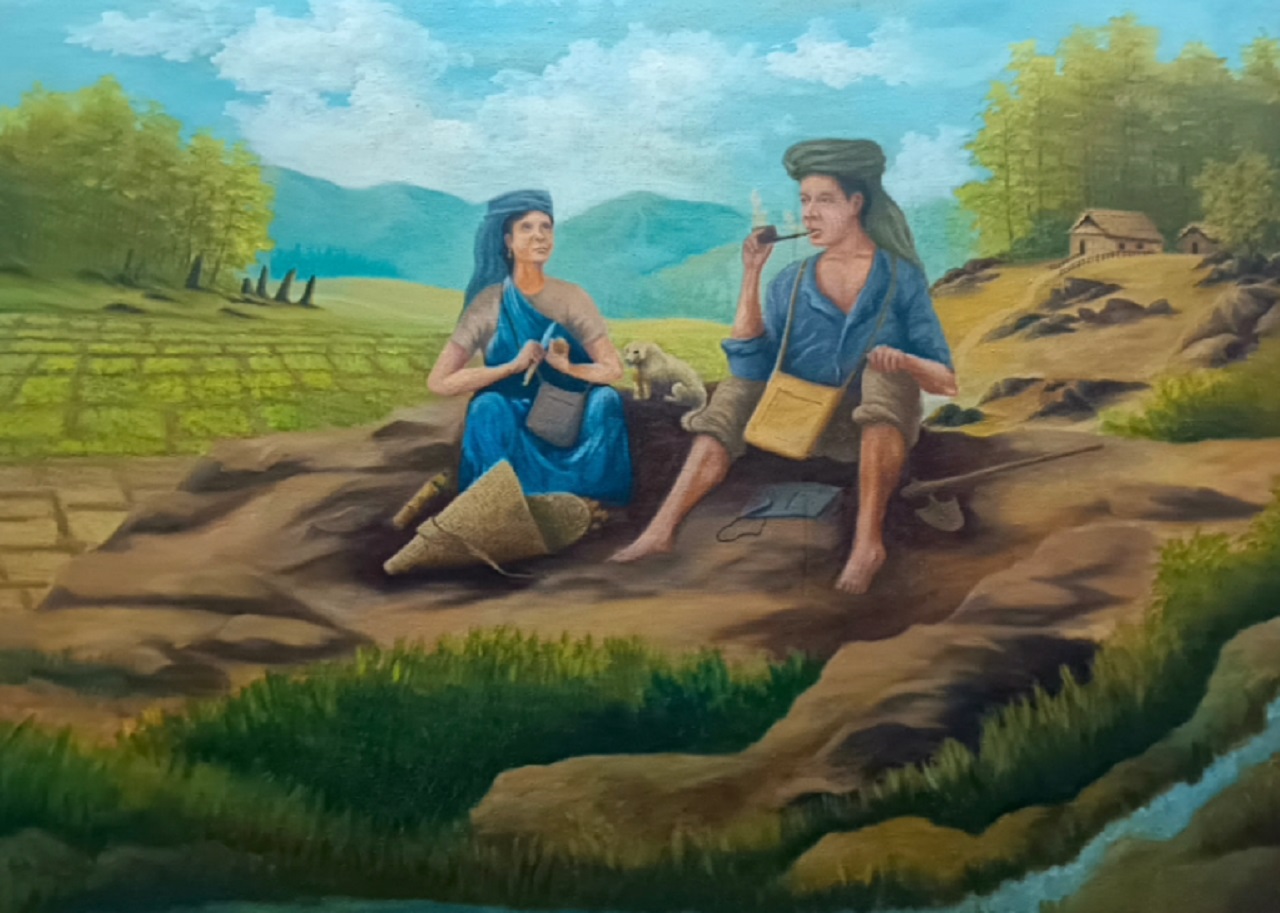
Old photographs and illustrations offer vivid glimpses into this past, portraying the resilience and industrious nature of the elders. Agriculture was the primary livelihood, and both men and women worked side by side in the hills and fields, cultivating the land to sustain their families.
In this traditional structure, gender roles were complementary and equally vital. Khasi men would rise early and head to the fields equipped with farming tools, labouring throughout the day, often pausing briefly for rest before continuing until dusk. Women, central to both household and agricultural life, contributed extensively—sowing seeds, carrying baskets, and ensuring that the family’s daily needs were met after long hours of work in the fields.
The natural surroundings—rolling hills, dense forests, flowing streams, and modest village homes—formed more than just a backdrop. They represented a way of life deeply intertwined with nature, a defining feature of Khasi identity and worldview.
These preserved images are not merely records of the past; they serve as enduring reminders of the core values of the Hynniewtrep people—hard work, cooperation, and respect for the environment.
However, the march of modernity has brought noticeable changes. Many young people today are moving away from agriculture, drawn instead to urban employment and new opportunities. While community bonds still exist, they are no longer as deeply rooted or intimate as they once were.
Yet, this traditional lifestyle has not entirely faded. In rural areas, glimpses of it remain—women carrying baskets, men tending to fields, and communities living in relative harmony with nature. Still, these practices are gradually diminishing under the growing influence of modernization.
Public perception increasingly views the life depicted in old images not as a present reality, but as a cultural foundation—something to learn from and preserve for future generations. As society advances, there is a growing recognition of the need to retain the positive aspects of this heritage: unity, environmental respect, and a meaningful, simple way of life.
In essence, traditional Hynniewtrep life is not just a story of the past—it is a guiding path for the future, reminding us to embrace progress thoughtfully while holding firmly onto values that sustain both community and nature.