

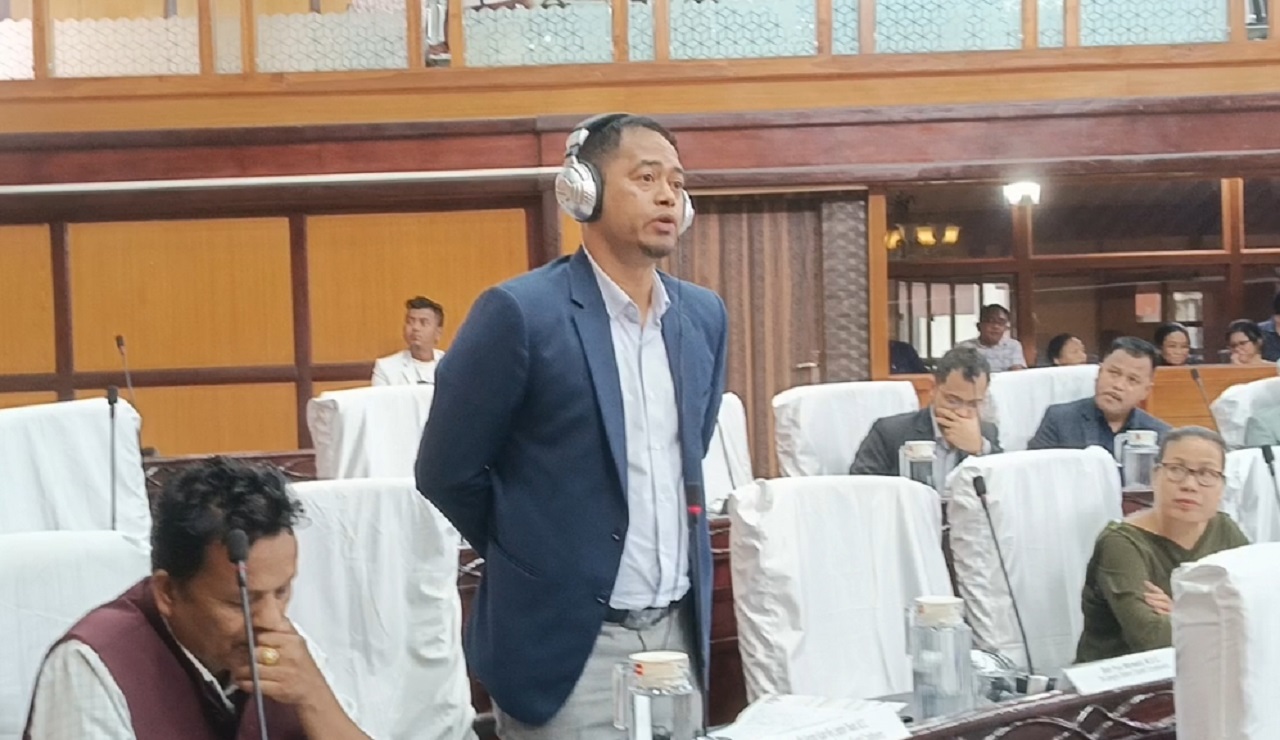
Shillong, June 19: Questions over the legal basis for the collection of Court Fees and Stamp Fees in the District Council Courts dominated proceedings on the final day of the Summer Session of the Khasi Hills Autonomous District Council (KHADC), with Opposition members demanding greater clarity and transparency from the Executive Committee (EC).
The issue was raised by Sohiong MDC S. L. Thabah, who sought clarification from the Executive Committee on whether the District Council Courts are levying Court Fees on suits and cases and, if so, under which Council law such collections are being made.
Thabah also questioned whether the District Council Courts had been exempted from Stamp Duty since 1952, when the collection of Court Fees and Stamp Fees allegedly began, and whether the Indian Court Fees Act is applicable to the District Council Courts.
Replying on behalf of the Executive Committee, Executive Member in charge of the Judicial Department, Deity H. Majaw, informed the House that the collection of Court Fees is governed by the Khasi Hills Autonomous District Council Court Fees Rules, 1976 and the Court Fees (Meghalaya Amendment) Act, 1993.
She further stated that the District Council Courts are not exempted from Stamp Duty and that the collection of Court Fees and Stamp Fees has been in practice since 1953, following the appointment of the first Judge of the District Council Court.
Majaw also confirmed that the Indian Court Fees Act is applicable to the District Council Courts.
However, Opposition MDCs expressed dissatisfaction with the reply, contending that the Executive Committee had failed to furnish detailed legal references, official notifications and government orders clearly establishing the authority for levying Court Fees and Stamp Fees in the District Council Courts.
They argued that the matter is of considerable importance as it directly affects litigants and members of the public seeking justice through the District Council Court system.
According to the Opposition, the Executive Committee should place all relevant legal documents and records before the House to ensure that the collection of such fees is fully supported by applicable laws and regulations and to dispel any ambiguity surrounding the issue.
The discussion underscored the Opposition’s demand for greater transparency in the functioning of the District Council Courts, particularly in matters relating to financial charges imposed on litigants, while also highlighting the need for clearer public understanding of the legal framework governing the Council’s judicial system.