
Era of overseas missionaries in Khasi-Jaintia Hills gradually draws to a close
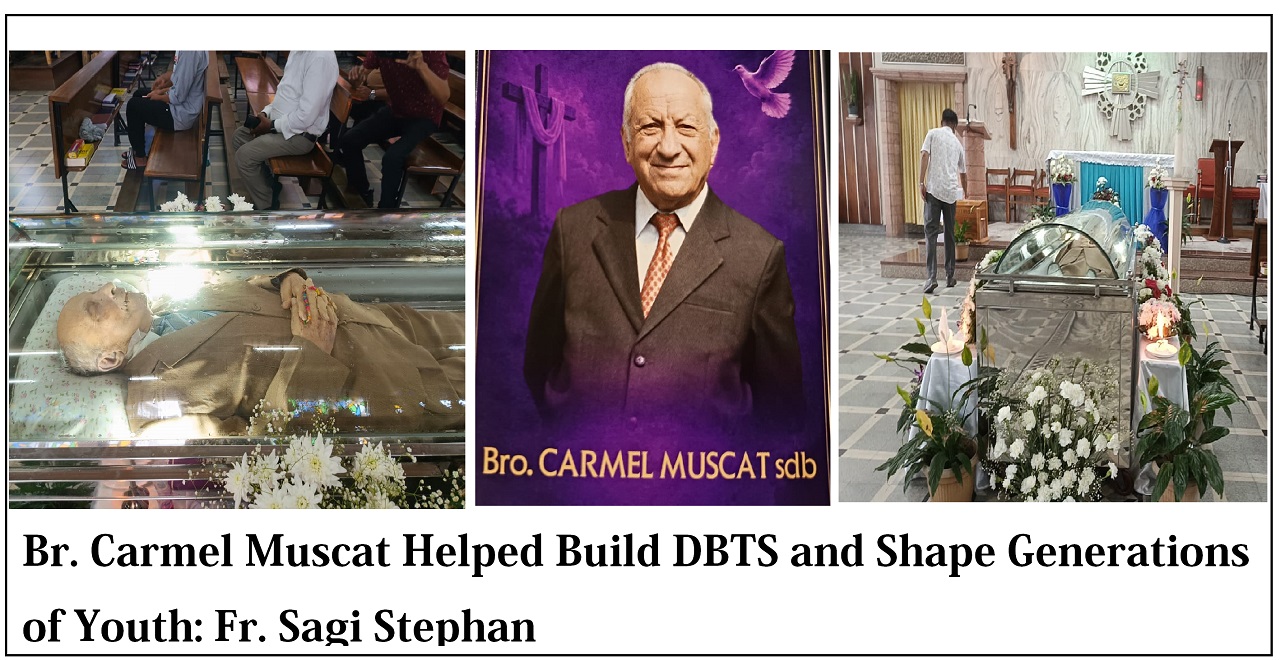
Shillong, August 30: Br. Carmel Muscat SDB, a veteran Salesian missionary from Malta who devoted more than seven decades of his life to serving young people in India, played a significant role in building and strengthening Don Bosco Technical School (DBTS), Laitumkhrah, according to its Rector, Fr. Sagi Stephan SDB.
Br. Muscat passed away at Nazareth Hospital, Shillong, at around 12.30 am on August 29 after being unwell for nearly two weeks. He was 87.
His death also marks the gradual passing of a generation of overseas missionaries who dedicated their lives to the people of the Khasi-Jaintia Hills. According to Fr. Stephan, only two foreign missionaries—Fr. Marsow and Br. John Columbi, both from Italy—are now said to remain in the region.
Paying tribute to the late missionary, Fr. Stephan recalled Br. Muscat as one of the veteran Salesians whose decades of service contributed substantially to the development of DBTS.
“He was one of those who truly built Don Bosco Technical School. His contribution to this institution was immense and will never be forgotten,” the Rector said.
A Young Missionary Who Made India His Home
Fr. Stephan said Br. Muscat left Malta and travelled to India by ship in 1953, when he was only about 14 years old. The journey took several days and brought the young missionary aspirant to a distant and unfamiliar country.
Following his religious formation and studies, Br. Muscat joined Don Bosco Technical School in 1957. He subsequently served the institution in various capacities for more than six decades.
Over the years, he supervised different technical training departments, handled administrative responsibilities and served as a hostel supervisor, playing a direct role in the education, training and formation of generations of young people.
A Man of Many Skills
Fr. Stephan remembered Br. Muscat as a remarkably versatile and practical person who could find solutions to technical problems that others struggled to resolve.
“He was a cook, a musician and a skilled technician. Whatever he undertook with his hands, he did well. Whenever a machine developed a problem, he would examine it carefully and find a way to repair it,” he said.
His commitment to technical work continued well into his later years. According to the Rector, Br. Muscat was still working in the workshop, repairing machinery and making equipment, until he was nearly 85.
“It was deeply saddening for him when declining health prevented him from continuing his workshop duties about three years ago,” Fr. Stephan recalled.
“He was an extraordinarily hard-working man. Even at 82 or 83, one could still find him in the workshop repairing machines and making things. At that age, others might have preferred to retire, but he was different,” he added.
Discipline That Shaped Young Lives
Beyond his technical abilities, Br. Muscat was known for his disciplined approach to work and formation. Fr. Stephan described him as a perfectionist who expected every task to be completed to a high standard.
As hostel supervisor, he closely monitored students’ studies, conduct and overall development. His strict approach was not always easy for young people at the time, but many former students later recognised its lasting impact on their lives.
“Some have said that they are what they are today because of him. They may have found his discipline difficult at the time, but he moulded them and prepared them to face the challenges of life,” the Rector said.
His influence therefore extended beyond the technical and academic education of students. Through discipline, hard work and integrity, he sought to prepare young people for the responsibilities and challenges of adulthood.
Compassion for the Poor
Alongside his demanding standards, Br. Muscat was remembered for his compassion, particularly towards poor and marginalised people.
Fr. Stephan said he was always willing to listen to people who approached him for assistance and would try to help whenever possible.
“Anyone who came to him seeking help rarely returned empty-handed. He loved the poor, spoke with them and tried his best to help them,” he said.
This combination of discipline and compassion became an important part of the missionary’s personality and his relationship with the community.
A Missionary Who Became Part of Families
The emotional response following Br. Muscat’s death reflected the depth of his relationships with former students, friends and families in Shillong and beyond.
In the days surrounding his passing, numerous people came to pay their respects. Many were visibly emotional as they recalled the role he had played in their lives.
According to Fr. Stephan, the testimonies of former students demonstrated that Br. Muscat had become much more than a teacher, technician or administrator.
“He had become part of their lives and their families. It was deeply moving to see people arrive in tears and to hear them speak about how precious he had been to them,” he said.
Faith Behind a Lifetime of Service
Fr. Stephan also highlighted Br. Muscat’s disciplined spiritual life. Despite his numerous responsibilities, he remained committed to prayer and regular participation in church life.
For the Rector, this spiritual discipline was central to understanding Br. Muscat’s extraordinary longevity in missionary service. His work was not simply a profession but a vocation sustained by faith and prayer.
His decision to leave Malta and come to India as a young teenager also reflected, according to Fr. Stephan, exceptional courage.
Leaving one’s family and homeland at such an early age to serve in an unfamiliar country required considerable faith and determination. That courage, the Rector said, remained a defining characteristic throughout Br. Muscat’s life.
“Whenever a problem arose, he was ready to accept responsibility and search for a solution,” Fr. Stephan said.
The Passing of a Missionary Era
Br. Muscat’s death comes at a time when the generation of overseas missionaries who helped establish and develop educational and religious institutions across the Khasi-Jaintia Hills is gradually disappearing.
For decades, missionaries from outside India worked alongside local communities, contributing to education, technical training, pastoral work and youth formation. Many devoted virtually their entire lives to the region.
Fr. Stephan said the passing of these missionaries represents the closing of an important chapter in Salesian history, while also placing a responsibility on the present generation to continue the work they began.
“He lived a beautiful life. Like a candle, he continued to burn and give light to others. He offered himself humbly throughout all these years,” the Rector said.
Br. Muscat’s more than seven decades of service in India, including over six decades at Don Bosco Technical School, leave behind a legacy that extends beyond an institution. His life, as remembered by those who worked with and were guided by him, represents a commitment to faith, technical education, discipline, compassion and the formation of young people.
As the era of overseas missionaries in the Khasi-Jaintia Hills gradually draws to a close, the memories and values left behind by missionaries like Br. Carmel Muscat remain an enduring part of the region’s educational and Salesian heritage.