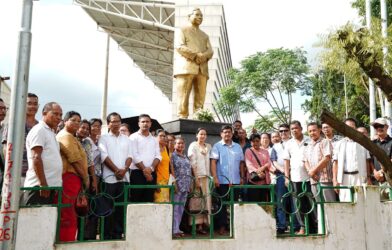

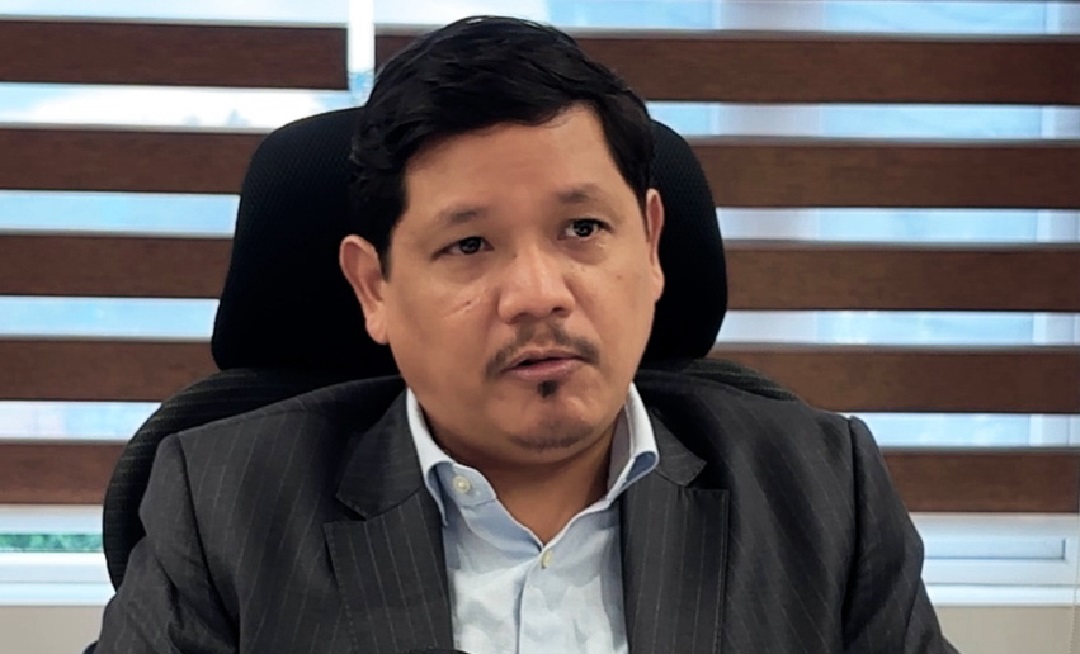
SHILLONG, SEP 1: Meghalaya Chief Minister Conrad K Sangma on Tuesday launched the state government’s ambitious research initiative “Tracing the Roots” at the District Auditorium, Tura, dedicating it as a tribute to his late father Purno Agitok Sangma on his 79th birth anniversary.
Arts and Culture Minister Sanbor Shullai and MLA Mehtab Chandee A Sangma were present on the occasion.
The Chief Minister said the programme, aimed at scientifically documenting the indigenous heritage of Meghalaya, was born out of a vision of late P A Sangma.
Recalling a conversation with his late father, Sangma said, “It was one of those normal conversations between a father and son. But looking back, every conversation had a strong message. It was like a classroom for me, a roadmap for life and for the State.”
He said late P A Sangma had expressed concern over the lack of scientific documentation on the roots, history, migration and culture of the people of Meghalaya, particularly the Garos.
“That one conversation stayed in my mind. Keeping this in mind, about two years back, I decided we must start a programme to study all aspects of our culture and history and scientifically bring out evidence on the actual identity of our people,” the Chief Minister said, adding that a note prepared by him one and a half years ago has now taken shape as the programme.
The multidisciplinary research will involve historical research, oral traditions, indigenous knowledge, linguistics, archaeology and archival study on the origins and historical movements of the Garos, Khasis and Jaintias.
Under the initiative, 75 scholars will travel to Vietnam, Cambodia and Tibet to trace socio-cultural linkages of Meghalaya’s tribes with Southeast Asia.
While the Khasi-Jaintia study is titled “Ki Dienjat: Re-examining Khasi-Jaintia Socio-cultural Linkages with Southeast Asia”, the Garo component will examine the Tibet and northern highlands hypothesis.
The Chief Minister also launched a dedicated e-portal for the project which will serve as a central platform for research data, digital archives, scholarly publications and educational resources.
“Tracing the Roots is more than a research project. It is a journey of rediscovery, undertaken so that we may reconnect with our past, understand our present and shape our future with greater confidence,” he said.