
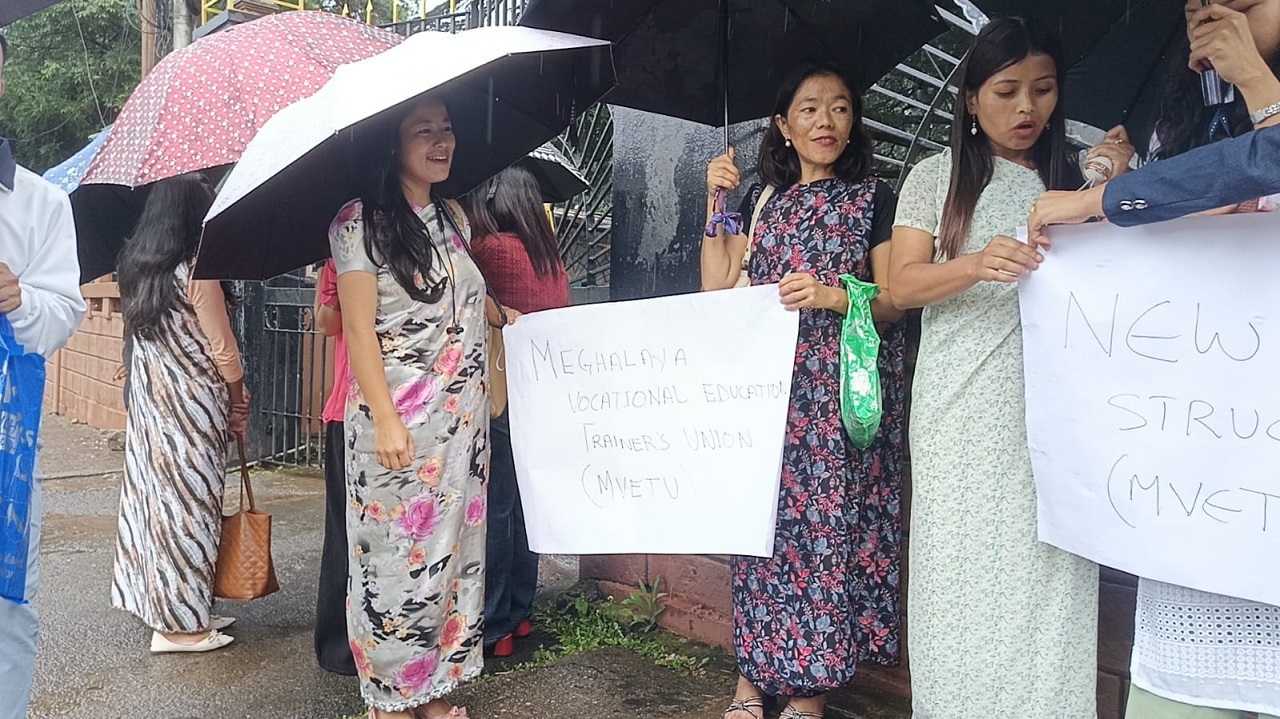
Shillong, September 2: The Meghalaya Vocational Education Trainers/Teachers Union (MVETU–NSQF) has accused Chief Minister Conrad K. Sangma of giving only verbal assurances on their demands and has renewed its call for salary revision, job security and the removal of private agencies from the implementation of vocational education in the state.
In a memorandum submitted to the Chief Minister, the union said vocational trainers and teachers have been serving under Samagra Shiksha in government and government-aided schools across Meghalaya since the introduction of vocational education in 2017.
The union highlighted that vocational teachers are involved not only in classroom teaching but also in school programmes, co-curricular activities, skill-development initiatives, career guidance and other educational activities.
According to the memorandum, vocational teachers currently receive ₹24,000 per month at the secondary level for Classes IX and X, while those teaching Classes XI and XII receive ₹30,000 per month. The union said the remuneration is inadequate in view of their qualifications, responsibilities and the rising cost of living.
The MVETU–NSQF demanded a fair and sustainable pay structure, along with periodic salary increments and opportunities for career progression.
The union also raised concerns over job security, seeking a clearly defined service policy and an assurance of continued employment up to the age of 60, on a par with other teaching personnel under the Education Department.
Another major demand is the gradual removal of multiple Vocational Training Providers (VTPs) and private agencies currently engaged in implementing the vocational education programme.
The union argued that funds currently spent on agency commissions and administrative charges could instead be utilised to improve the salaries and welfare of vocational teachers.
It further demanded that vocational teachers be placed directly under the administration and payroll of the Education Department, stating that such a system would improve transparency, administrative efficiency and accountability while ensuring greater job security and direct payment of salaries through government channels.
The union also urged the government to formally recognise the contribution and years of service of vocational teachers and ensure their inclusion in future educational reforms and welfare measures concerning teaching personnel.
The MVETU–NSQF maintained that vocational teachers have played an important role in equipping students with practical skills and preparing them for employment and self-reliance, and called for concrete government action rather than further assurances.