

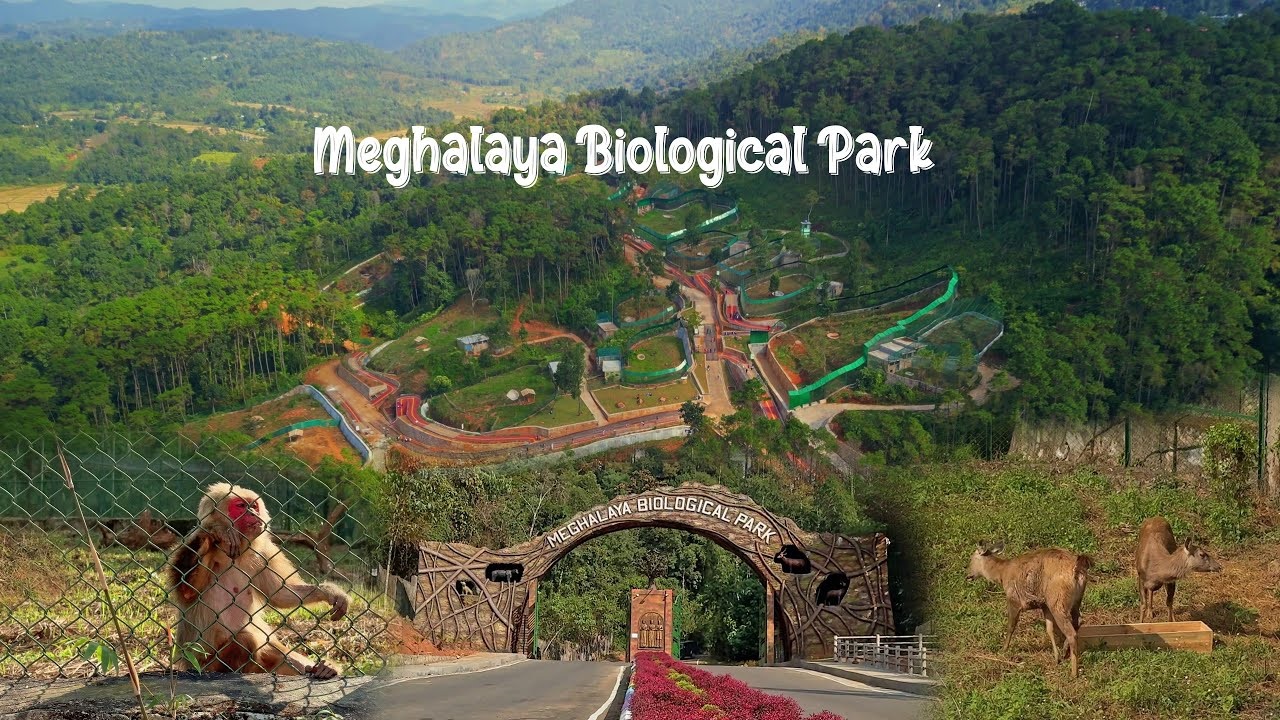
SHILLONG, JUN 26: In a significant step to wildlife conservation, Meghalaya State Zoo successfully released a rescued Chinese Pangolin (Manis pentadactyla) and an Asian Palm Civet (Paradoxurus hermaphroditus) into Nongkhyllem Wildlife Sanctuary after completing rehabilitation and health assessments. The release is particularly important as both species play vital roles in maintaining ecological balance, with the Chinese Pangolin being Critically Endangered as per IUCN as well as highly threatened by illegal wildlife trade, and the Asian Palm Civet contributing to forest regeneration through seed dispersal.
The Chinese Pangolin was rescued by the staff of Nongpoh (Wildlife) Range from the NH 6 near Jiva Restaurant, Nongpoh while the Asian Palm Civet was rescued from Jaintia Hills recently in a severely injured condition. Both animals were shifted to Meghalaya State Zoo, where they received veterinary treatment, care, and monitoring.
Following a period of rehabilitation, veterinary experts certified both animals fit for release. The operation was carried out jointly by Meghalaya State Zoo and Nongpoh (Wildlife) Range under Khasi Hills Wildlife Division, Shillong in the presence of Shri P.K. Agrahari, IFS, Chief Conservator of Forests (Wildlife), Meghalaya & Chief Executive Officer, Meghalaya Zoo Project Implementation Society, Shri Pavan Khade, IFS, Director, Meghalaya State Zoo among other officials and staff of the Department.
Shri Agrahari stated that wildlife rescue, rehabilitation, and release are essential components of conservation efforts. He stated that the Chinese Pangolin is listed asCritically Endangered by the IUCN and is protected under Schedule-I of the Wild Life (Protection) Act, 1972 providing the Pangolins the highest degree of legal protection under the national statute. However, the species is facing serious threats from illegal wildlife trade and habitat loss. The successful release reflects the Department’s continued commitment to wildlife conservation and animal welfare executed through the officials and staff of Meghalaya State Zoo and Khasi Hills Wildlife Division, Shillong. He also appealed to people to assist in rescue of wild animals by informing the Department about such wild animals in distress, so that they can be treated and released.
Ecological importance
Pangolins play a vital role as “Ecosystem engineer” and natural pest controllers in forests and agro-ecosystems. They primarily feed on ants and termites, consuming in vast quantities. This helps prevent termite infestations that damage forest, crops and soil structures. Their presence indicates a balanced and healthy ecosystem.
Palm civets are vital to tropical ecosystems as keystone seed dispersers and forest regenerators. By eating fruits and defecating seeds across wide ranges, they maintain plant biodiversity and help reforest degraded areas.
Pangolins are the most heavily trafficked mammals in the world, accounting for up to 20% of the entire global illegal wildlife trade, an estimated one million pangolins were poached worldwide over a recent decade. Pangolin trafficking remains a grave concern in India, posing a significant threat to the country’s wildlife and biodiversity. During the last 5 years, about 7 cases of illegal smuggling of Pangolin and Pangolin scales were detected by the Forest Department and booked under Wild Life (Protection) Act, 1972. Despite efforts by wildlife authorities to combat the illegal trade, pangolin smuggling remains a serious concern to enforcement agencies globally.
The issue of rampant poaching of the Chinese Pangolin was also raised by Hon’ble MLA and Leader of Opposition in the Assembly highlighting that such act is fuelling severe ant infestations and causing agricultural havoc in Garo Hills. He highlighted that these ant-eaters are vital for natural pest control.