

His September 12 entry into the BJP raises questions over regional politics, long-pending state issues and his political ambitions
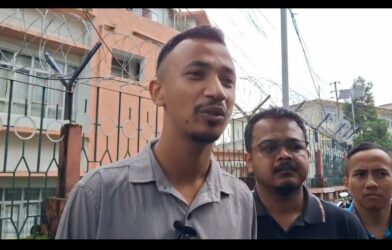
Shillong, September 11: The decision of former United Democratic Party (UDP) leader and former legislator Dr Jemino Mawthoh to join the Bharatiya Janata Party (BJP) on September 12 has triggered fresh political debate in Meghalaya, with questions being raised over the reasons behind his decision and what he hopes to achieve through the move.
Dr Mawthoh and his supporters have announced their intention to join the BJP. The larger question, however, is whether the move is primarily driven by political differences within the UDP, electoral considerations, or an attempt to secure a larger platform from which Meghalaya’s long-pending issues can be taken directly to the Union Government.
Was his departure prompted by differences with the UDP leadership, dissatisfaction with the party’s functioning, or a belief that the BJP could provide greater political access in Delhi?
Why Have Regional Parties Failed to Remain Strong?
The UDP and other regional parties in Meghalaya were established with the stated objective of protecting the State’s land, identity, customs, language, indigenous rights and constitutional safeguards.
Yet several of the issues championed by these parties for decades remain unresolved. Internal differences, competition over electoral tickets, personal political ambitions and the inability to maintain a united political position have contributed to questions over the effectiveness of regional politics.
Whenever a prominent regional leader moves to a national party, the same question returns: Can regional parties continue to effectively safeguard Meghalaya’s interests, or are they increasingly becoming stepping stones for individual political ambitions?
Dr Mawthoh’s decision will inevitably be viewed against this broader political backdrop.
Longstanding Links with BJP Leaders
His move to the BJP also does not appear to have emerged entirely suddenly. During his time in the UDP, Dr Mawthoh was seen interacting with senior BJP leaders in Delhi, including J.P. Nadda and Amit Shah.
Such interactions suggest that political communication may have existed between him and the BJP leadership for some time. His familiarity with the party’s central leadership could potentially provide him with greater access to decision-makers in Delhi.
That access, however, can only become meaningful if it translates into concrete action on issues affecting Meghalaya. Meetings with senior leaders, without corresponding policy outcomes, cannot by themselves be considered an achievement.
Issues He Must Address
If Dr Mawthoh’s decision is genuinely intended to strengthen Meghalaya’s voice at the national level, he will face expectations to clearly articulate his position on several longstanding issues, including:
- Implementation of the Inner Line Permit (ILP) in Meghalaya;
- Inclusion of the Khasi language in the Eighth Schedule of the Constitution;
- Amendment and strengthening of the Sixth Schedule;
- Protection of indigenous land, forests and mineral resources;
- Protection of the powers and rights of the autonomous district councils;
- Resolution of the continuing crisis at North-Eastern Hill University (NEHU); and
- Protection of religious freedom and minority rights.
Joining the party that leads the Union Government does not automatically mean these demands will receive favourable consideration.
Dr Mawthoh will therefore have to demonstrate whether his entry into the BJP is intended merely as a political realignment or as an opportunity to pursue issues that Meghalaya has raised for decades.
The NEHU Question
Dr Mawthoh’s background as a former teacher at NEHU also adds another dimension to his political move. He is familiar with the university and the concerns surrounding its administration, including the continuing controversy involving the office of the Vice-Chancellor.
His entry into the BJP could potentially give him an opportunity to raise matters concerning NEHU directly with the Union Ministry of Education and the Centre’s political leadership.
However, it would be premature to conclude that the NEHU situation influenced his decision to join the BJP unless Dr Mawthoh himself publicly establishes such a connection.
Will BJP Membership Affect His Christian Faith?
His decision to join the BJP does not, by itself, determine or diminish his Christian faith. At the same time, Meghalaya’s political and social context means that his position on religious freedom and minority rights will inevitably come under public scrutiny.
People are likely to judge him not simply by the political party he joins, but by the issues he supports, the positions he takes and his willingness to speak out if policies are perceived as threatening Meghalaya’s identity, traditions or religious freedom.
Election Ticket or Meghalaya’s Voice in Delhi?
Perhaps the most important question is whether Dr Mawthoh’s move is aimed at securing another opportunity to contest the Nongthymmai Assembly seat or whether he intends to emerge as a stronger political voice for Meghalaya within the party governing at the Centre.
If the latter is his objective, the public may reasonably expect clarity on the commitments, if any, behind his decision.
Will the BJP leadership support Meghalaya’s demands on the ILP, Khasi language, Sixth Schedule, indigenous land rights, NEHU and religious freedom? Has any assurance been given on these matters?
These are questions that only Dr Mawthoh and the BJP leadership can answer.
His reported relationship with senior BJP leaders could provide him with political access that regional leaders often struggle to obtain. But the real test will be whether that access can be converted into tangible outcomes for Meghalaya.
Politics may provide a path to power, but power has little meaning without principles, courage and accountability.
Dr Jemino Mawthoh’s entry into the BJP will therefore be judged not by the ceremony surrounding his induction, but by what follows. Time will reveal whether the move strengthens Meghalaya’s voice in Delhi—or becomes primarily a strategy for an electoral comeback.