
Shillong, June 6: Newly elected President of the Khasi Students’ Union, Raymond Kharjana, has declared that the Union will remain steadfast in its commitment to protecting the rights of indigenous communities and addressing key issues affecting Meghalaya, including land ownership, tribal rights, governance reforms and employment.
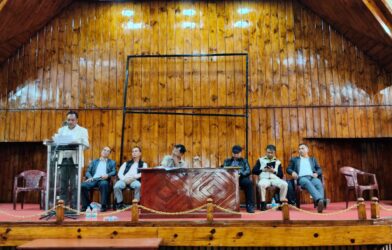
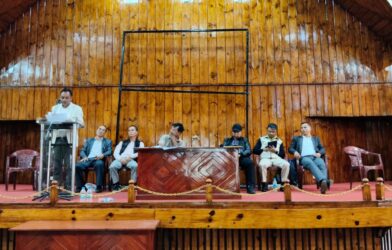
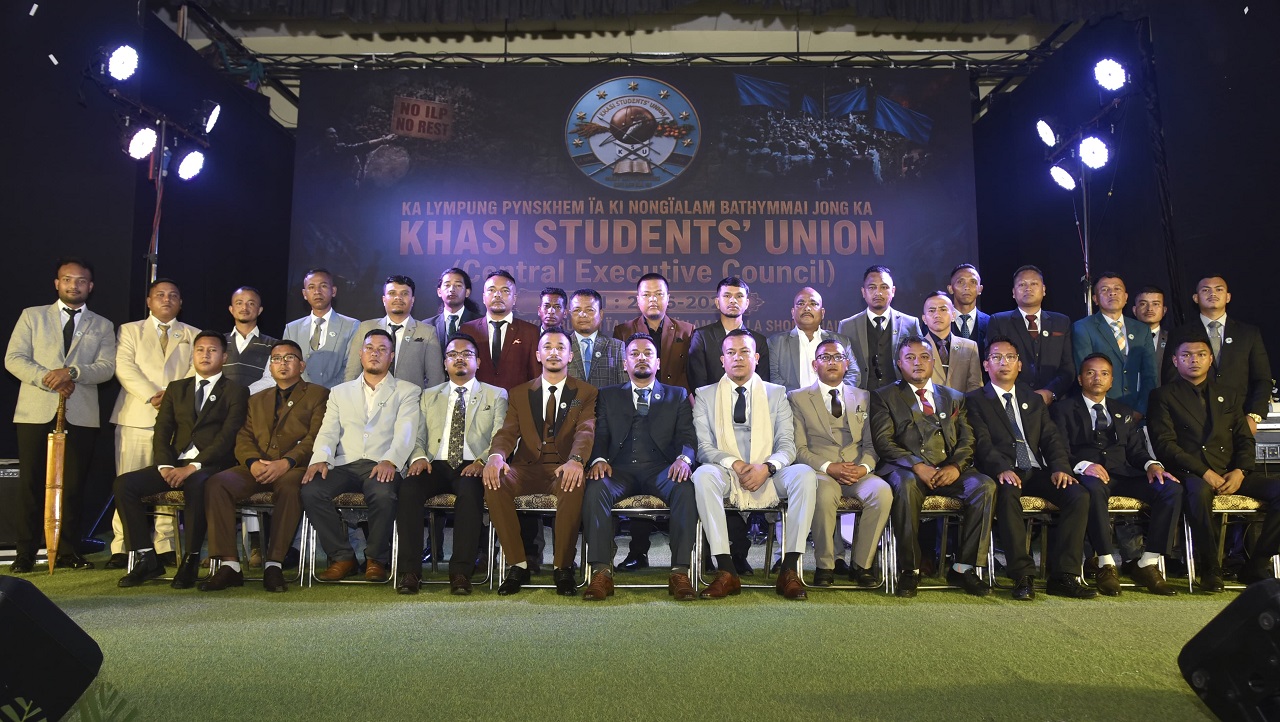
Speaking during the oath-taking ceremony of the new KSU Central Executive Council (CEC) for the 2026–2029 term at Soso Tham Auditorium, Kharjana said the outcome of the Union’s election was not a personal victory but a mandate to continue serving the people and safeguarding the interests of the Khasi community.
He announced that the KSU is preparing to take up new issues, including advocating for the implementation of a Land Ceiling Act in Meghalaya to prevent excessive concentration of land ownership and ensure equitable distribution of land resources. He said the Union also intends to seek a review of the Scheduled Tribe Certificate system and push for the removal of non-Khasi Scheduled Tribes from provisions of the Constitution (Scheduled Tribes) Order, 1950 in matters relating to land ownership rights within the state.
Kharjana stated that while the KSU would continue engaging with both the Central and State Governments through peaceful dialogue, it would not hesitate to take a firm stand whenever the rights and interests of Meghalaya’s indigenous people were at stake.
He informed that the KSU leadership would soon meet Conrad K. Sangma to submit a memorandum containing 20 major demands concerning governance, constitutional safeguards, education, employment and indigenous rights.
Among the key demands are the immediate implementation of the Inner Line Permit (ILP) in Meghalaya and, if ILP is not granted, a review of the Instrument of Accession alongside full implementation of the Meghalaya Residents Safety and Security Act. The Union also reiterated its opposition to uranium mining in the state and maintained that railway expansion should not be allowed without adequate legal safeguards to protect indigenous interests.
The KSU further called for the early resolution of the interstate boundary dispute, amendments to the Meghalaya Identification, Registration (Safety & Security) of Migrant Workers Act, 2020, and the inclusion of the Khasi language in the Eighth Schedule of the Constitution of India.
Other issues highlighted by Kharjana included addressing recruitment-related concerns at the North Eastern Indira Gandhi Regional Institute of Health and Medical Sciences, reforms in the education sector, promotion of tourism, strengthening the state’s sports policy, and improving transparency and accountability in public administration.
The KSU President also demanded reforms in the functioning of the Meghalaya Public Service Commission and District Selection Committees, formulation of standard operating procedures and legal frameworks for recruitment bodies, and the abolition of personal interviews for Grade B, C and D government posts.
On governance and anti-corruption measures, he called for greater transparency in government contracts and tenders, a policy requiring private companies to prioritize local residents in employment, annual public declaration of assets by public officials, and the establishment of a dedicated Vigilance and Anti-Corruption Cell.
Highlighting the Union’s historical role, Kharjana said the KSU has consistently championed issues relating to indigenous rights, protection of natural resources, constitutional safeguards, language preservation and public welfare. While acknowledging several achievements over the years, he stressed that many important issues remain unresolved and require collective efforts from all sections of society.
He asserted that the KSU would not allow any force to suppress the voice of the people or undermine the rights of indigenous communities in Meghalaya.
“KSU is not merely a student organisation; it is a movement that carries the aspirations of the Khasi people. We will continue to monitor government policies and decisions closely and will speak out whenever the interests of the state and its youth are threatened,” Kharjana said.