
By Babu Kular Khongjirem
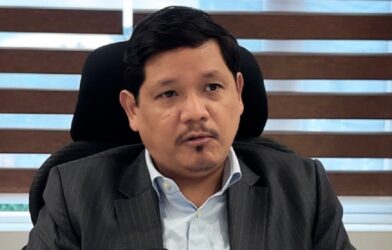
The MDA-II Government in Meghalaya, led by the NPP in coalition with the UDP and other parties, has taken a major decision to restructure the school education system across the State.
Beginning in April 2026, the Government issued orders discontinuing various existing categories of schools and teaching posts, including SSA and ad hoc schools as well as posts for Hindi and Science teachers. These were brought under a new salary structure known as the Structured Pay Framework (SPF).
Under the SPF, teachers are classified according to different levels, ranging from Primary and Upper Primary to Secondary and Higher Secondary. Their remuneration is determined based on their respective levels and length of service.
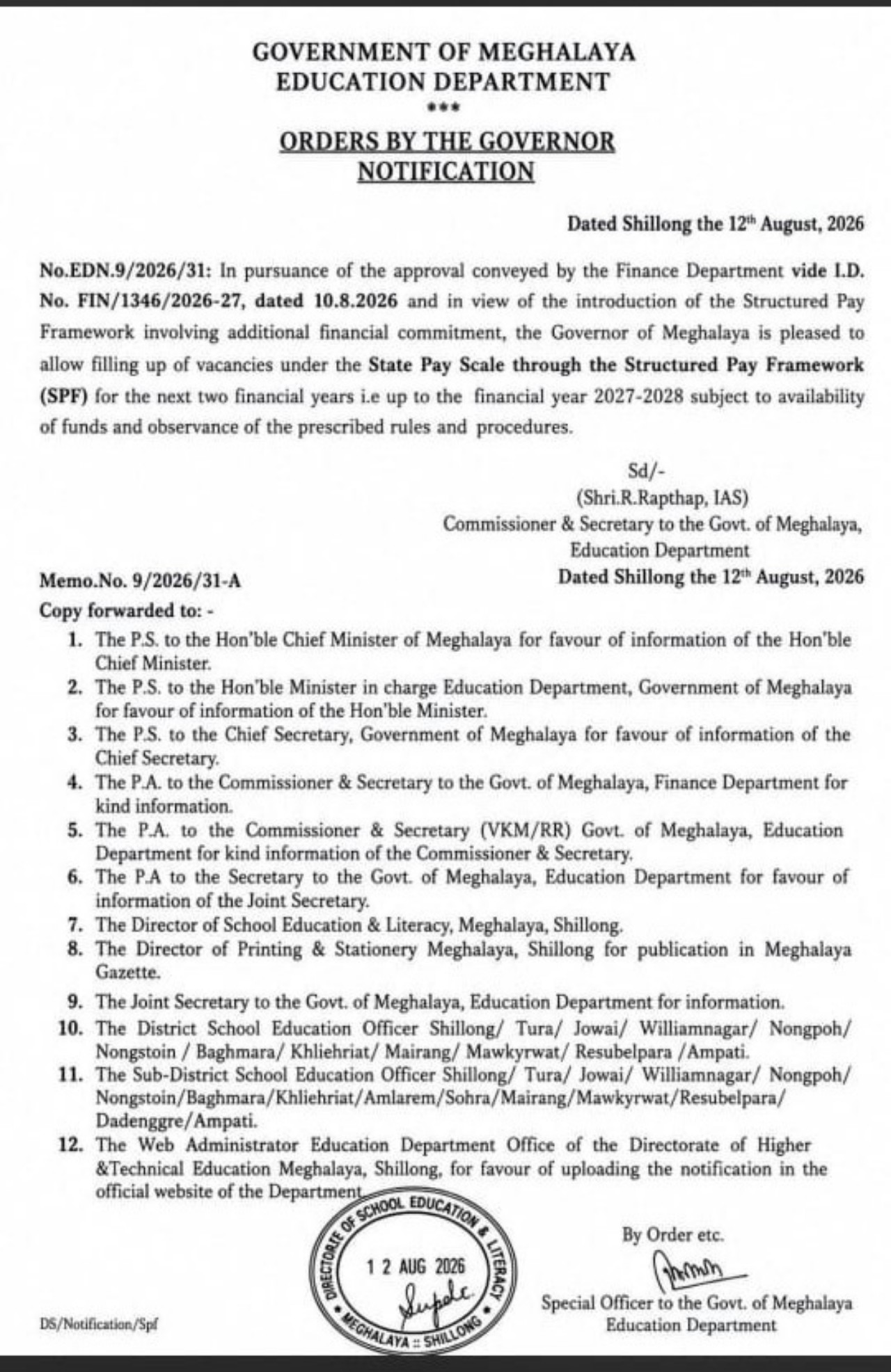
However, an Education Department notification issued in August 2026 has reportedly caused widespread concern among teachers. The notification stated that Deficit and Government schools would also be brought under the SPF, effectively replacing the existing salary structures applicable to teachers at different levels.
The move has left many teachers serving in Deficit schools across Meghalaya confused, demoralised and deeply concerned about their professional future.
At a time when Meghalaya continues to face serious challenges in the education sector, as reflected in various reports of the Government of India, such a change in the remuneration structure of teachers could have far-reaching consequences. Rather than strengthening the teaching profession, the decision risks undermining the dignity, motivation and professional standing of teachers.
It is particularly worrying that Meghalaya appears to be moving in a direction contrary to the broader need to attract and retain qualified teachers. At a time when several states are taking steps to improve teachers’ salaries and working conditions, any reduction or stagnation in remuneration could make the profession less attractive to talented young people.
The proposed remuneration under the new framework is reportedly comparable, in some cases, to the earnings of lower-level support staff such as peons or school chowkidars. There are also concerns that certain hourly-paid workers could potentially earn more than professionally trained and qualified teachers.
If such disparities persist, the Government may find it increasingly difficult to attract capable and academically qualified individuals into the teaching profession.
The question, therefore, is not merely about the salary of teachers. It is about the future of education in Meghalaya.
What kind of education system can the State build if qualified people are discouraged from becoming teachers? How can the Government expect teachers to shoulder the responsibility of educating future generations if their professional contribution is not adequately recognised?
The Government must also consider the impact of such a policy on the morale of thousands of teachers who have dedicated years of their lives to serving students in Meghalaya.
Does the Government intend to compromise the educational future of our children? Does it want to weaken an education system that already faces significant challenges?
These are questions that deserve serious public discussion.
The MDA-II Government should reconsider the proposed changes and adopt a more reasonable, transparent and teacher-friendly approach. Any reform of the education system must ensure that teachers are treated as professionals and that their experience, qualifications and years of service are appropriately recognised.
The future of Meghalaya’s children depends significantly on the quality and commitment of its teachers. A Government that seeks to improve education must first ensure that those entrusted with educating the next generation are respected, motivated and fairly compensated.
Unless the Government addresses the concerns surrounding the SPF and the proposed restructuring of salaries in Deficit and Government schools, uncertainty among teachers will continue—and with it, concerns about the long-term future of education in Meghalaya.