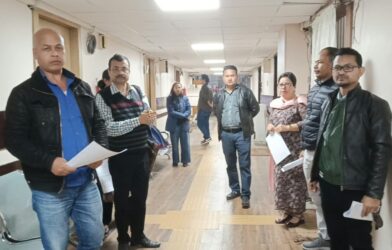

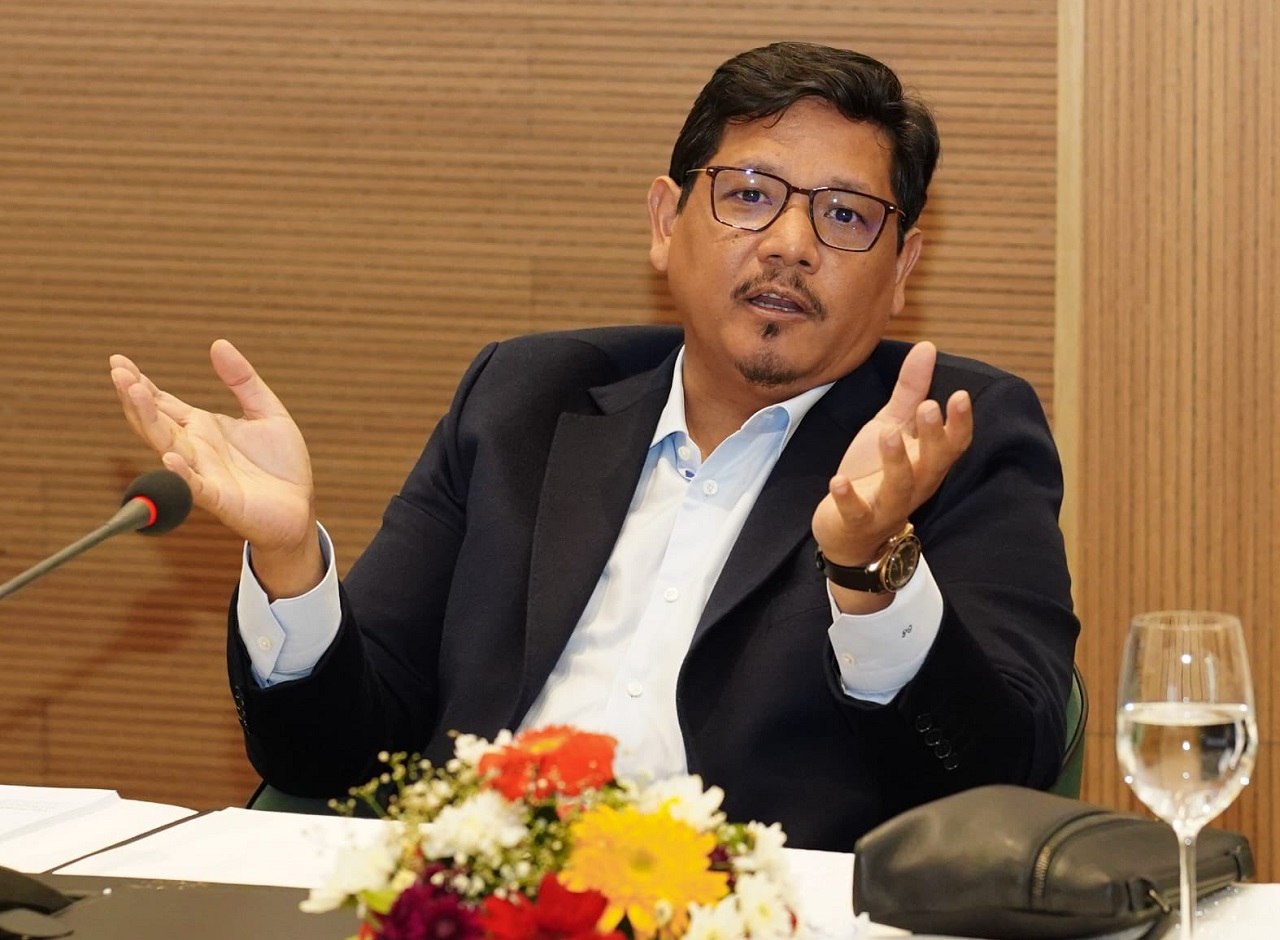
SHILLONG, NOV 4: Meghalaya Chief Minister Conrad K Sangma on Wednesday said that the Health Department should identify key health issues and work in a systematic manner to address the issue.
Speaking at the conference “Rethinking Anemia: Towards Comprehensive Anaemia Care” at Shillong, the Chief Minister said the conference is a continuation of the first Meghalaya Health Summit held last year, whose objective was to bring Government, private hospitals, organisations and individuals together to think and work collectively.
“I had urged the Health Department that every year, and if possible every six months, we must take up one topic, one issue, one concern and ensure we continue to work on it for six months till we are able to create awareness about that particular subject,” he said.
Citing the example of increase kidney failure presented by Dr. Benjamin from Tura Christian Hospital, which showed how diet, high sugar, high carbs and lifestyle were driving preventable illness, and the 1000-day programme where parents unknowingly give chips and chocolates to children at 9 months to 2 years to keep them happy – doing the worst thing for child health.
“These are small things people need to know. Somebody must tell them. That is why we must come together and direct our efforts towards a particular goal in a concerted manner,” he said.
The Chief Minister said the biggest step in last 8 years has been partnering with like-minded organisations.
“It is not about money always. It is about desire to make a change, bringing minds and hearts together, bringing expertise together. We are spending 9% of our budget on health – yes, it is a big thing. But the issue is how effective is it? Spending money alone is not enough. It has to be spent in the right way, on the right things, at the right time,” he said.
He said Meghalaya has built trust with partners, including IFAD whose entire Executive Board spent 3 of its 7 days in India in Meghalaya and visited remote villages. “Truth will be in eyes of the person in the village. When you shake hands and ask – is this project affecting your life, is it making things better – that can only happen when you go to grassroots,” he said.
He urged participants not to treat conference as a one-day event. “Even if you do not come to this conference and you go to a village and create awareness to even one mother, or visit one school and talk to girls there, that is more meaningful. That is the partnership we are looking for.”
“Meghalaya has not always been a great story. We were at bottom of almost every chart in country – be it vaccination, MMR, stunting. We don’t look at it as failure. We look at it as challenge we are here to solve. God has given us this opportunity for a purpose,” he said.
He said governance is wrongly assessed by schemes – how many km of canal, how many hospitals opened, how many football fields built.
“The issue is not how many hospitals you open, but how many lives you saved. It is not about km of canals, but whether agricultural production increased. It is not about football field, but how many children you engaged and improved their lives. That small change in mindset is very important.”
Recalling start of MMR programme in 2019, when then DC Ampati Ramkumar S was tasked to save every mother, he said initially focus was on institutional deliveries and awareness, but impact was limited.
“Later we realised it is not about mother not wanting to go to institution. She just can’t go, because there is no way for her to go – place is 2-3 hours away. Sometimes we look at outcome and think outcome is the problem, whereas reason for that outcome is the problem. We have to get analysis correct. We cannot be shooting arrows in dark. Analysing and critically breaking down problem into real problems is 80% of problem solved,” he said.
He likened it to drip irrigation versus spraying water – “Give water when it matters, you save energy, save cost, and you are effective.”
The Chief Minister said anemia remains central to maternal mortality, low birth weight, stunting and child development. The conference will focus on comprehensive anemia care – screening, treatment, nutrition, and follow-up – from adolescent girls to pregnant women.
He said through systematic work, maternal deaths have fallen from 228 in 2021-22 to 106 in 2025-26, institutional deliveries have risen from 58.1% (NFHS-5) to 65.6% (NFHS-6), stunting has fallen from 46.5% to 36.8%, and TFR from 2.9 to 2.2.
“But one conference will not do justice. It requires commitment, consistency. Things don’t change in a day. But it will be exciting and satisfying when you shake hands with same person after 6 months, one year, when you have actually made a difference in her life,” he added.