
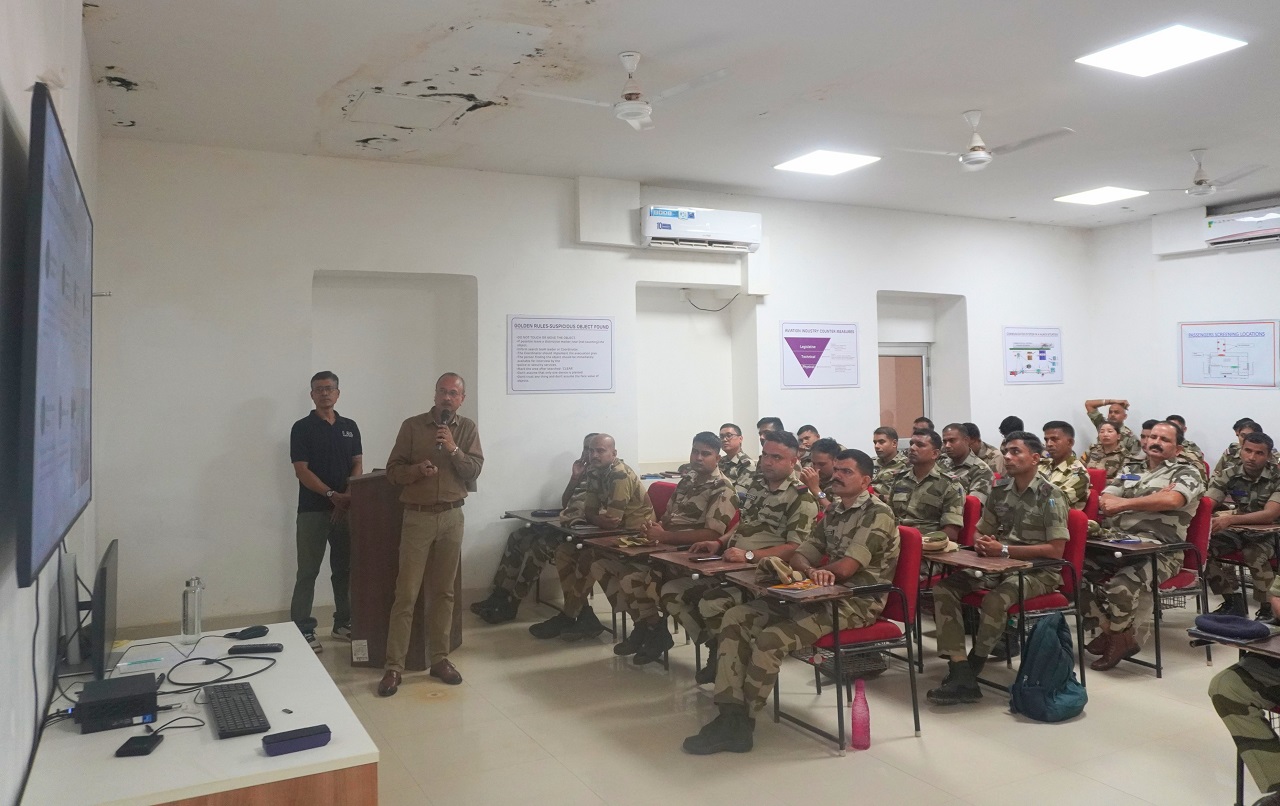
Guwahati, October 14: Around 55 personnel of the Central Industrial Security Force (CISF) deployed at Lokpriya Gopinath Bordoloi International Airport in Guwahati were sensitised on measures to prevent illegal wildlife trade through airports during a workshop held at a CISF facility in Kahikuchi on Wednesday.
The workshop was hosted by the CISF and conducted by resource persons from the Legal and Advocacy Division of Aaranyak and the Wildlife Crime Control Bureau (WCCB). It focused on identifying attempts to smuggle protected wildlife, wildlife parts and products made from wildlife through passenger and cargo channels.
Addressing a technical session, Dr Jimmy Borah, Deputy Director of Aaranyak’s Legal and Advocacy Division, explained how airport security personnel could help detect wildlife trafficking during baggage screening and other security checks. He cited instances where alert airport security personnel in India and abroad had helped prevent wildlife trafficking and stressed the importance of coordination among the CISF, Customs, airline security teams, WCCB, state police and forest departments.
Borah said traffickers often targeted air routes because of the speed of transportation, which enabled live animals to be moved across continents within hours. He also noted that the high volume of passenger and cargo traffic could provide cover for illegal consignments.
He emphasised that checkpoints, terminals, cargo sheds and baggage belts offered opportunities to detect trafficking attempts through trained personnel, sniffer dogs and coordinated surveillance. He called for information-sharing and joint action among airport authorities, enforcement agencies, airlines and non-governmental organisations.
During another technical session, Nippon Kumar Baishnab, Assistant Director-in-Charge of WCCB, explained how CISF personnel could identify protected wildlife, wildlife parts and consumer products made from species listed under the Wildlife (Protection) Act, 1972, as amended in 2022.
Baishnab provided guidance on detecting suspicious items during baggage screening using X-ray machines and outlined the immediate follow-up action required when such items are detected. He also highlighted the provisions relating to Schedule I and Schedule II species, along with other scheduled flora and fauna whose trade is prohibited or restricted under the law.
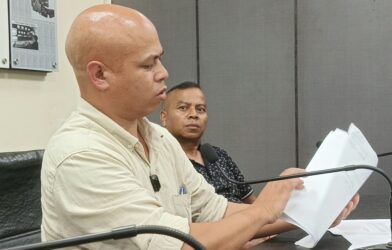
Baishnab, accompanied by Bijay Basumatary, Intelligence Assistant at WCCB, displayed various wildlife parts prohibited from trade and provided CISF personnel with practical demonstrations on identifying them through X-ray screening.
The workshop aimed to strengthen the capacity of airport security personnel to detect wildlife trafficking and improve coordination among agencies involved in combating illegal wildlife trade.