
Shillong, April 25: An RTI application seeking clarity on lease agreements and ownership status of government land in Upper Shillong has raised serious concerns over transparency and possible irregularities in land management.
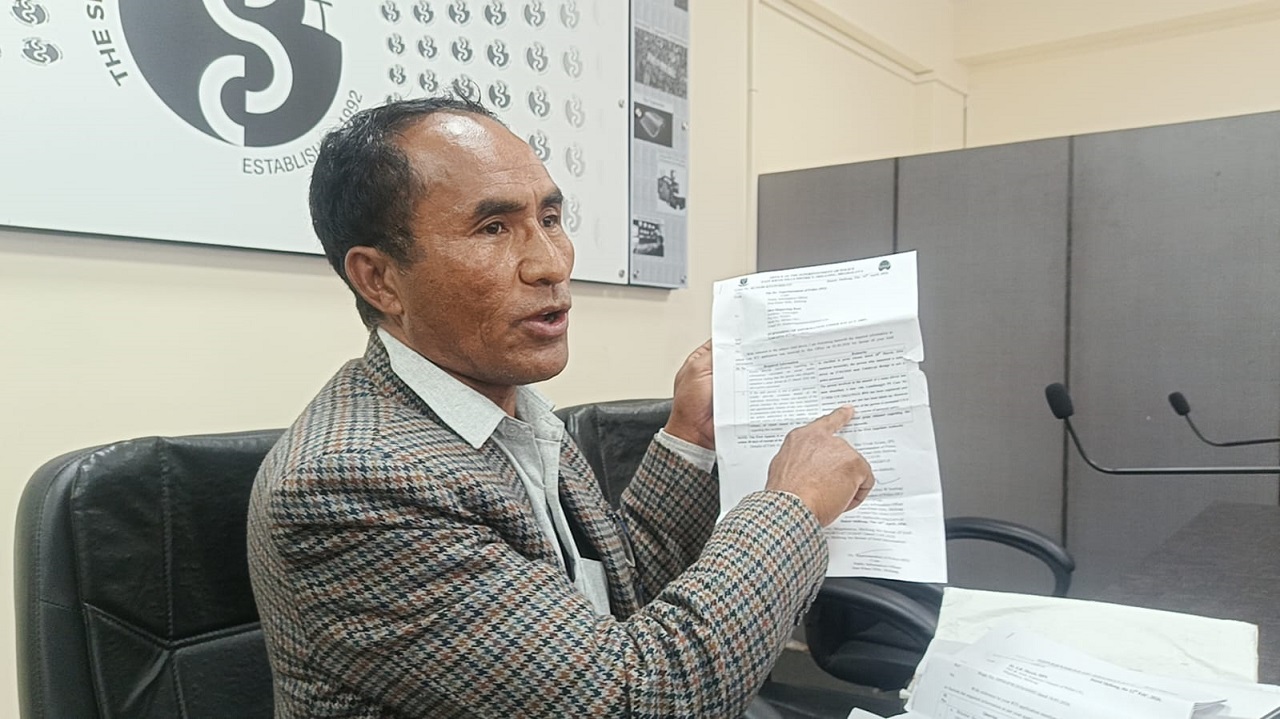
RTI activist Disparsing Rani, along with another applicant, filed the request under the Right to Information Act, questioning how government land—reportedly dating back to the British colonial period—has been acquired, managed, and utilised over the decades.
According to Rani, the land was originally leased out in 1886 to one J.D. Ram for a period of 99 years. The lease is believed to have expired in 1967, but there is no clear public record indicating the current ownership or legal status of the land, leading to ambiguity over control and revenue collection.
He further alleged that while the Revenue Department appears to have assumed control of the land around 1987, documentation in the public domain remains unclear or unavailable.
Despite submitting the RTI application to the office of the Deputy Commissioner, Rani claimed that a complete response has not yet been provided. Instead, he was reportedly summoned by the Public Information Officer (PIO), a move he described as inconvenient and potentially intimidating.
“We want to know how unidentified individuals have obtained government land under such lease arrangements. Transparency and accountability are essential,” Rani told media persons.
The RTI application seeks detailed records on land allotment, lease agreements, release of land, and revenue collection related to the area. Activists stressed that access to such information is vital to prevent misuse of public land and ensure that due legal procedures have been followed.
Rani also raised concerns over delays in the RTI response, stating that the lack of timely information reflects administrative opacity. He alleged that summoning applicants instead of providing written replies amounts to indirect pressure on information seekers.
He further pointed to issues surrounding land and road expansion projects in Upper Shillong, particularly the four-lane road project. Rani claimed that several affected individuals did not receive compensation, as land acquisition in earlier periods occurred before modern legal safeguards were introduced.
He noted that the enactment of the Right to Fair Compensation and Transparency in Land Acquisition, Rehabilitation and Resettlement Act, 2013, established compensation provisions, but many legacy cases remain unresolved.
Reiterating that access to information is a fundamental right, Rani urged authorities to provide clear, transparent, and timely responses.
As of now, no official clarification has been issued by the concerned government authorities regarding the allegations.