

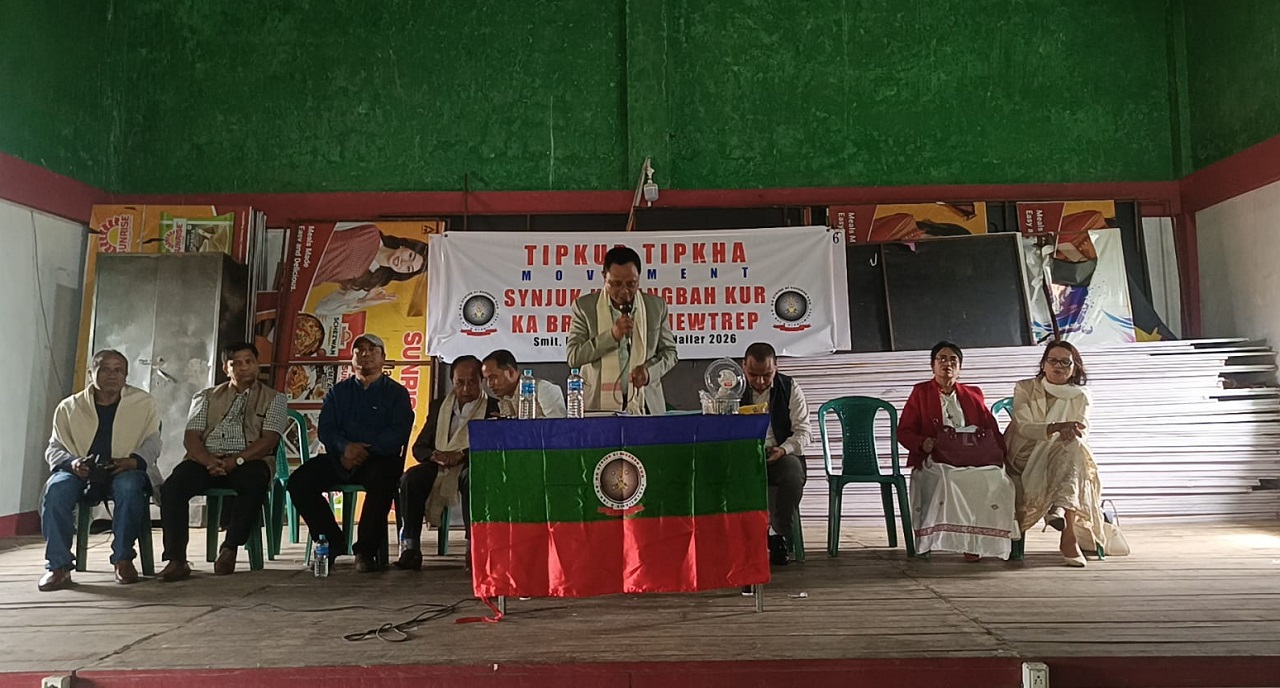
Shillong, August 3, 2026: The Synjuk Ki Rangbah Kur Ka Bri U Hynniewtrep on Saturday formally launched the Tipkur Tipkha Movement at the Ing Dorbar Shnong, Smit, Hima Khyrim Syiemship, with the aim of strengthening Khasi clan identity, preserving customary practices and reinforcing the community’s matrilineal system of inheritance through the maternal lineage.
The meeting was attended by Rangbah Kur (clan elders), Waheh Kur, Rangbah Shnong (village headmen), leaders of various Dorbar Kur and community elders from across the Bri U Hynniewtrep region. The organisation also invited Khasi clan organisations and community members residing both within and outside Meghalaya to participate in the movement.
Speaking to reporters after the meeting, Synjuk Ki Rangbah Kur Ka Bri U Hynniewtrep President Bah R.L. Kharpran said the Tipkur Tipkha Movement seeks to revive awareness among Khasi people about the importance of knowing their Kur (clan) and Kha (maternal kinship), describing them as fundamental pillars of Khasi customary law and social identity.
He said many young people and families are gradually losing knowledge of their clan lineage and traditional kinship ties. Unless concerted efforts are made to document and preserve this knowledge, future generations risk losing customs and traditions passed down by their ancestors.
Bah Kharpran clarified that the movement is neither political nor directed against any individual or community. Rather, he said, it is a cultural initiative aimed at revitalising the traditional Khasi way of life and strengthening the role of Dorbar Kur in preserving indigenous institutions.
He emphasised that Khasi identity is rooted in the community’s matrilineal system, under which lineage and clan affiliation are inherited through the mother rather than the father. According to him, understanding one’s clan is essential for upholding customary laws, maintaining proper kinship relations and preventing marriages within the same clan, which are prohibited under Khasi tradition.
During the meeting, all Dorbar Kur were urged to collect, document and preserve information relating to their respective clan histories, genealogies, oral traditions and customary practices. The information will be compiled by the Dorbar Thawaiñ Dalariti to create a comprehensive record aimed at safeguarding the heritage and lineage of the Khasi people.
Participants also deliberated on a range of issues affecting Khasi society, including the declining knowledge of customary laws among younger generations, the need to strengthen clan institutions and the importance of educating youth about Khasi history and culture. The discussions further explored perspectives from biological and anthropological sciences to deepen understanding of human society while reinforcing the significance of Khasi customary traditions.
The Synjuk concluded the meeting by calling upon all Khasi people to work collectively to preserve their customs, strengthen the institution of the Dorbar Kur and ensure that future generations continue to understand and uphold the values of the Khasi matrilineal system.