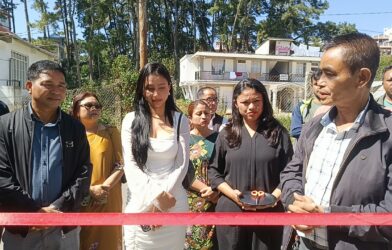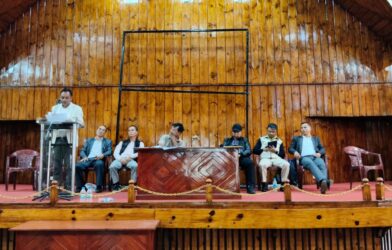

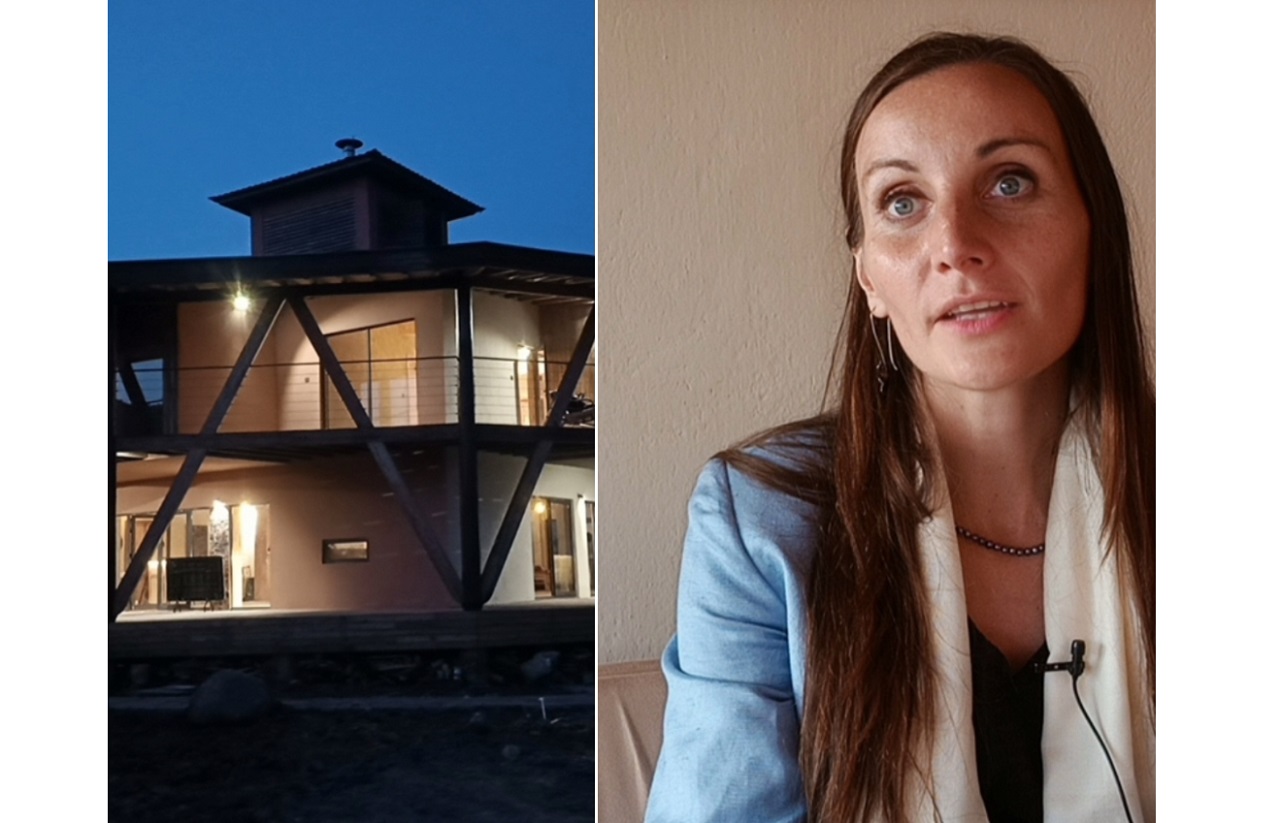
Shillong, May 20: The Pine Home Project, an eco-sustainable habitat initiative envisioned as a model for climate-responsive and community-based development, was formally launched at Mawlangwir in South West Khasi Hills district on Tuesday.
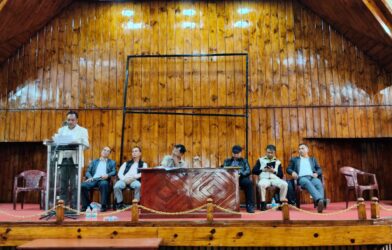
The launch programme was attended by Jana Bednarova along with resource architects Jozef Fugger and Marek Guga, who shared insights into the concept and long journey behind the initiative.
Speaking during the programme, Bednarova said the project marks a major milestone as the infrastructure phase has now been completed after years of planning, research and collaboration.
She explained that the initiative was conceived not merely as a physical structure, but as a long-term platform for tourism, culture, education and sustainable community development.
“We wanted the building itself to become an example of exchange — not only an exchange of culture and ideas but also of technologies and sustainable practices,” she said.
According to Bednarova, the project combines sustainable architectural technologies from Europe with Meghalaya’s indigenous knowledge systems and locally available resources. Prior to construction, architects and researchers carried out extensive studies on local climatic conditions, traditional construction practices, soil composition and the suitability of available materials.
Natural materials such as bamboo, timber, clay and other locally sourced resources were incorporated into the design based on the findings of these field studies.
She said the initiative explored alternatives to conventional construction systems by introducing ecological building techniques, including breathable wall systems, natural insulation and environmentally friendly infrastructure.
The project also incorporates recycled and waste-based materials. One of the innovations highlighted was the use of sheep wool as insulation material because of its thermal efficiency and moisture-resistant properties.
Bednarova noted that sustainable construction is not only about environmental protection but also about reducing long-term costs for users. Citing examples from Europe, she said effective insulation technologies can significantly reduce energy consumption and electricity expenses while maintaining indoor comfort.
She further stated that the Pine Home Project is intended to function as a centre where local communities and stakeholders can receive training in sustainable construction methods, resource management and environmental practices.
Beyond architecture, the project is expected to support local livelihood generation through tourism-related activities, entrepreneurship, handicrafts and cultural programmes.
Bednarova stressed that the project seeks to promote responsible tourism rather than mass tourism. She said Meghalaya’s natural beauty and cultural richness should be protected from exploitative tourism practices and instead developed through environmentally sensitive approaches that directly benefit local communities.
She also highlighted the contribution of local craftsmen, artists and traditional knowledge holders in shaping the initiative.
“We found highly skilled local artisans and craftsmen whose traditional knowledge played a vital role in preserving and improving the use of natural materials,” she said.
According to her, the initiative involved years of experimentation, capacity building and collaboration among government agencies, architects, local communities and experts.
She expressed hope that the project would continue to evolve as a centre for sustainable innovation and inspire similar models across Meghalaya in the future.
The project has been supported by Meghalayan Age Limited and the Directorate of Tourism, Meghalaya, and implemented through collaboration among Picasso Pupils – An Art Society, Saitsnad Multipurpose Cooperative Society and other stakeholders.