
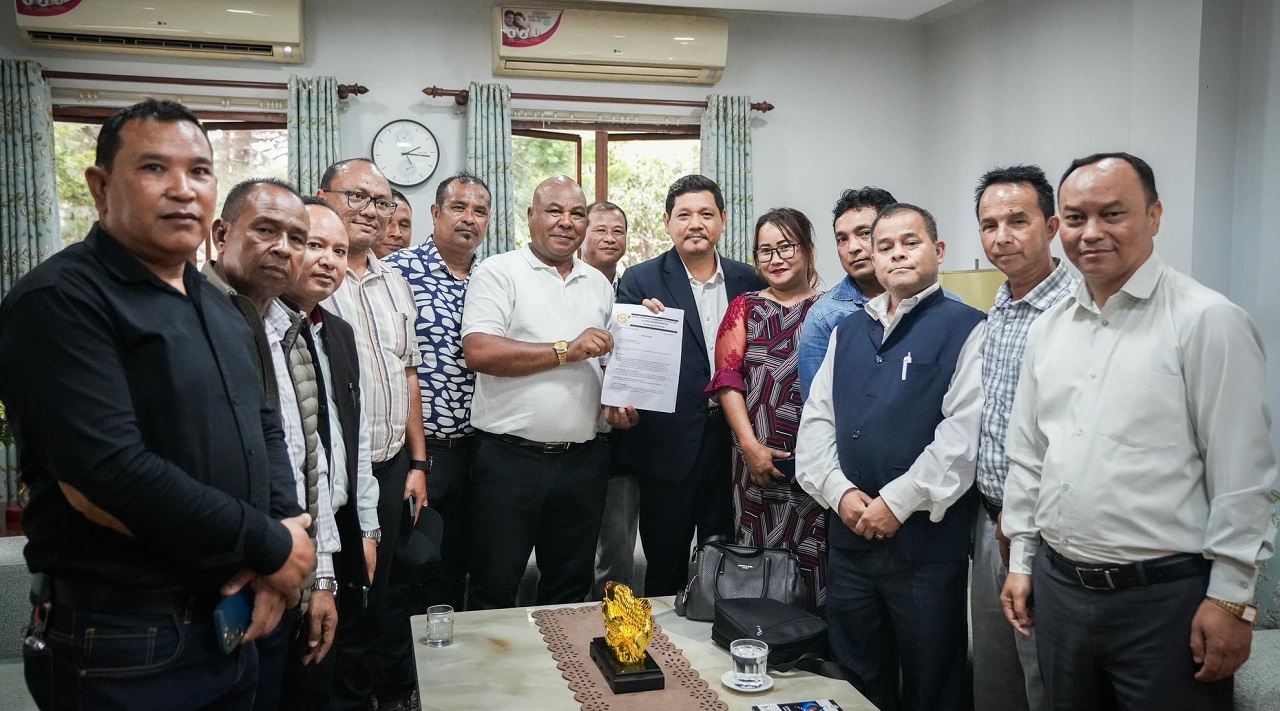
SHILLONG, JUNE 2: The Khasi Jaintia Government Contractors & Supplier Association (KJGCSA) has submitted a memorandum to Chief Minister Conrad K Sangma, seeking immediate intervention on challenges faced by government contractors and suppliers in the State.
In the memorandum, the Association said local contractors in Khasi Jaintia are being deprived of opportunities to participate in and benefit from government projects within the district.”
It added that “issues with irregular bill payments” were affecting members’ livelihoods and ability to work.
The Association raised four key demands. On the Jal Jeevan Mission, it urged the government to address pending dues, stating, “As Bills to JJM are yet to be cleared, many contractors are facing financial problems.”
The memorandum requested intervention in asking the PHE department to clear approximately 50 percent of the money from other sources. It also sought the “expedited release of pending bills for central schemes under Water Resources for 2024-2025.”
On PWD Roads, the Association said, the practice of calling tenders in packages without splitting the work benefits only a few big contractors, depriving local contractors.
It urged the government to “split tenders to allow local contractors to participate and promote economic growth and quality of work.”
Further, the Association called for an end to non-transparent practices. “Departments should ensure transparency in their work through the tender process. This will promote fair competition, quality work, and better value for money spent,” the memorandum said.
It requested “the cessation of close tenders and advance work on PWD roads without sanction orders” and asked for a halt to departmental work in the Soil & Water Conservation, Wildlife, and Forest departments.
“Instead, call tenders for work to enable local contractors to participate,” it said. While noting appreciation for the Government’s development efforts, the Association said, “We request your intervention to ensure that local contractors are not deprived of their livelihood and rightful share in the development process.”